OpenClaw auth credentials not synced across agents: complete fix guide
Problem statement: you updated your OpenClaw provider credentials using configure/auth add, but non-main agents still cannot access the provider. The main agent works fine with the new credentials, but sub-agents fail with authentication errors or API key failures. This happens because auth updates only refresh the main agent's auth-profiles.json, leaving other agents with stale credentials.
- Issue #55648 (2026-03-27): configure/auth add only updates main agent auth-profiles.json.
- Community reports: non-main agents keep stale auth-profiles.json and fail silently after credential rotation.
- Self-hosted deployments: auth updates to agents/main do not propagate to agents/<agent_id>/ directories.
Why auth credential sync breaks multi-agent setups
OpenClaw multi-agent deployments use per-agent auth profiles for provider credentials. Each enabled agent should receive its own auth-profiles.json
at .openclaw/agents/<agent_id>/agent/auth-profiles.json. This design allows agents to share provider credentials while maintaining
separate runtime contexts.
The sync failure happens when auth update flows only write to the main agent path. Multi-agent architecture expects credential distribution to all enabled agents during config regeneration, but some implementations only refresh the main agent's auth store. Non-main agents continue using outdated credentials, leading to authentication failures that are easy to miss if you only test through the main agent.
How OpenClaw-native auth and multi-agent config should work together
Understanding the intended behavior helps you spot where sync is breaking. In a properly configured multi-agent deployment with native auth:
- Auth artifact builder:
build_auth_artifacts()produces auth-profiles.json with decrypted credentials from the database. - Multi-agent config generation: config generator emits
agents.list[]entries and ensures each enabled agent receives auth profiles. - K8s init bootstrap: places auth-profiles.json at
/home/node/.openclaw/agents/main/agent/auth-profiles.jsonfor the main agent. - Agent-local distribution: for each enabled agent, writes auth profiles to
.openclaw/agents/<agent_id>/agent/auth-profiles.json. - Config update flow: when credentials change, regenerates config and updates all agent auth profiles, then triggers restart or hot-reload.
When any layer skips the non-main agents, sync fails silently. Agents still start, but using wrong credentials.
Evidence from the field: multi-agent implementation details
Hosted multi-agent deployments show that auth sync issues trace back to how instance config regeneration handles credential distribution. The multi-agent implementation added agent-local auth profile writes as a core feature, but auth update flows must explicitly iterate over all enabled agents.
What our implementation confirmed
- Native auth migration replaced proxy-based auth with per-agent auth-profiles.json files.
- Multi-agent config writes agent-local auth profiles at
.openclaw/agents/<agent_id>/agent/auth-profiles.jsonfor every enabled agent. - Provider credentials are shared across agents per instance, but model selection and auth profile distribution must be per-agent.
- Instance config regeneration must rebuild auth artifacts for all agents, not just main, to maintain sync after credential updates.
This means the root cause is usually in how auth updates trigger config regeneration. If the update flow only refreshes main agent credentials without regenerating the full multi-agent config, other agents silently fall out of sync.
Fast triage: confirm the sync issue in 10 minutes
- Test main agent provider access: verify that the main agent can successfully call the provider with updated credentials.
- Test sub-agent provider access: send a test prompt to a non-main agent and observe whether provider calls succeed or fail with auth errors.
- Inspect auth-profiles.json timestamps: compare modification times between main and non-main agent auth profile files.
- Check auth profile content: verify that sub-agent auth-profiles.json contains the updated credentials or stale old ones.
- Review config update logs: look for evidence that config regeneration iterated over all enabled agents after the auth update.
If main agent auth works but sub-agents fail with authentication errors, and timestamps show main auth-profiles.json was updated more recently than sub-agent files, you have confirmed a sync failure.
Step-by-step diagnostic and fix playbook
Step 1: Verify auth update actually ran
Before assuming sync failure, confirm that the auth update command completed successfully. Check that configure/auth add or dashboard credential update reported success. If the update failed or timed out, retry the auth update. If it succeeded but agents are still out of sync, continue to the next step.
Step 2: Check auth-profiles.json file timestamps
If you have shell access to the instance, compare modification times across agent directories. Look at .openclaw/agents/main/agent/auth-profiles.json
and compare with .openclaw/agents/<agent_id>/agent/auth-profiles.json for each enabled agent. If main agent file is newer than sub-agent files,
the auth update did not propagate. This confirms the sync failure.
Step 3: Force full instance restart
Some auth update flows rely on instance restart to rebuild all agent configurations. Trigger a full instance restart from the dashboard or CLI. The restart should trigger config regeneration, which rebuilds auth artifacts for all enabled agents. After restart, test whether sub-agents can now access the provider. If restart fixes it, the problem was incomplete hot-reload propagation.
Step 4: Manually copy auth profiles as a temporary workaround
For immediate relief, you can copy the updated auth-profiles.json from the main agent to sub-agent directories. Stop the instance, copy
.openclaw/agents/main/agent/auth-profiles.json to each enabled agent's agent directory, then restart. This is a manual workaround,
not a fix, but it restores functionality while you address the underlying sync issue.
Step 5: Inspect auth artifact builder logic
If you have access to the auth profile builder code or configuration, verify that it iterates over all enabled agents when generating auth artifacts. The builder should read the instance's agent list and emit auth profiles for each, not just main. If the builder only handles main, report this as a bug with evidence from your deployment.
Step 6: Verify config update flow handles multi-agent
Check whether auth update triggers call the full instance config regeneration or a partial update that only touches the main agent. Config updates that add or remove providers should always trigger full regeneration. If the auth update uses a shortcut path that skips full config rebuild, this is the root cause. The fix is to route auth updates through the same regeneration flow used for other config changes.
Practical diagnostics teams skip (and regret skipping)
- Testing only through main agent: sub-agent auth failures can go undetected if you never route test prompts to non-main agents.
- Assuming silent success means actual success: auth update commands may report success even when credential propagation is incomplete.
- Ignoring auth error details: API key errors vs quota errors vs credential format errors all indicate different problems.
- Forgetting agent reordering effects: if you renamed or reindexed agents, old auth profile paths may no longer match current agent IDs.
- Missing provider-specific validation: some providers validate keys differently, and the validation step may only run for the main agent.
Edge cases that can mislead your debugging
Not every provider failure in sub-agents is caused by auth sync problems. Watch for these edge cases:
- Provider-side quota limits: the provider may have separate quotas per API key, and rapid requests from multiple agents can hit limits.
- Model-specific credentials: if some models use different providers or credentials, ensure each agent's model config matches available auth profiles.
- Binding routing confusion: incorrect agent routing can make it look like auth failure when the real issue is prompts reaching the wrong agent.
- Partial credential rotation: if you updated only one provider's credentials but agents use multiple providers, verify which provider is actually failing.
- Stale DNS or provider issues: transient provider API problems can masquerade as auth errors; check provider status pages.
How to verify the fix is working
- All agent auth-profiles.json files show the same modification time after auth updates.
- Sub-agents can successfully call the provider without authentication errors.
- Test prompts through different channels (Telegram, Slack, Built-In Chat) all work when routed to non-main agents.
- Provider dashboard shows API calls from multiple agents using the updated credentials.
- Future auth updates propagate to all agents without manual intervention.
Common mistakes that prolong this issue
- Updating credentials only through the main agent and assuming distribution happens automatically.
- Restarting only the gateway or a single service instead of the full instance, leaving stale config in some agent paths.
- Testing auth fixes only through one channel or binding, missing that the problem is agent-specific not system-wide.
- Reporting the bug without collecting file timestamps and log evidence from before and after the auth update.
- Working around the issue by putting all logic in the main agent, which defeats the purpose of multi-agent architecture.
Prevention: hardening multi-agent auth distribution
Once auth sync is working, add safeguards to prevent regression. Configure monitoring or alerts that check file timestamps across agent directories. Add a post-update validation step that tests provider access from each enabled agent. Consider adding a health check that calls provider APIs from non-main agents and reports sync failures immediately. These checks catch credential propagation issues before they affect production workflows.
When to consider managed hosting
Multi-agent auth management adds operational complexity. If you spend more time debugging credential sync across agents than using the agents themselves, managed hosting may reduce the burden. Hosted environments handle auth artifact building, multi-agent config regeneration, and credential distribution at the platform level. Compare tradeoffs at /compare/. If you want multi-agent functionality without managing auth plumbing yourself, review /openclaw-cloud-hosting/.
Fix once. Stop recurring multi-agent credential sync issues.
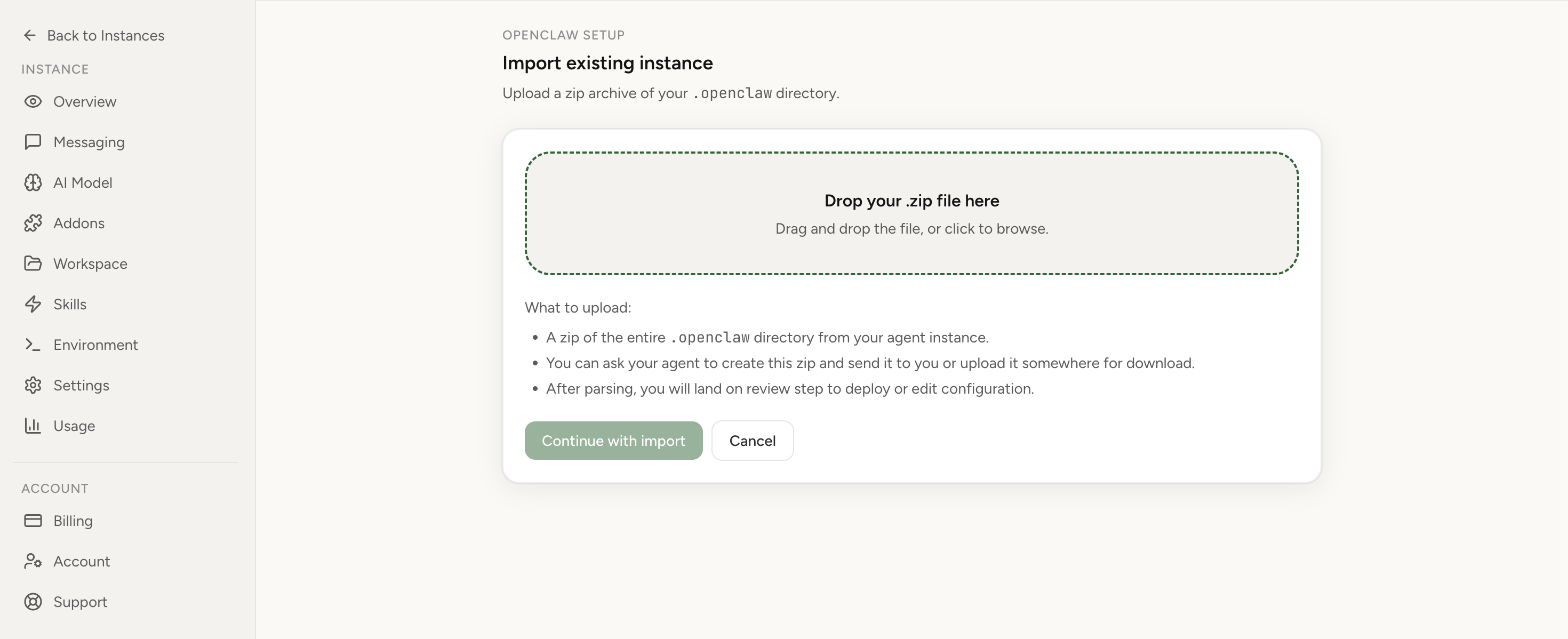
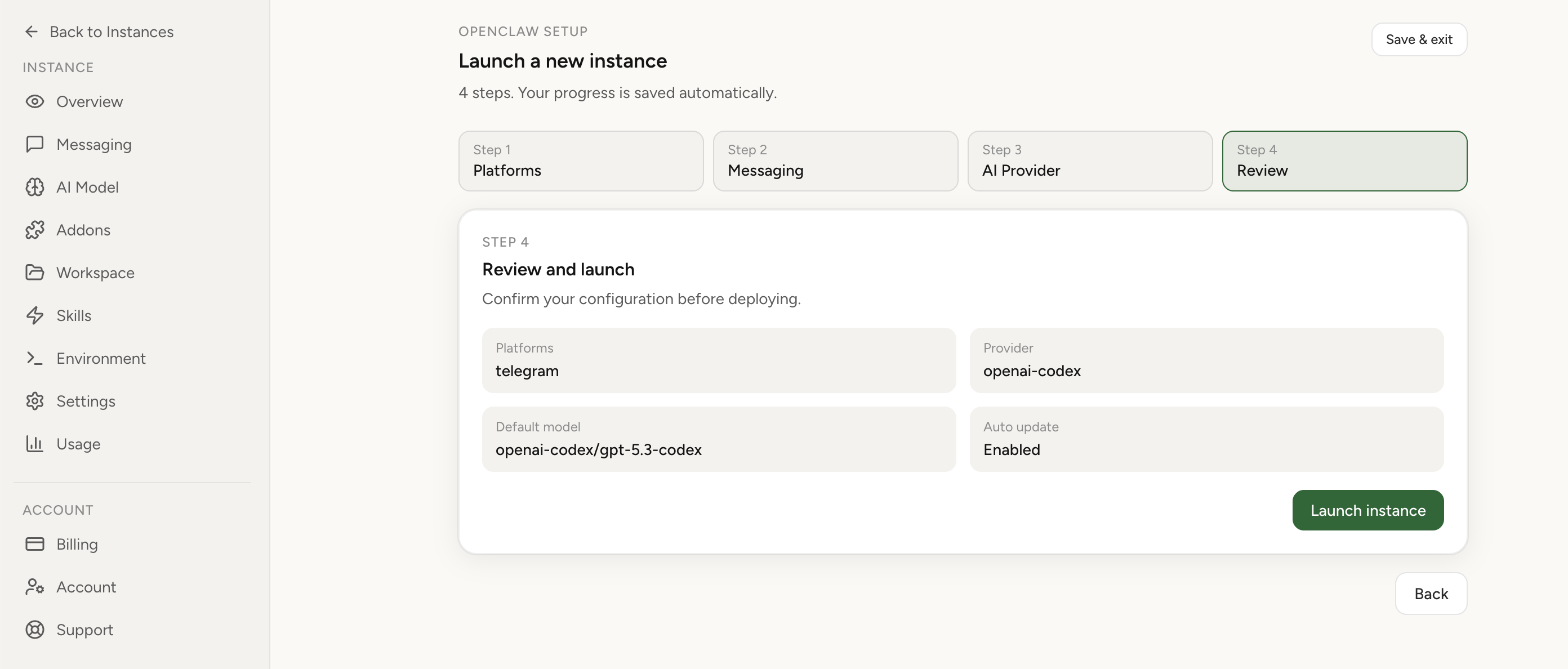
If this keeps coming back, you can move your existing setup to managed OpenClaw cloud hosting instead of rebuilding the same stack. Import your current instance, keep your context, and move onto a runtime with lower ops overhead.
- Import flow in ~1 minute
- Keep your current instance context
- Run with managed security and reliability defaults
If you would rather compare options first, review OpenClaw cloud hosting or see the best OpenClaw hosting options before deciding.
FAQ
Will fixing this require updating all agent configurations?
Usually not. Auth sync issues are typically fixed by correcting how credential updates propagate to existing agents. Only recreate agents if you have corrupted database state or mismatched agent IDs that cannot be resolved through config regeneration.
Should I use separate credentials for each agent instead?
Separate credentials per agent are an option if your provider supports multiple API keys and you want per-agent usage tracking. But this creates more operational overhead. The design intent is shared credentials with proper distribution, not separate auth per agent.
Does this affect provider OAuth tokens the same way as API keys?
Yes. OAuth tokens and API keys both live in auth-profiles.json and must be distributed to all enabled agents. If you updated an OAuth connection through the dashboard but sub-agents cannot use it, the same sync failure is occurring.
Sources
- OpenClaw issue #55648 (opened 2026-03-27) — auth credentials not synced across agents
- First-party implementation:
docs/worklog/2026-02-12-openclaw-native-auth-usage-phase1.md— OpenClaw-native auth migration - First-party implementation:
docs/worklog/2026-03-13-multi-agent-instance-config.md— multi-agent configuration architecture - Product specification:
docs/SPEC.mdsections 5 and 7 — OpenClaw-native auth and instance configuration