1
Sign in and connect
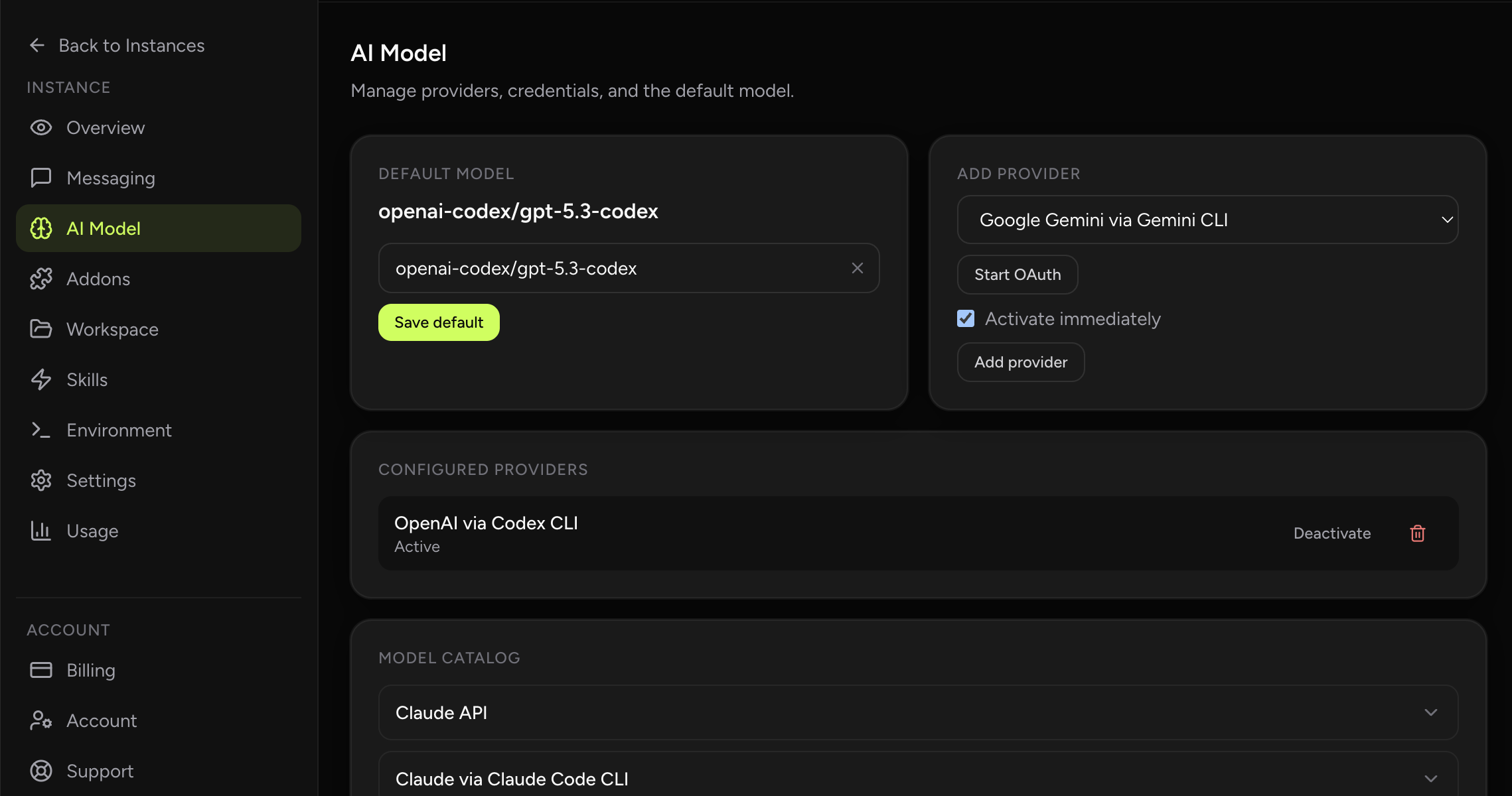
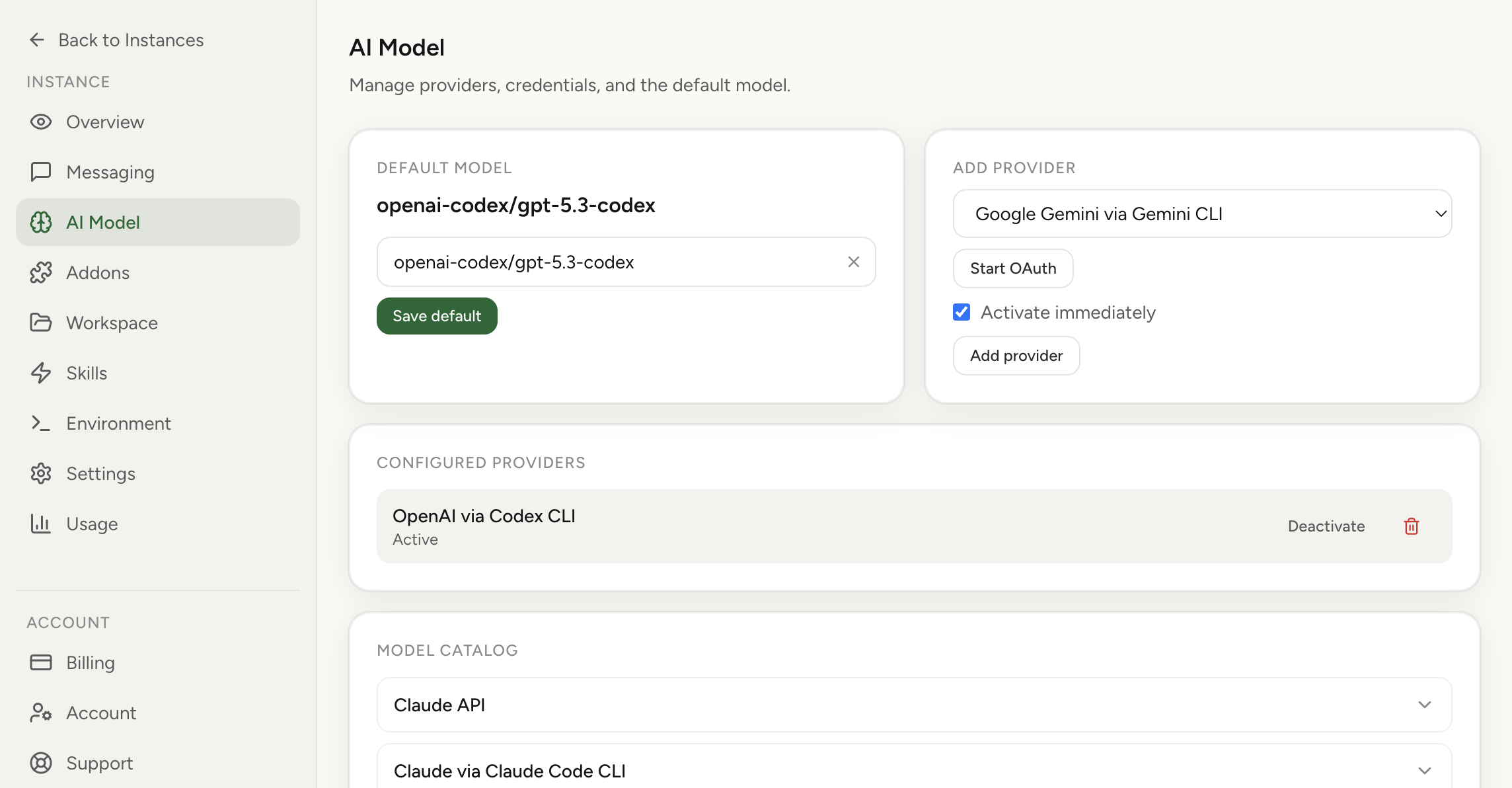
Sign in with Google, connect your LLM provider (OpenAI, Anthropic, Gemini, or others), and start with built-in chat, file uploads, and session management. Optionally connect Telegram or Slack bots.
Run OpenClaw without owning day-2 VPS maintenance. You get managed operations, security defaults, and usage visibility while keeping control of model credentials and bot setup.
Cloud hosting for OpenClaw means your assistant runs on managed infrastructure with security-by-design defaults. You do not touch servers, networking, or update cycles. You bring your LLM provider credentials, chat directly in the dashboard by default with file uploads and session management, and optionally connect messaging platform tokens.
Managed OpenClaw cloud hosting is usually the fastest path to production-grade AI agent operations.
OpenClaw Setup provides isolated runtime boundaries, no public IP exposure, encrypted credentials, allowlist controls, and per-model usage/cost analytics by default.
Teams requiring deep custom infrastructure control may still prefer self-hosting. For decision criteria, see managed vs self-hosted comparison.
This is a product-focused breakdown of runtime boundaries, security controls, and why managed cloud hosting is the main alternative to running OpenClaw on your own VPS. If you want Q&A style guidance first, start with Answer Hub. For provider comparisons, use the hosting provider guide. For the self-managed path, use the OpenClaw setup guide plus the troubleshooting checklist.
Time to first message with guided setup.
No servers to provision, patch, or monitor.
Bring your own LLM keys. View hosting plans.
| Factor | Self-hosted | Cloud hosting |
|---|---|---|
| Setup time | Hours to days | Minutes |
| Server management | You handle provisioning, OS, updates | Fully managed |
| Security hardening | You design and maintain | Built-in isolation, no public IP |
| Credential storage | You secure API keys in your runtime | Encrypted at rest (AES-256-GCM), keys separated from agent |
| Monitoring | You set up logging and alerts | Built-in usage and cost analytics |
| Access control | You implement allowlists | Allowlist-only messaging by default |
| Updates | You track and apply | Managed updates |
Sign in with Google, connect your LLM provider (OpenAI, Anthropic, Gemini, or others), and start with built-in chat, file uploads, and session management. Optionally connect Telegram or Slack bots.
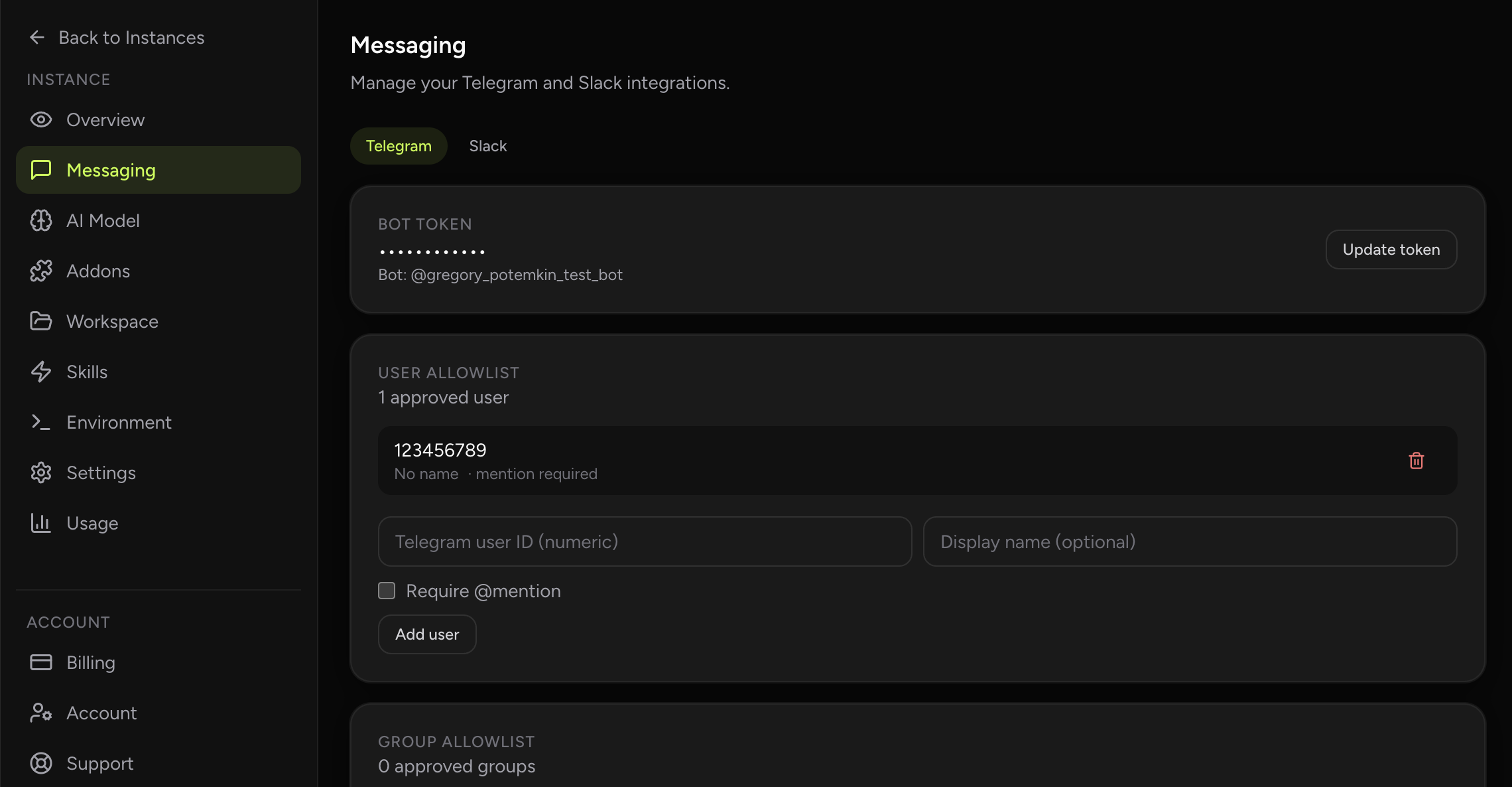
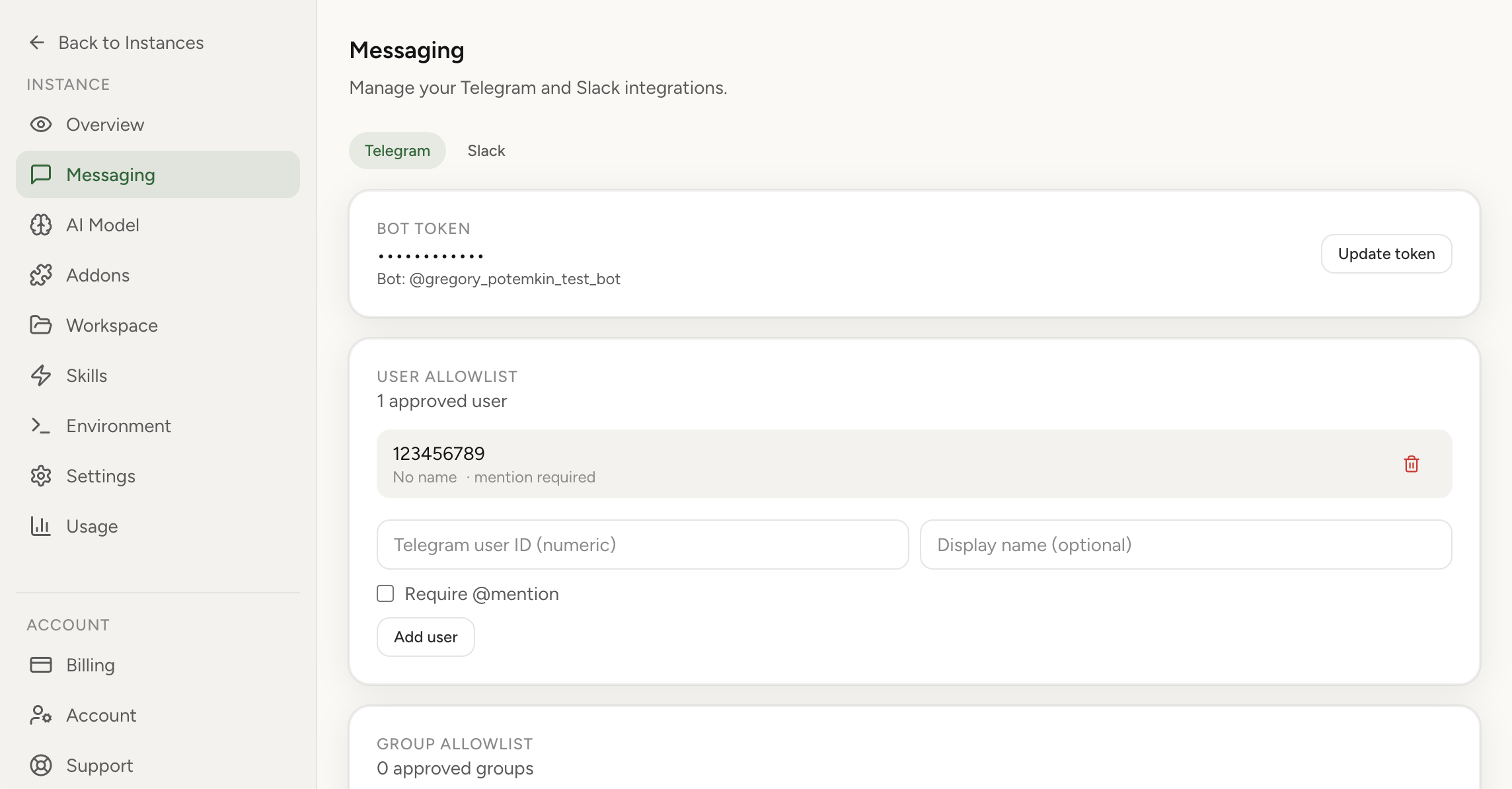
Set up your allowlist so only approved users can message your assistant. Credentials are encrypted and stored separately from your runtime.
Your instance deploys to an isolated environment with no public IP. Chat with reusable sessions, upload files in the dashboard, and monitor usage and cost by model.
With BYOK (bring your own keys), you pay your provider directly for model usage. Hosting plan pricing is shown in our pricing section. The dashboard shows token burn by model so you can catch surprises early.
You get a managed OpenClaw runtime with deployment, patching, and baseline security controls handled by the platform team.
Self-hosting gives deeper low-level control but requires setup, hardening, patching, and monitoring. Managed runtime removes that recurring work.
Isolated runtime boundaries, no public IP exposure, encrypted credentials (AES-256-GCM), and allowlist-based messaging access.
Yes. You can export your workspace from a self-hosted instance and import it into the managed platform. Secrets and tokens are excluded from exports for security.
Solo is $3.9/month for 1 active instance. Trio is $9.9/month for up to 3 active instances. Orchestra is $29.9/month for up to 10 active instances. For higher usage, contact the developer for a Custom plan. See pricing.
Side-by-side breakdown of what you handle vs what we manage.
AI agent hosting guideWhere managed AI/LLM hosting wins and where self-hosted still makes sense.
Telegram setup guideStep-by-step instructions for connecting your Telegram bot.
Cost-effective OpenClawHow to save 5–20x with subscription-based LLM auth instead of raw API keys.
No infrastructure work. Secure defaults. Clear cost visibility.