OpenClaw Raspberry Pi OOM Fix: Memory Errors on Low-RAM Systems
Problem statement: your Raspberry Pi 4 worked fine with OpenClaw, but after an upgrade, gateway crashes repeatedly with "JavaScript heap out of memory." The Control UI stays disconnected no matter how many times you restart.
- Issue #45440 (2026-03-13): upgrade from 2026.3.7 to 2026.3.12 causes rapid memory growth and OOM on Raspberry Pi 4 with ~2 GB RAM.
- Representative failure: "Reached heap limit Allocation failed - JavaScript heap out of memory."
- Issue reproduced with cron disabled, indicating a base runtime problem.
- UI remains disconnected after restart, requiring manual intervention each time.
Why low-RAM systems hit hard limits with OpenClaw
Raspberry Pi 4 is a capable single-board computer, but 2 GB of RAM is tight for an AI agent runtime. OpenClaw's gateway and node processes need memory for JavaScript execution, context buffers, web request handling, and concurrent tool operations. Recent releases have added features that increase baseline memory usage, which can push marginal systems over the edge.
The most painful aspect is how these failures compound: when gateway crashes from OOM, the UI loses connection. When you restart, memory pressure builds again quickly because retained context and buffers reload automatically. This creates a restart loop where your assistant is never stable enough to use.
Typical failure pattern on constrained hardware
- System worked fine on an older OpenClaw version.
- After upgrade, openclaw-gateway and openclaw-node rapidly consume available RAM.
- Process crashes with heap limit error within minutes of starting.
- Control UI shows disconnected status repeatedly.
- Restart helps briefly, then same pattern repeats.
- Disabling cron or scheduled tasks does not resolve the issue.
Root causes behind memory exhaustion on Pi
1) JavaScript heap limits set too low
Node.js has a default heap limit that may be lower than your actual available RAM. On a 2 GB system, the default limit can be around 1.4 GB, leaving little room for system processes, buffers, and OpenClaw's working set. When the runtime hits this artificial ceiling, it crashes even though physical memory might still be available.
2) Context retention and memory files
OpenClaw retains conversation context in memory for responsiveness. Long sessions, large memory files, and rich history can consume hundreds of megabytes. On systems with limited RAM, this alone can push you near the limit before any active work begins.
3) Concurrent gateway and node processes
OpenClaw runs both a gateway process and node processes. Each has its own memory footprint, buffers, and temporary allocations. Combined, they can easily exceed what a Pi can handle if multiple sessions or tools are active simultaneously.
4) Version increases in baseline memory usage
New releases often add features, improve error handling, or expand internal state structures. These improvements can increase baseline memory requirements. A version that worked fine on your Pi six months ago may no longer fit comfortably after several feature releases.
Step-by-step recovery for your Raspberry Pi
Step 1: Increase Node.js heap limit
The most direct fix is to raise the heap limit closer to your actual physical memory. This prevents premature crashes while
still allowing the OS to manage overall memory pressure. Use the --max-old-space-size flag when starting OpenClaw.
# For global install, set environment variable
export NODE_OPTIONS="--max-old-space-size=1800"

# Then start OpenClaw normally
openclaw gateway

# For Docker, add to your run command or docker-compose.yml:
NODE_OPTIONS: "--max-old-space-size=1800"

# Verify the setting is active
node -e "console.log(v8.getHeapStatistics())" | grep heap_size_limit
On a 2 GB Pi, setting max-old-space-size to 1800 MB leaves room for the OS and other processes. Do not set it to the full physical RAM amount, as this can cause the system to swap heavily or OOM at the kernel level.
Step 2: Reduce context retention settings
If your OpenClaw installation has been running for a while, accumulated memory files and conversation history may be taking up significant space. Consider archiving old conversations, trimming memory files, or disabling auto-expansion of context.
# Check workspace size (common locations)
ls -lh ~/.openclaw/workspace/
du -sh ~/.openclaw/

# Archive old conversation sessions if needed
mkdir -p ~/openclaw-archive
mv ~/.openclaw/workspace/sessions/*.jsonl ~/openclaw-archive/

# Restart OpenClaw to release retained buffers
openclaw gateway restart
Step 3: Disable memory-heavy features temporarily
If you need immediate stability, disable features that increase memory footprint until you can either upgrade hardware or move to managed hosting. Consider temporarily turning off:
- Large context windows and extended history retention
- Web browsing and heavy tool chains
- Multiple concurrent channels or devices
- Complex skills with large runtime dependencies
Step 4: Roll back to a previous version if needed
If a specific upgrade triggered the problem, rolling back can restore stability. The reported incident occurred after upgrading from 2026.3.7 to 2026.3.12. Pinning to 2026.3.7 or a similar known-good version may resolve the issue while you plan a longer-term solution.
# Install a specific version (example)
npm install -g openclaw@2026.3.7

# Or using npx to test without affecting global install
npx openclaw@2026.3.7 gateway
Step 5: Add monitoring before you declare success
After applying fixes, do not assume stability. Monitor memory usage over several hours of actual use. On Raspberry Pi, you can use built-in tools to watch memory pressure in real time.
# Watch memory usage in real time
watch -n 5 'free -h; echo "---"; ps aux | grep -E "(openclaw|node)" | grep -v grep'

# Check for swap usage (heavy swapping is a bad sign)
vmstat 1 10 | awk '{print $7}'
Verification checklist for low-RAM stability
- Gateway runs continuously for at least 24 hours without heap errors.
- Control UI remains connected during normal workflows.
- Memory usage stays consistently below swap pressure thresholds.
- At least one end-to-end workflow completes successfully.
- Memory usage does not grow unboundedly over time.
Edge cases specific to single-board computers
Edge case: SD card wear amplifies symptoms
When RAM is exhausted and the system swaps to SD card, performance degrades dramatically. This can make OpenClaw appear frozen or unresponsive. Heavy swap activity also wears SD cards faster. If you see swap being used constantly, the fundamental issue is insufficient RAM, not a software bug.
Edge case: headless operation with no monitoring
Many Pi deployments run headless without active monitoring. Memory exhaustion may go unnoticed until the system becomes completely unresponsive. Consider adding a lightweight health check that reports memory status or restarts services before hard crashes occur.
Edge case: concurrent homelab services
If your Pi also runs other services—media servers, home automation, monitoring tools—these compete for the same limited RAM. Isolate OpenClaw to a dedicated Pi or allocate separate resources using container memory limits.
Fix once. Stop recurring memory exhaustion on Raspberry Pi.
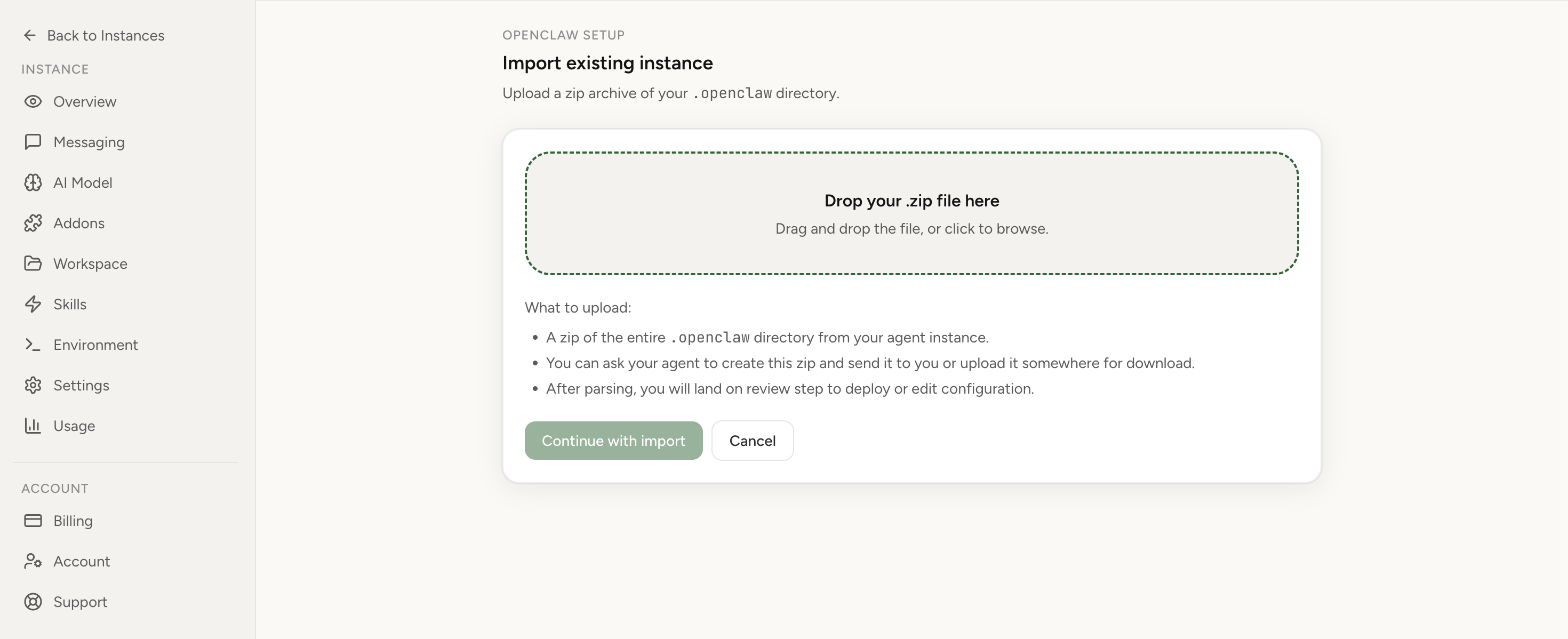
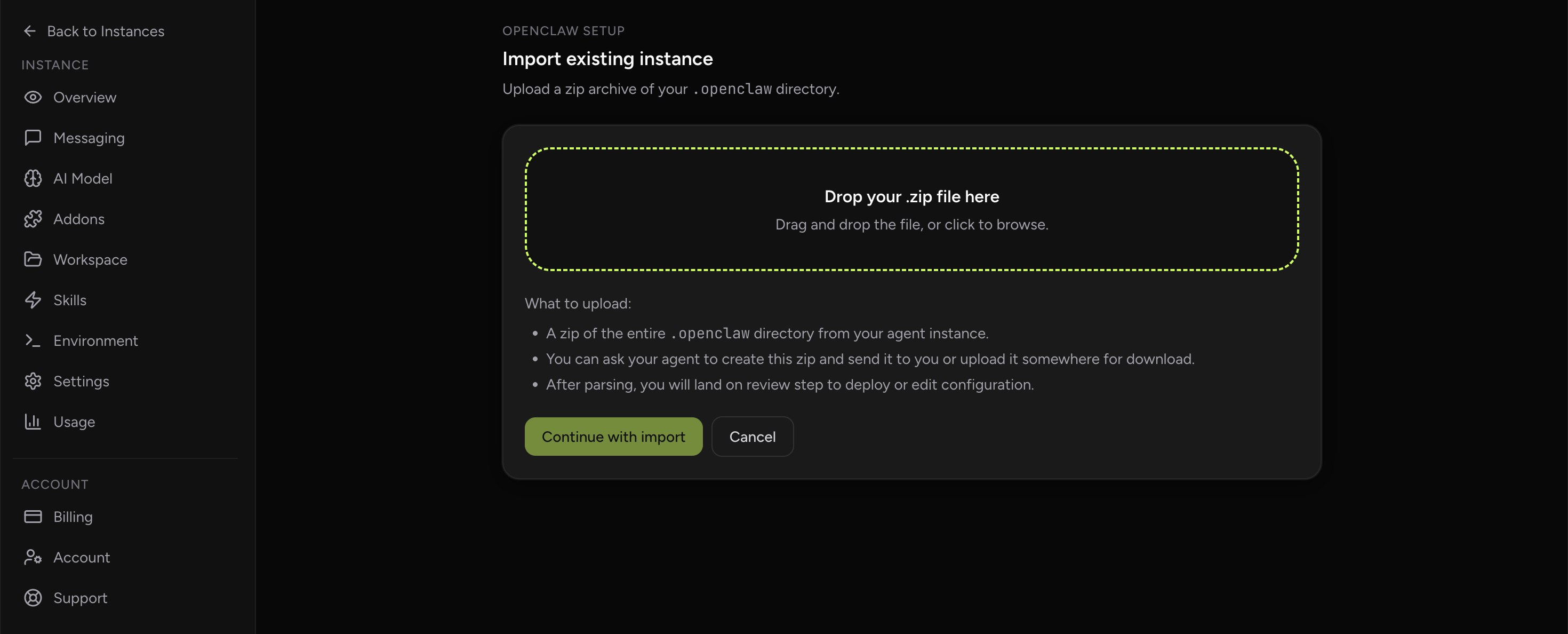
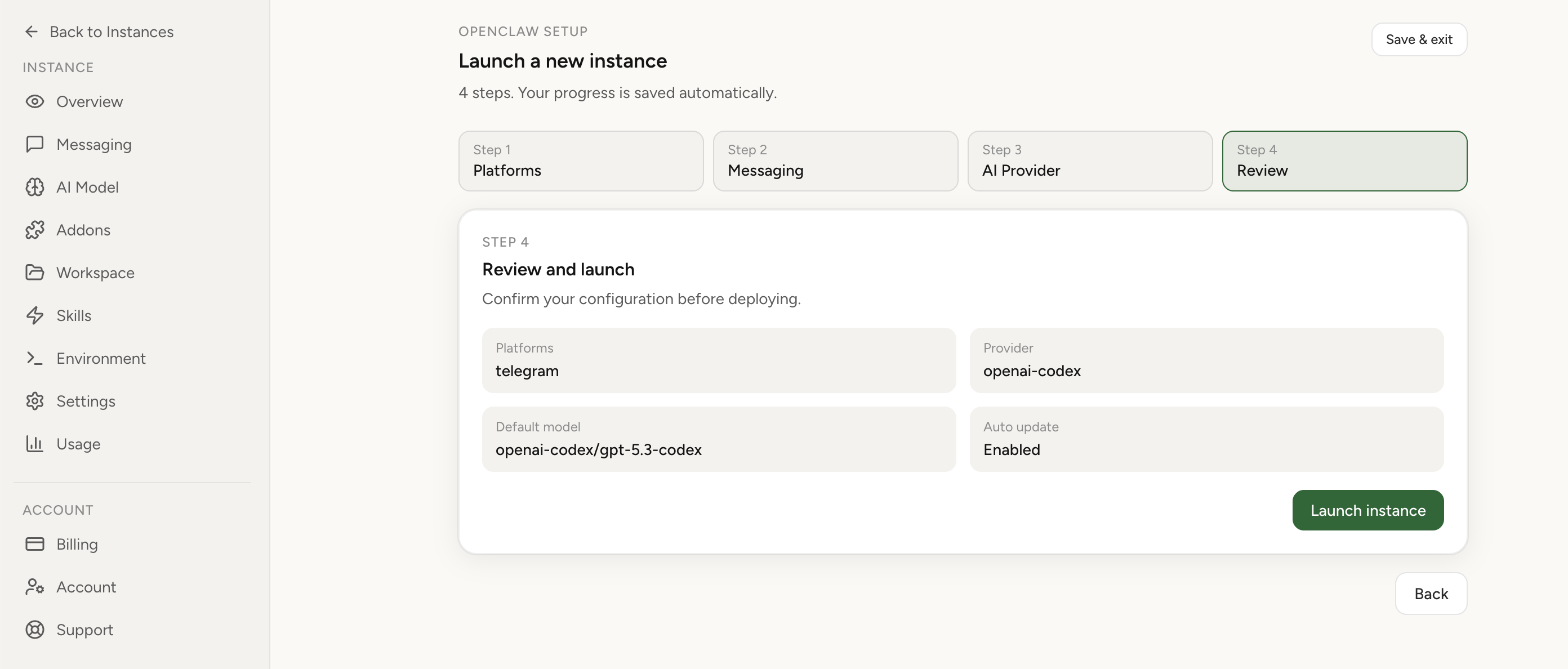
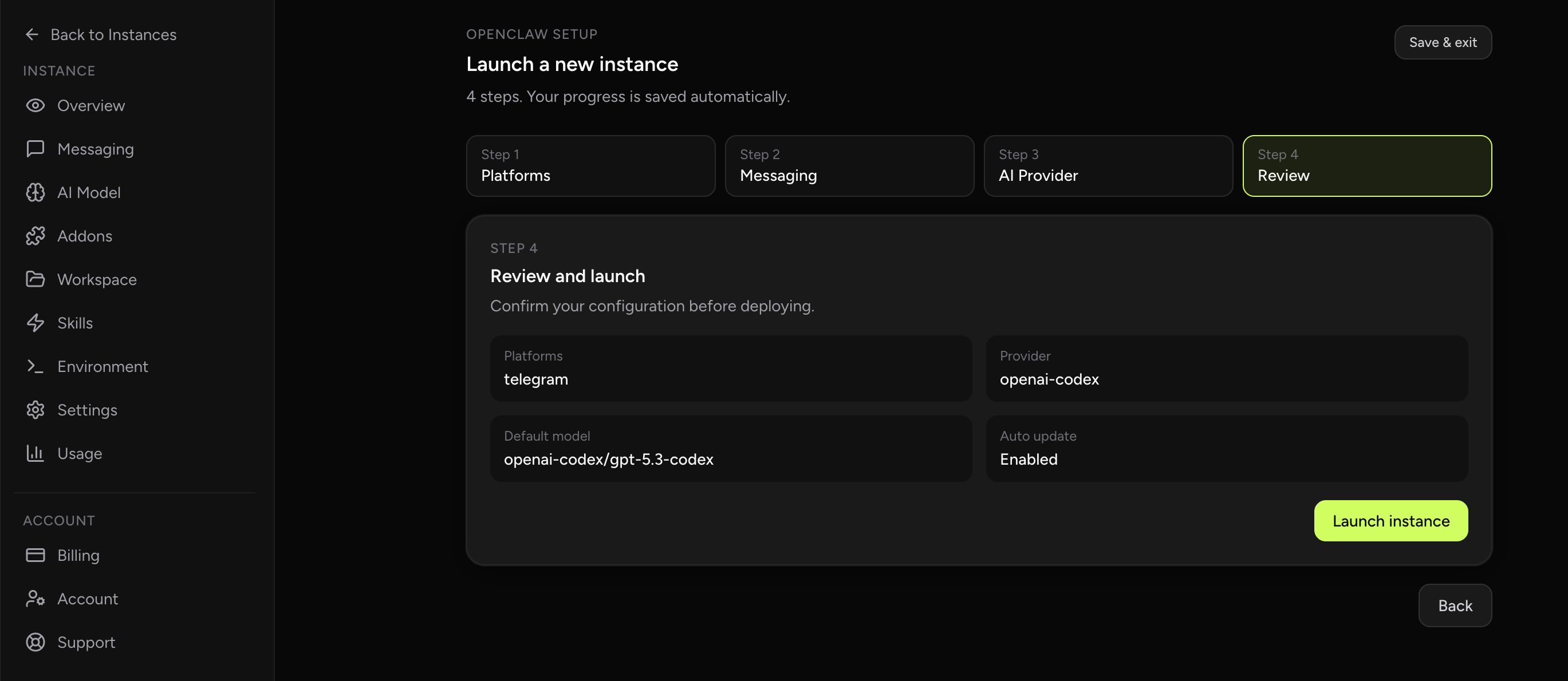
If this keeps coming back, you can move your existing setup to managed OpenClaw cloud hosting instead of rebuilding the same stack. Import your current instance, keep your context, and move onto a runtime with lower ops overhead.
- Import flow in ~1 minute
- Keep your current instance context
- Run with managed security and reliability defaults
If you would rather compare options first, review OpenClaw cloud hosting or see the best OpenClaw hosting options before deciding.
When to choose managed hosting over a constrained Pi
Raspberry Pi deployments are attractive for low cost and local control, but they have hard limits. If you need reliable always-on automation, large context windows, or multiple concurrent sessions, a 2 GB Pi will struggle. Every time OpenClaw releases a new feature that improves functionality, you may find your hardware pushed closer to its limits.
Managed hosting provides predictable resources, automatic scaling for memory-intensive operations, and tested upgrade paths that account for changing requirements. The decision comes down to whether you want to continuously tune memory limits on constrained hardware, or focus on workflows that take advantage of an unconstrained runtime.
A practical decision framework
If you enjoy hardware tinkering and accept occasional limitations, continue with your Pi and use the fixes in this guide. If you need reliability for business-critical automations or want to use OpenClaw's full feature set without memory constraints, compare managed OpenClaw hosting options or see how self-hosted vs managed deployments compare on cost and operational burden.
Common mistakes that prolong Pi instability
- Mistake: ignoring swap activity signs.
Correction: heavy swap use means RAM is fundamentally insufficient, not misconfigured. - Mistake: increasing heap limit to match full physical RAM.
Correction: leave room for OS and system processes; 80-85% of physical RAM is a safer ceiling. - Mistake: adding more software instead of removing load.
Correction: reduce feature usage and concurrent operations before declaring a Pi deployment unsalvageable. - Mistake: assuming OOM is a software bug.
Correction: treat it first as a resource constraint that can be mitigated, then investigate regressions. - Mistake: restarting repeatedly without monitoring.
Correction: add memory monitoring first to understand whether your fixes actually changed behavior.
FAQ
Will upgrading to Raspberry Pi 5 with 4 GB or 8 GB RAM solve this?
A Raspberry Pi 5 with more RAM will significantly improve stability. 4 GB is a comfortable baseline for OpenClaw, while 8 GB provides headroom for complex workflows. However, Pi 5 models are still limited by CPU performance and thermal throttling under sustained load.
Can I run OpenClaw successfully on 1 GB Raspberry Pi models?
It is technically possible but severely limiting. You would need to disable almost all memory-heavy features, run very small contexts, and accept frequent limitations. For most users, 1 GB is not enough for a practical OpenClaw deployment.
Is Docker better or worse for memory on Raspberry Pi?
Docker adds some overhead but also provides better isolation and resource control. You can set memory limits on containers to prevent runaway processes from taking down the entire system. For constrained hardware, properly configured Docker can be more stable than global installs.
Where should I start if I am new to OpenClaw on Raspberry Pi?
Begin with the setup guide at /openclaw-setup/, which covers installation and initial configuration. For Raspberry Pi specifically, consider starting with a known-stable version and adding heap limits before upgrading.