OpenClaw removed provider still selected: complete fix guide
Problem statement: you removed a provider (like OpenRouter) from your OpenClaw configuration through the dashboard, but the gateway
continues trying to select models from that removed provider.
The provider shows as removed in your settings, but your agent still attempts to use openrouter/... model IDs and fails or hangs.
- Issue #56206 (2026-03-28): Gateway continues selecting openrouter/... models after complete provider removal.
- Dashboard shows provider removed, but default-model config still references the old provider's model IDs.
- Gateway fails or hangs when attempting to use models from the removed provider.
Why removed providers stay selected in OpenClaw
OpenClaw's provider and model management system has two separate concepts: the list of configured providers with their credentials, and the default-model setting that specifies which model the agent should use. When you remove a provider through the dashboard, it updates the provider list, but the default-model configuration may still reference a model ID from the removed provider.
The problem occurs because these two configurations don't automatically stay in sync. If your default model is set to openrouter/gpt-4
and you remove the OpenRouter provider, the system should either prompt you to choose a new default model or automatically fall back to an available
provider. Instead, the gateway continues attempting to use the stale model reference, causing failures or hangs when it tries to route requests
to a provider that no longer exists in your configuration.
How OpenClaw provider management should work
Understanding the intended provider management flow helps you spot where it's breaking. In a properly configured OpenClaw deployment:
- Provider catalog: Backend maintains a catalog of available providers with their supported models and auth requirements.
- Provider configuration: Dashboard AI Model section allows adding and removing providers, storing credentials per provider.
- Default model selection: Default model is chosen from models across all configured providers, stored as a model ID string.
- Runtime canonicalization: Gateway canonicalizes provider IDs at runtime to ensure compatibility with stored model IDs.
- Config update flow: When providers are added or removed, config regeneration updates all affected settings and restarts the instance.
When the default model isn't updated after provider removal, the canonicalization step attempts to map a stale model ID to non-existent provider configuration, causing the gateway to fail when trying to use that model.
Evidence from the field: provider management implementation
First-party implementation details show that provider management involves split providers, runtime canonicalization, and config regeneration flows. The provider split worklog confirms that different auth-mode variants exist as separate backend providers, and runtime canonicalization handles provider ID normalization for model validation and compatibility.
What our implementation confirmed
- Provider split created separate backend providers for auth-mode variants like
anthropic-claude-codeandgoogle-gemini-cli. - Runtime canonicalization maps split providers to canonical runtime providers for default-model compatibility.
- Dashboard AI Model section supports add/edit/default-model filtering with real split provider IDs.
- Config update flow for add/remove provider operations requires instance restart to load new configuration.
This means the root cause is typically that the default-model setting isn't automatically cleared or updated when its associated provider is removed, leaving a dangling reference that the gateway attempts to resolve on every request.
Fast triage: confirm the stale provider issue in 10 minutes
- Check dashboard provider list: verify the provider appears removed in the AI Model section of your OpenClaw dashboard.
- Check default model setting: see what model is currently set as default and whether it references the removed provider.
- Test agent behavior: send a test prompt and observe whether the gateway fails or hangs trying to reach the removed provider.
- Review gateway logs: look for errors mentioning the removed provider or model canonicalization failures.
- Check for restart: verify whether the instance actually restarted after the provider removal operation.
If the provider is gone from your dashboard but the default model still references it, and gateway logs show attempts to use that provider, you've confirmed a stale provider reference issue.
Step-by-step diagnostic and fix playbook
Step 1: Verify the provider is actually removed
Open the OpenClaw dashboard and navigate to the AI Model section. Confirm that the provider you intended to remove no longer appears in the configured providers list. If it still shows up, the removal didn't complete and you should retry the remove operation.
Step 2: Check the default model setting
Look at the default model dropdown or setting. If it shows a model ID from the removed provider (like openrouter/gpt-4 or similar),
this is the problem. The default model should be changed to a model from an active provider. Select a different model from the available options
and save the setting.
Step 3: Force instance restart
Provider add/remove operations require instance restart to take effect. If you removed the provider but the gateway didn't restart, trigger a manual restart from the dashboard or CLI. The restart should load the updated configuration and clear any cached provider references.
Step 4: Clear model catalog cache if applicable
Some OpenClaw deployments cache the model catalog or provider mappings. If you have access to the instance filesystem, check for cached catalog files in the OpenClaw configuration directory and remove them. After clearing cache, restart the instance to force a fresh catalog fetch.
Step 5: Verify provider removal in instance configuration
If you have shell access to the instance, check the actual configuration files. Look for the removed provider in environment variables, config files, or database entries. If you find stale references, update the configuration to remove them and restart the instance.
Step 6: Test with a new conversation
After fixing the default model and restarting, start a new conversation or test prompt. The gateway should now use the updated default model from an active provider. Verify that prompts complete successfully and that gateway logs show requests going to the correct provider.
Practical diagnostics teams skip (and regret skipping)
- Assuming dashboard removal is enough: removing a provider in the UI doesn't automatically update dependent settings like default model.
- Not checking default model after provider changes: the default model is the most common place where stale provider references hide.
- Forgetting restart requirement: provider changes require full instance restart; hot-reload may not catch all config updates.
- Ignoring gateway logs: logs often show exactly which provider the gateway is trying to use and why it's failing.
- Testing only through old conversations: existing conversations may have cached model choices; start fresh to verify the fix.
Edge cases that can mislead your debugging
Not every model selection failure after provider removal is caused by stale default-model configuration. Watch for these edge cases:
- Per-agent model overrides: in multi-agent setups, each agent may have its own model setting that needs updating separately.
- Hardcoded model IDs in workflows: skills or workflows may explicitly specify model IDs that don't respect the default model setting.
- Provider temporarily down: the provider may still be configured but experiencing an outage, making it look like a removal issue.
- Model catalog sync delay: the model catalog may not have refreshed yet, showing models from providers that were just removed.
- Channel-specific model settings: some integrations may override the default model at the channel level (Telegram, Slack, etc.).
How to verify the fix is working
- Default model setting shows a model from an active, configured provider.
- Test prompts complete successfully without provider-related errors.
- Gateway logs show requests being routed to the expected provider.
- Removed provider no longer appears in any configuration files or database entries.
- Future provider add/remove operations update the default model automatically or prompt for selection.
Common mistakes that prolong this issue
- Removing a provider without first setting a new default model from a different provider.
- Restarting only individual services instead of the full instance, leaving stale config in memory.
- Not checking all places where model selection happens: default, per-agent, channel-specific, and workflow-specific.
- Assuming the UI reflects reality when backend config files may have cached or stale entries.
- Reporting the bug without collecting the current default-model setting and gateway logs showing the failed provider lookup.
Prevention: safe provider management practices
When managing providers in OpenClaw, always update the default model before removing the provider it depends on. If you need to remove a provider that supplies your default model, first choose a new default from a different provider, save that change, then remove the unwanted provider. This ordering prevents dangling references and ensures continuous operation. For teams managing multiple instances, consider documenting which models and providers each instance uses to avoid accidental removal of active providers.
When to consider managed hosting
Provider management and configuration consistency add operational complexity to self-hosted OpenClaw deployments. If you spend significant time debugging provider configuration, chasing stale references, or coordinating configuration changes across multiple instances, managed hosting may reduce the burden. Hosted environments handle provider management, model selection, and configuration updates at the platform level. Compare tradeoffs at /compare/. If you want reliable provider management without handling config plumbing yourself, review /openclaw-cloud-hosting/.
Fix once. Stop recurring stale provider reference issues.
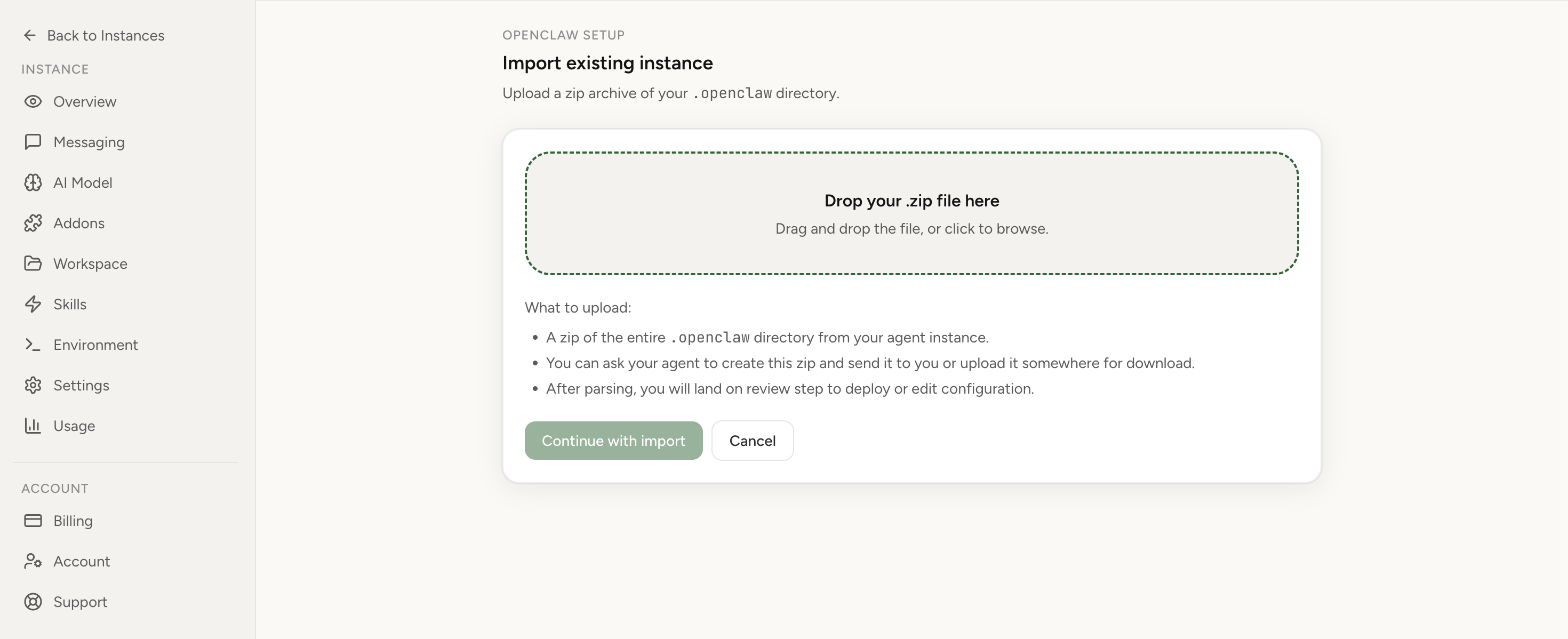
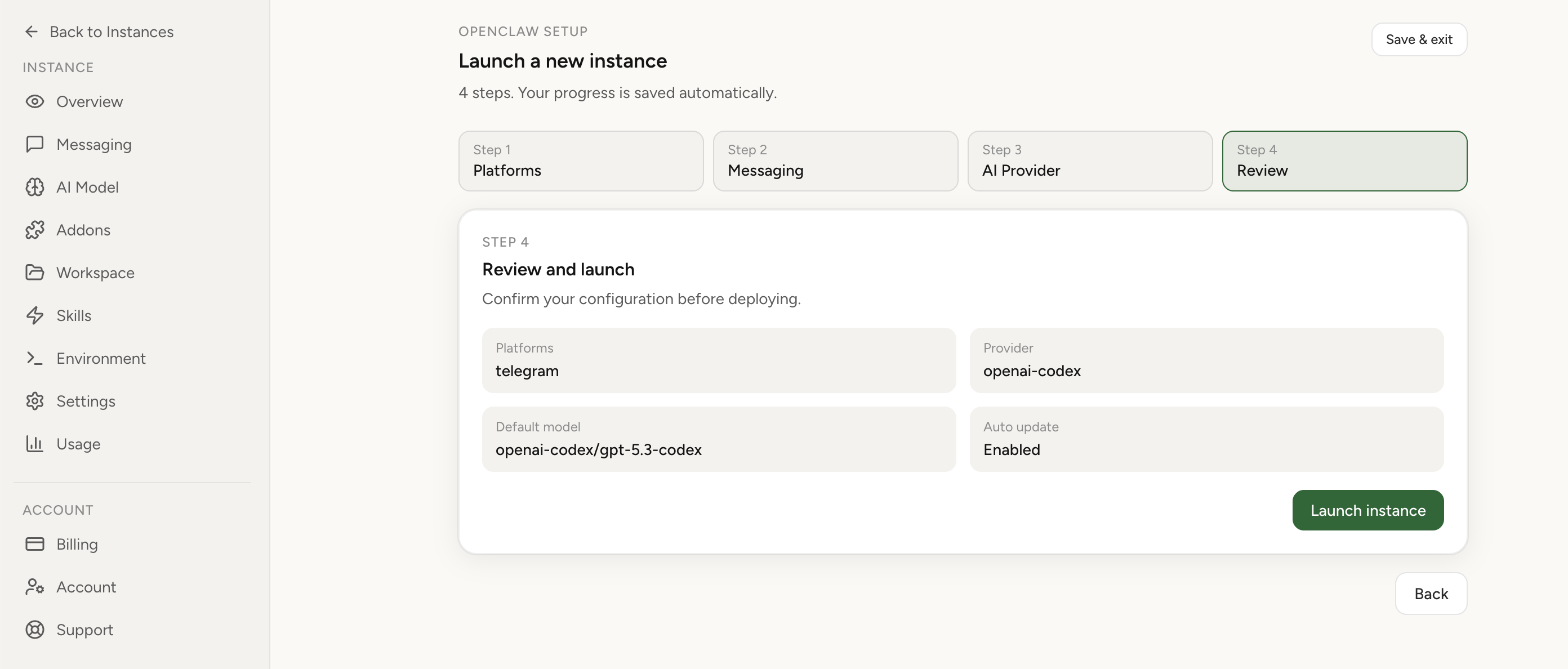
If this keeps coming back, you can move your existing setup to managed OpenClaw cloud hosting instead of rebuilding the same stack. Import your current instance, keep your context, and move onto a runtime with lower ops overhead.
- Import flow in ~1 minute
- Keep your current instance context
- Run with managed security and reliability defaults
If you would rather compare options first, review OpenClaw cloud hosting or see the best OpenClaw hosting options before deciding.
FAQ
Do I need to remove all references to a provider before deleting it?
Yes, ideally. Update the default model, check for any per-agent model overrides, and review skills or workflows that might explicitly specify models from that provider. Removing these references before deleting the provider prevents dangling configuration.
What if I don't have another provider configured?
Add a new provider first before removing the old one. OpenClaw requires at least one active provider to function. Configure the new provider, set its model as default, verify it works, then remove the unwanted provider.
Does this affect multi-agent deployments differently?
Multi-agent deployments can be more complex because each agent may have its own model configuration. You'll need to check the default model setting at the instance level and also any agent-specific model overrides. The same fix applies: update all model references before removing the provider they depend on.
Sources
- OpenClaw issue #56206 (opened 2026-03-28) — Gateway continues selecting removed provider models
- First-party implementation:
docs/worklog/2026-02-12-provider-split-anthropic-google.md— provider split and canonicalization - Product specification:
docs/SPEC.mdsections 7 and 9 — instance configuration and dashboard features - Product specification:
docs/SPEC.mdsection 12 — API endpoints for provider and default-model management