OpenClaw startup crash after the March 12 upgrade: how to recover without making it worse
Problem statement: OpenClaw was working, you upgraded, and now the gateway crashes before the assistant becomes usable.
A fresh GitHub report from 2026-03-13 shows one especially painful signature:
Cannot access 'ANTHROPIC_MODEL_ALIASES' before initialization.
This kind of failure is dangerous because it hits before normal workflows even start. Teams often react by deleting config,
reinstalling everything, or mixing version changes with config edits. That usually makes recovery slower, not faster.
- GitHub issue #44781 opened on 2026-03-13 reports startup crash with the
ANTHROPIC_MODEL_ALIASESinitialization error. - The March 12 docs and release activity also show multiple runtime and config-touching changes, which raises the odds of upgrade-related breakage for operators who update quickly.
Why this crash feels worse than a normal bug
A runtime bug inside a working agent session is painful, but at least you can still inspect the environment and often ship a workaround. A startup crash is different. It takes away the control plane, the healthy status path, and your confidence all at once. If OpenClaw powers inbound channels, scheduled work, or browser automations, the business impact starts immediately. The right mindset is not “how do I get lucky fast?” but “how do I restore service with the least added damage?”
That means two goals in order: first, recover a working state; second, understand the failure well enough that you do not repeat it on the next update.
What this crash usually means in practice
The new report points to an initialization-order problem rather than a simple bad credential or missing environment variable. In plain English: something in the runtime is being referenced before it is ready. When that happens during boot, the process can die before health checks or normal UI paths recover. Operators often waste time checking channels, API keys, or browser settings first. Those are worth checking later, but they are not the first move when the crash happens before boot completes.
The safe response sequence
1) Freeze the state before you “fix” anything
Do not immediately reinstall. Do not overwrite config. Do not pull more changes. Record the exact version you upgraded from and to, save the startup logs, and note whether the crash appears under the same command every time. If you run through a service manager, capture both service logs and one manual foreground start attempt. Your first 10 minutes should create evidence, not destroy it.
- Record the version before upgrade and the current version.
- Capture the full stack trace and exact startup command path.
- Keep a copy of the current config before editing anything.
- Note whether the crash happens with the same error every run.
2) Separate release regression from local corruption
This is the most important fork in the road. If the problem reproduces right after an upgrade and matches a fresh upstream report, you are likely dealing with a release regression. If the stack trace changes constantly, or only one machine is affected while another with the same version is healthy, local drift becomes more likely. Those are different incidents and they should not share the same response plan.
3) Check whether a clean rollback restores service
A rollback is not surrender. It is often the fastest way to protect a live workflow. If a known-good version starts cleanly with the same config, you have strong evidence that the new build is the problem. That is much more useful than spending an hour guessing at unrelated settings.
4) Avoid destructive “cleanup” too early
People under pressure often delete caches, remove workspaces, or rebuild auth state. That can turn one upgrade regression into three new problems. Unless you have positive evidence of damaged local state, keep your edits reversible. The goal is a narrow change history you can reason about.
5) Inspect config only after you confirm the boot path
Once you know whether the older version works, review config for any recent provider, model, or alias changes. Pay special attention to custom model blocks, provider merges, environment overrides, and any edits made near the upgrade window. You are not looking for random differences. You are looking for interactions that could affect initialization order.
A practical diagnosis checklist
- Run one foreground startup and capture the complete error output.
- Verify whether the same stack trace appears under the service manager.
- Compare with current upstream reports and release notes.
- Start a known-good version with the same config if available.
- Only after that, inspect model/provider config for recent changes.
Root-cause patterns worth checking
- Initialization order regression: a symbol is referenced before the relevant module has completed boot.
- Version mismatch across wrappers: the app, service wrapper, and CLI are not actually running the same build.
- Stale service environment: service manager still uses old environment after partial update.
- Custom provider config edge case: advanced model/provider overrides trigger a code path basic setups never touch.
- Mixed install methods: npm, package manager wrappers, and cached launch artifacts point at different binaries.
How to recover service fast without cutting corners
If this system matters to your day-to-day work, service restoration should be boring and disciplined. The cleanest short-term path is usually: pin to the last working version, verify a healthy boot, confirm one inbound channel and one scheduled workflow, and postpone deeper experimentation until the fire is out. If you are responsible for a team setup, communicate that clearly. “We have restored service on the previous known-good version” is much better than “we are still trying things.”
If upgrades keep interrupting live work, compare operating models at /compare/, review the managed environment at /openclaw-cloud-hosting/, and keep the baseline self-host path documented at /openclaw-setup/. The right choice depends on whether your team wants to own release recovery every time.
Fix once. Stop recurring startup crash incidents after upgrades.
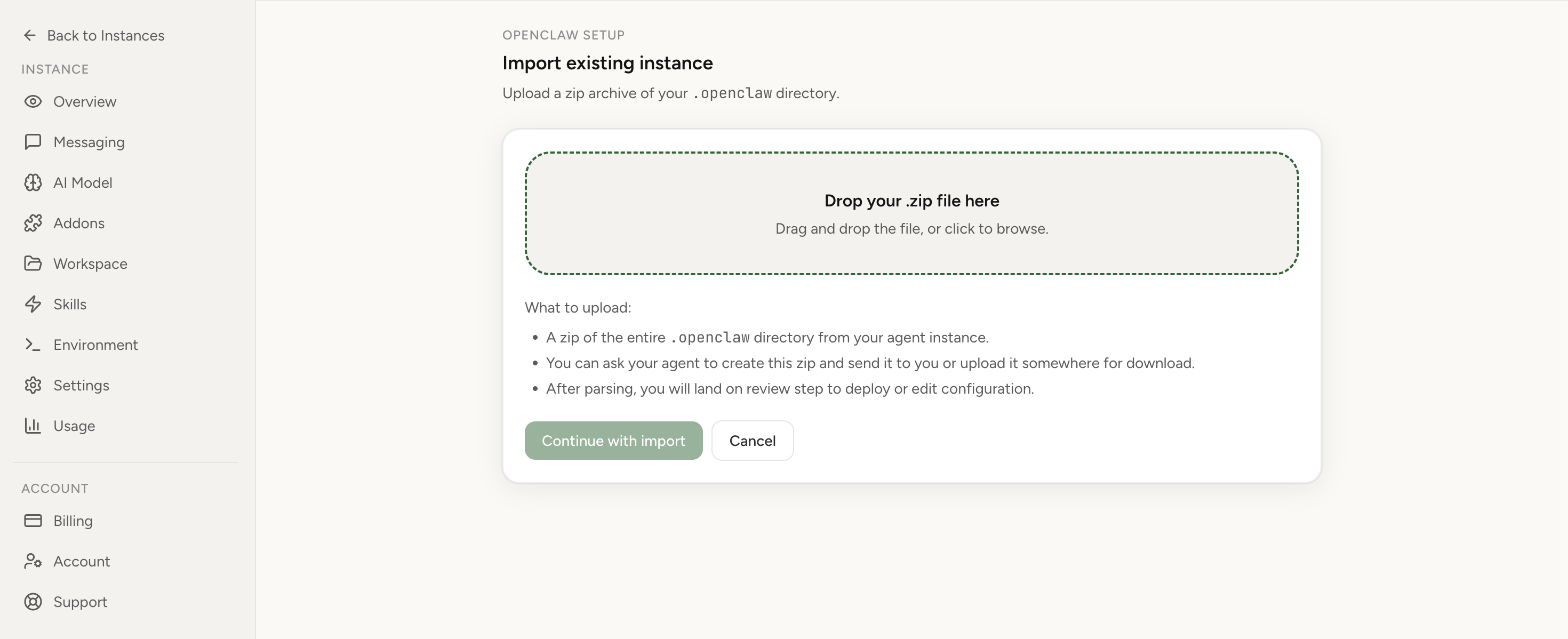
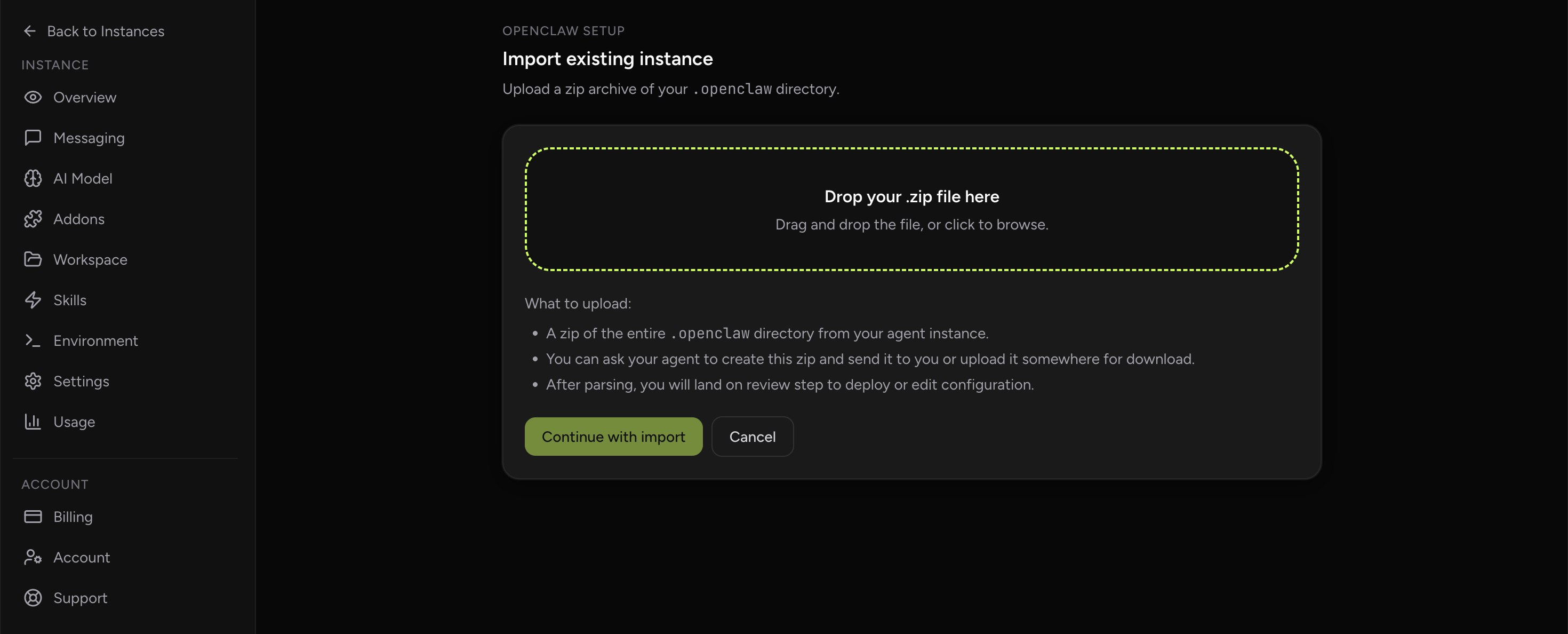
If this keeps coming back, you can move your existing setup to managed OpenClaw cloud hosting instead of rebuilding the same stack. Import your current instance, keep your context, and move onto a runtime with lower ops overhead.
- Import flow in ~1 minute
- Keep your current instance context
- Run with managed security and reliability defaults
If you would rather compare options first, review OpenClaw cloud hosting or see the best OpenClaw hosting options before deciding.
Step-by-step recovery playbook
Step 1: Confirm the blast radius
Check what is actually down. Is the gateway dead? Are only the UI and service wrapper failing? Are channels still delivering messages but the local interface is broken? The answer changes urgency. A startup regression on a lab machine is annoying. A startup regression on the instance handling daily inbound work is an outage.
Step 2: Preserve logs from the failing version
Save one full failing boot trace. If you later escalate upstream, this trace will matter more than a vague description. Good escalation includes version, OS, install method, exact error text, and whether rollback fixes it. Poor escalation just says “it crashes now,” which slows everybody down.
Step 3: Roll back only one variable at a time
Do not roll back version and edit config and rebuild service files in the same attempt. Change one variable. Test. Record outcome. Regressions are easiest to understand when your own process does not add chaos.
Step 4: Verify one real workflow, not just boot
A clean start is necessary but not sufficient. After rollback or patching, validate one real workflow end to end: a message comes in, the assistant runs, and output goes back out. If you rely on scheduled work, also verify one cron or heartbeat path. Recovery is not complete until useful work has resumed.
Step 5: Put a release gate in front of future upgrades
Teams that keep getting burned by upgrades usually have no release gate. Add one. That can be as simple as canarying one environment, running a smoke test, and only then updating the main instance. You do not need enterprise bureaucracy. You need a habit that prevents one upstream regression from taking down your only working copy.
Edge cases that fool experienced operators
- Service wrapper points at old Node runtime: manual run and service run behave differently.
- macOS or Linux service manager kept old environment: restart sequence looks complete but boot still uses stale variables.
- App and CLI mismatch: desktop app expects one runtime version while global CLI provides another.
- Multi-host confusion: one machine was upgraded, another was not, and people compare the wrong state.
- Provider alias customization: custom model/provider blocks hide the real trigger.
How to know the problem is truly fixed
- Gateway starts cleanly more than once in a row.
- One channel workflow completes end to end.
- One scheduled workflow completes end to end.
- No repeat crash appears in startup logs after restart.
- The exact working version and config state are recorded.
Typical mistakes that prolong this outage
- Deleting workspace or config before collecting evidence.
- Assuming the problem must be credentials because the error mentions a provider symbol.
- Trying five changes at once and losing the signal.
- Declaring success after one clean boot without testing real work.
- Re-upgrading immediately without a canary or rollback note.
When managed hosting becomes the calmer option
Some teams genuinely prefer full control and are good at release discipline. For them, self-hosting can still make sense. But if your pattern is “an upgrade lands, productivity stops, one person loses half a day doing incident response,” then the true cost is not the VPS price. It is the interruption. That is exactly why it helps to compare self-managed recovery burden against a managed runtime with tested defaults and a clearer upgrade path.
A sharper decision question
Ask: do we want to keep owning upgrade triage as an operating responsibility, or do we want to spend that time on the workflows OpenClaw is supposed to unlock? If the second answer is winning, start with Import your current OpenClaw instance in 1 click and evaluate the production path before the next surprise update window.
FAQ
Should I wait for upstream before doing anything?
Not if this is an active outage. Restore a known-good version first, then monitor the upstream issue for the permanent fix.
Is this definitely caused by the March 12 upgrade?
You still need to confirm that with a rollback or version comparison. Fresh reports make it plausible, but the safest conclusion comes from your own reproduction evidence.
Can clearing caches solve it?
Sometimes, but that should not be your first move. Without evidence, aggressive cleanup often hides the real failure mode and complicates rollback.