OpenClaw Telegram media download fix behind proxies: how to restore image and file handling
Problem statement: your Telegram bot is alive, text messages may still arrive, but image or file workflows suddenly break. A fresh March 13 GitHub issue reports this exact pattern when a proxy is configured. That makes it a nasty operator problem: the setup looks partly healthy, so teams chase the wrong layer for too long. If your OpenClaw workflows depend on photos, screenshots, documents, or voice/media inputs, partial Telegram health is not real health.
- GitHub issue #44771 opened on 2026-03-13 reports Telegram media download failure when a proxy is configured.
- Earlier troubleshooting traffic already showed Telegram proxy sensitivity in restricted networks, but this new report narrows the pain to media retrieval rather than total polling failure.
Why this incident is easy to misread
Operators often assume that if a Telegram bot responds to /start or receives plain text, the Telegram path is fine.
That assumption breaks down once media is involved. Telegram media handling is a multi-stage path: message intake, metadata handling,
file lookup, file download, local path handoff, and then tool execution. A proxy misconfiguration, provider regression, or file-path bug can break one stage while leaving earlier stages intact.
In other words, “text works” is not evidence that “Telegram works.” It only proves that one slice of the pipeline is alive.
Where the failure usually happens
- Proxy reaches Telegram API but not the file download host or applies different rules to each.
- Environment variables exist but the media-fetch path does not honor them consistently.
- Provider logic retrieves Telegram metadata correctly but mishandles the downloaded file path.
- Proxy credentials or TLS behavior work for polling but break on follow-up download requests.
- Retries hide the real error and leave operators thinking the agent itself is at fault.
The right diagnosis order
1) Reproduce with one known file type
Start with a single image or small document you control. Do not test with five attachment types at once. You want a clean reproduction that you can repeat. Record the exact timestamp and message content so you can line it up with logs.
2) Confirm the difference between text and media
Send a plain text message and then an image. If text reaches the agent but the image does not complete the workflow, you have already narrowed the issue away from total channel outage. That saves time and points you at the file path.
3) Check the proxy path end to end
The useful question is not “is the proxy set?” but “does the exact media retrieval path work through the proxy the same way polling does?” Some environments allow initial API requests but choke on the subsequent file download host, TLS handshake, or header behavior.
4) Inspect downloaded file path handling
If the download succeeds but the agent still cannot use the file, the problem may be path handoff rather than network transport. The fresh Feishu issues from the same day are a reminder that media bugs can come from filename/path mismatches too, not just connectivity.
5) Verify one full user-facing workflow
Your goal is not “log looks better.” Your goal is “user sends image, OpenClaw sees it, processes it, and returns a useful reply.” End-to-end proof matters more than partial green lights.
Practical troubleshooting sequence
- Capture a clean success case for text and a clean failure case for media.
- Verify proxy environment placement in the actual runtime, not only in your shell.
- Test whether both metadata and file download requests can traverse the same proxy path.
- Check file-size and file-type edge cases with one small image first.
- Inspect whether the downloaded file path is handed correctly to the tool layer.
How to tell network failure from path failure
This distinction matters because the fixes are different. A network failure usually shows up as timeouts, proxy auth trouble, TLS errors, or missing file retrieval. A path failure appears later: Telegram reports success, the file may even download, but the agent or tool cannot locate or process it. If you skip this distinction, you can spend hours tuning proxy settings for a bug that actually lives in local handoff logic.
Edge cases that cause false conclusions
- Different network rules for API requests and file downloads: one succeeds, the other fails silently or late.
- Proxy configured in shell but not in service manager: manual tests pass, production runtime fails.
- Large media behaving differently from small media: the problem looks random until you test file size deliberately.
- One attachment type only: images fail but documents work, or vice versa.
- Filename encoding or path normalization: download completes, but local handoff breaks.
What to change first if you need a fast recovery
Reduce variables. Temporarily move the instance to a cleaner outbound network path, or route the workflow through an environment where Telegram media is known to work. That is often faster than trying to perfect a brittle proxy chain while users wait. If your setup must remain in a restricted environment, lock down one proven proxy configuration and test it with small media first before reintroducing heavier file workflows.
Compare self-managed network complexity against a cleaner deployment path at /compare/, review the hosted option at /openclaw-cloud-hosting/, and keep the baseline self-hosted setup reference at /openclaw-setup/. If file handling keeps breaking under regional or proxy constraints, the cheapest server is rarely the cheapest operating model.
Fix once. Stop recurring Telegram media download failures.
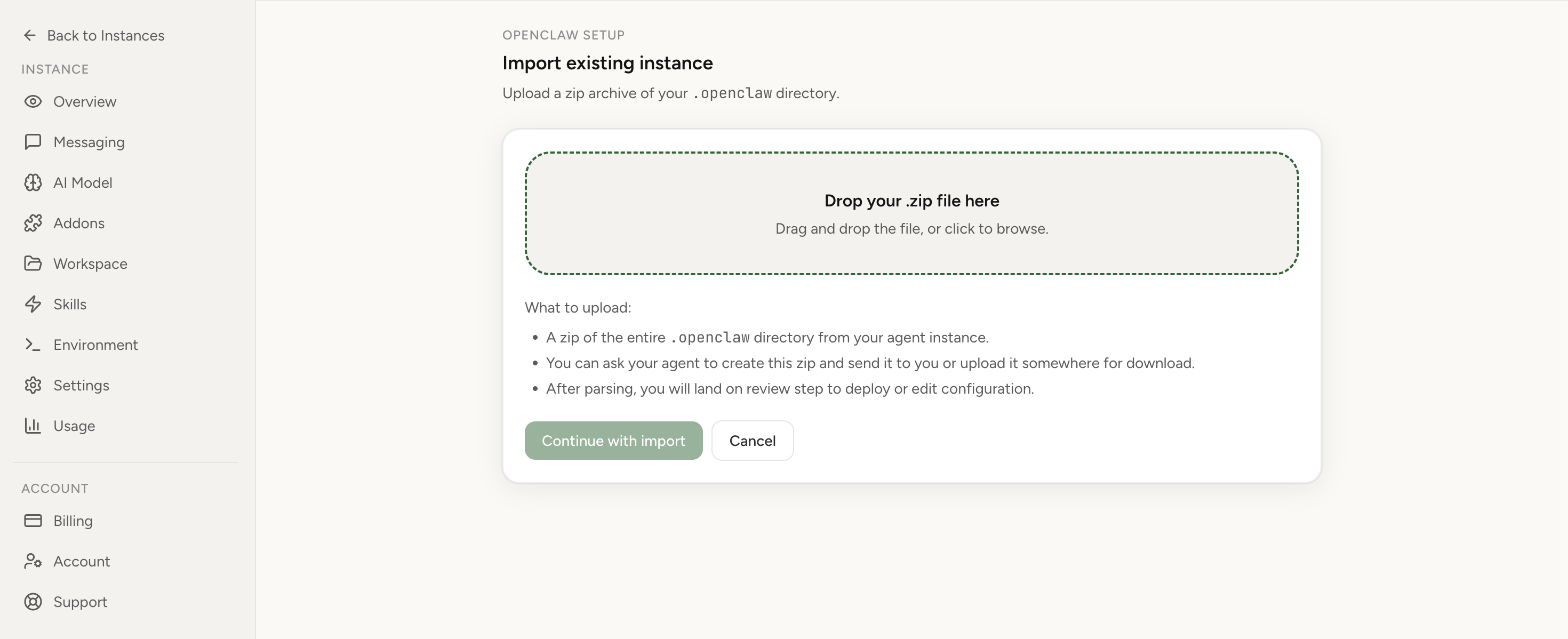
If this keeps coming back, you can move your existing setup to managed OpenClaw cloud hosting instead of rebuilding the same stack. Import your current instance, keep your context, and move onto a runtime with lower ops overhead.
- Import flow in ~1 minute
- Keep your current instance context
- Run with managed security and reliability defaults
If you would rather compare options first, review OpenClaw cloud hosting or see the best OpenClaw hosting options before deciding.
Step-by-step fix playbook
Step 1: Verify the runtime that really handles Telegram
Many teams test in one shell and forget that OpenClaw actually runs via a service, container, or remote host with different environment variables. Make sure the runtime that receives Telegram events is the runtime you are inspecting. This single check catches a surprising number of proxy incidents.
Step 2: Use one controlled media sample
Pick a small PNG or JPEG first. Avoid giant videos, unusual codecs, or files with odd names until the baseline works. You need a clean “pass/fail” test that keeps the signal obvious.
Step 3: Watch for the handoff moment
The critical question is: after Telegram delivers the update, do you see file lookup, file retrieval, local write, and tool invocation? Whichever step is missing is the real failure boundary. That is where you focus next.
Step 4: Remove one layer of network complexity
If you can test without an extra proxy, tunnel, or container hop, do it. One controlled run on the simplest viable network path can tell you whether the proxy is the root cause or just a suspect.
Step 5: Validate more than one attachment after the first win
Once a small image works, test a second media type that matters to you, such as a PDF, voice note, or screenshot. This protects you from declaring victory on a narrow case while the broader workflow is still broken.
Typical mistakes that waste time
- Assuming Telegram is healthy because text messages arrive.
- Changing proxy settings without confirming which runtime actually uses them.
- Testing only giant files and concluding the whole channel is broken.
- Ignoring path and filename handling after download succeeds.
- Reinstalling everything before isolating the failing stage.
How to verify the issue is actually solved
- Text and image messages both complete the full workflow.
- One additional file type also completes successfully.
- No media-related errors recur in logs during repeated tests.
- The proven proxy or network path is documented for future operators.
- You know whether the root cause was transport, service environment, or file handoff.
When to move from fixing to redesigning
If your users depend on media workflows every day, and you keep paying a tax for regional connectivity, fragile proxies, or multi-hop runtime complexity, it may be time to redesign the deployment rather than fight the same incident each week. Reliable Telegram media handling is not a luxury feature for many teams. It is core input. That makes recurring file failures a platform problem, not just a nuisance.
A practical migration CTA
If this channel keeps slipping because of proxy complexity, start with Import your current OpenClaw instance in 1 click, then compare your options on /compare/. It is often faster to keep your working context and move the runtime than to keep re-debugging the same network edge case.
FAQ
Does this mean my Telegram bot token is wrong?
Not usually. If text works, your token path is often fine. The problem is more likely in the media retrieval path or how the runtime handles downloaded files.
Can the proxy still be the problem if polling works?
Yes. Media retrieval can traverse a different host, request pattern, or TLS path than polling, so partial success does not clear the proxy.
Should I just disable media workflows?
Only as a temporary containment step. If screenshots, photos, or documents are part of the reason you run OpenClaw, disabling them is a business compromise, not a fix.