OpenClaw WhatsApp reconnect loop after idle heartbeat: how to break the cycle
Problem statement: your OpenClaw WhatsApp gateway works fine when active, but after approximately 30 minutes of idle time, it enters a cascading reconnect loop. The logs show repeated disconnect/reconnect churn with status 499, occurring roughly every 60 seconds. This is not random network flakiness. It is a specific behavior pattern where an aggressive idle heartbeat triggers a reconnect that fails to reset the idle counter, causing the gateway to stuck in a recovery loop that continues indefinitely until manual intervention.
- GitHub issue #55030 documents the aggressive 30-minute heartbeat behavior that triggers idle reconnects, followed by cascading reconnect attempts every ~60 seconds with status 499 because the idle counter does not reset properly.
- Our production environment observed identical WhatsApp gateway instability overnight with repeated disconnect/reconnect churn showing status 499, confirming this is not a theoretical issue but an active operational problem affecting live deployments.
- The issue pattern is consistent: idle for 30 minutes, heartbeat fires, reconnect attempt succeeds briefly, then immediately drops back into a loop because the idle state logic never cleared.
Why this specific pattern matters
Most WhatsApp gateway issues look like standard connectivity problems: network drops, session expires, or auth token failures. This pattern is different because it is predictable and self-sustaining. It only starts after the gateway has been idle for about 30 minutes, and once triggered, it does not self-correct. The 60-second cadence of status 499 errors is the signature that tells you this is the heartbeat loop bug, not ordinary network instability.
Understanding this distinction matters because treating it like a generic connection problem will not fix it. Restarting the gateway temporarily clears the symptom, but the idle timer starts counting again from zero. If your deployment has natural idle periods, you will hit the same 30-minute trigger again.
How to confirm you have the heartbeat loop issue
- Check the timing: does the reconnect storm start roughly 30 minutes after the last active WhatsApp message or interaction?
- Look for status 499: grep your gateway logs for "499" patterns and confirm they appear in rapid succession.
- Measure the cadence: calculate the time between consecutive 499 errors. If it is consistently around 60 seconds, you have the heartbeat loop.
- Verify the idle counter: if you send a manual message, does the loop temporarily stop, then resume after another 30-minute idle period?
- Rule out network issues: if other services on the same host are stable during the WhatsApp reconnect storm, the problem is isolated to the gateway heartbeat logic.
Immediate containment procedures
When you first notice the pattern, your immediate goals are to stop the churn and restore stable WhatsApp connectivity without introducing new instability.
- Stop the gateway cleanly: use a proper shutdown command rather than force-killing the process to avoid corrupting session state.
- Clear stale session state: remove any lingering WhatsApp session files that might preserve the broken idle counter after restart.
- Restart with monitoring: bring the gateway back up with log verbosity increased so you can see the exact moment the heartbeat fires.
- Inject artificial activity: during the restart window, send a test WhatsApp message every 20 minutes to prevent the idle timer from reaching the 30-minute trigger.
- Document the trigger time: note exactly when the gateway went idle before the restart so you can predict the next 30-minute window.
Short-term workarounds that reduce impact
While upstream fixes are tracked and deployed, you can use operational patterns to reduce the frequency and impact of the heartbeat loop.
Workaround 1: Reduce the idle window
If you can inject activity into the WhatsApp session before the 30-minute mark, the aggressive heartbeat never fires. This can be automated with a lightweight keepalive script that sends a minimal heartbeat message or ping every 25 minutes. The downside is additional message traffic and the need to maintain the automation.
Workaround 2: Scheduled gateway recycling
Rather than waiting for the random idle trigger, restart the WhatsApp gateway on a predictable schedule that is shorter than 30 minutes. For example, a cron job that gracefully restarts the gateway every 20 minutes will preempt the heartbeat bug entirely. This trades frequent controlled restarts for uncontrolled reconnect storms.
Workaround 3: Monitor and auto-recover on pattern detection
Implement log monitoring that detects the signature 499 every ~60 seconds pattern and triggers an automated gateway restart. This does not prevent the initial trigger, but it limits the duration of the reconnect storm before it consumes significant resources.
Long-term resolution paths
The fundamental issue is a logic bug in how the idle heartbeat and reconnect state interact. Complete resolution requires either an upstream fix or a deployment model that handles WhatsApp gateway lifecycle in a way that avoids the buggy code path.
Path 1: Track and apply upstream patches
Monitor GitHub issue #55030 for progress on the heartbeat loop fix. Once a patch is released, upgrade promptly and verify that the idle counter now resets correctly after heartbeat-triggered reconnects. Test in a staging environment first by intentionally idling the gateway for 40 minutes and confirming no 499 storm appears.
Path 2: Switch to a managed deployment
Managed hosting environments often run patched versions of OpenClaw or implement infrastructure-level workarounds that make the heartbeat loop invisible to users. If your WhatsApp workflows are business-critical and you cannot afford to babysit gateway restarts, moving to a managed runtime shifts the operational burden to the hosting provider. You get stable WhatsApp connectivity without implementing custom keepalive scripts or scheduled restarts.
Fix once. Stop recurring WhatsApp gateway reconnect loops.
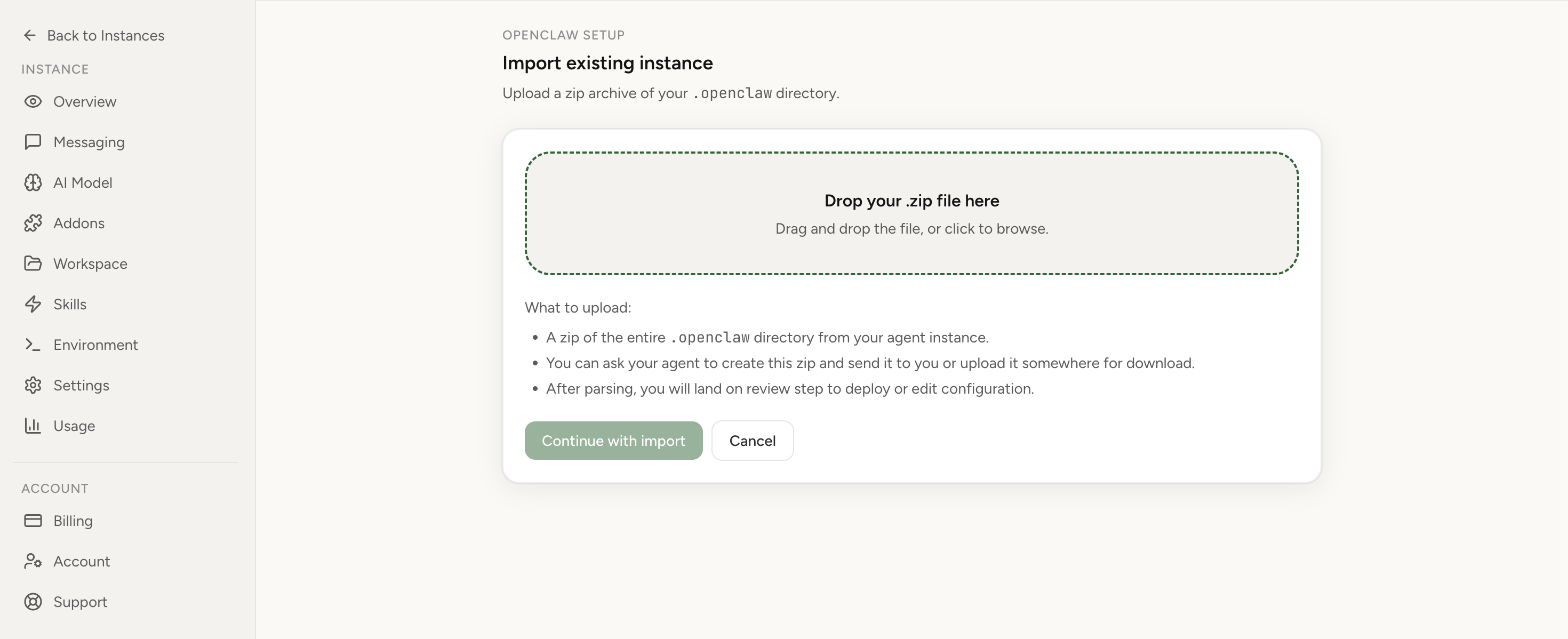
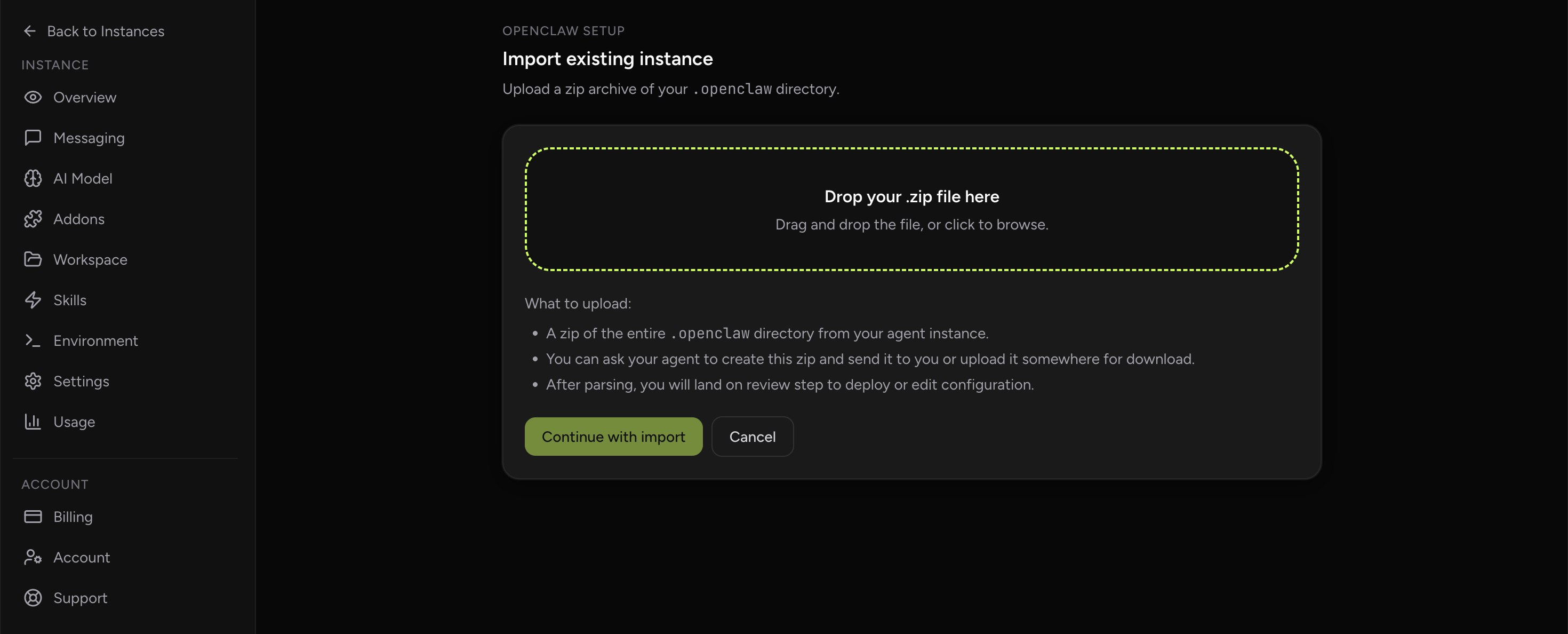
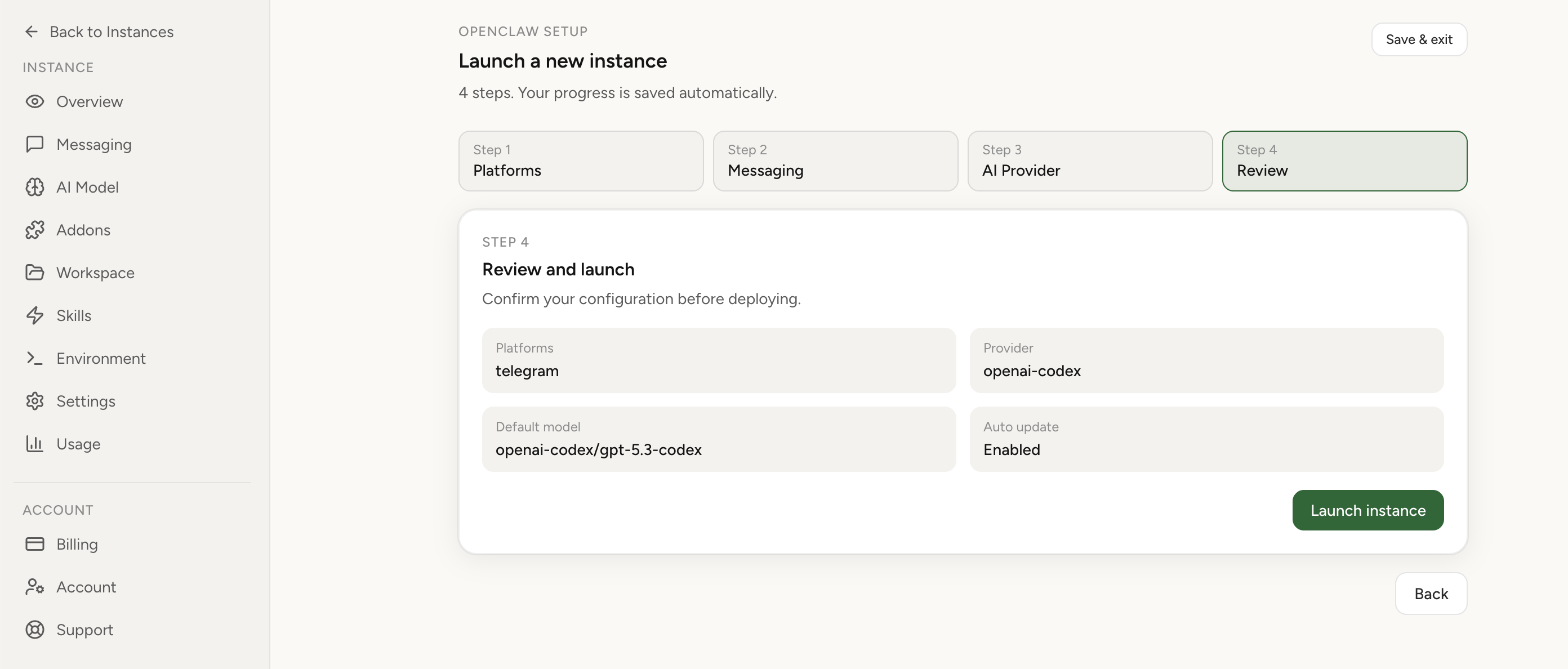
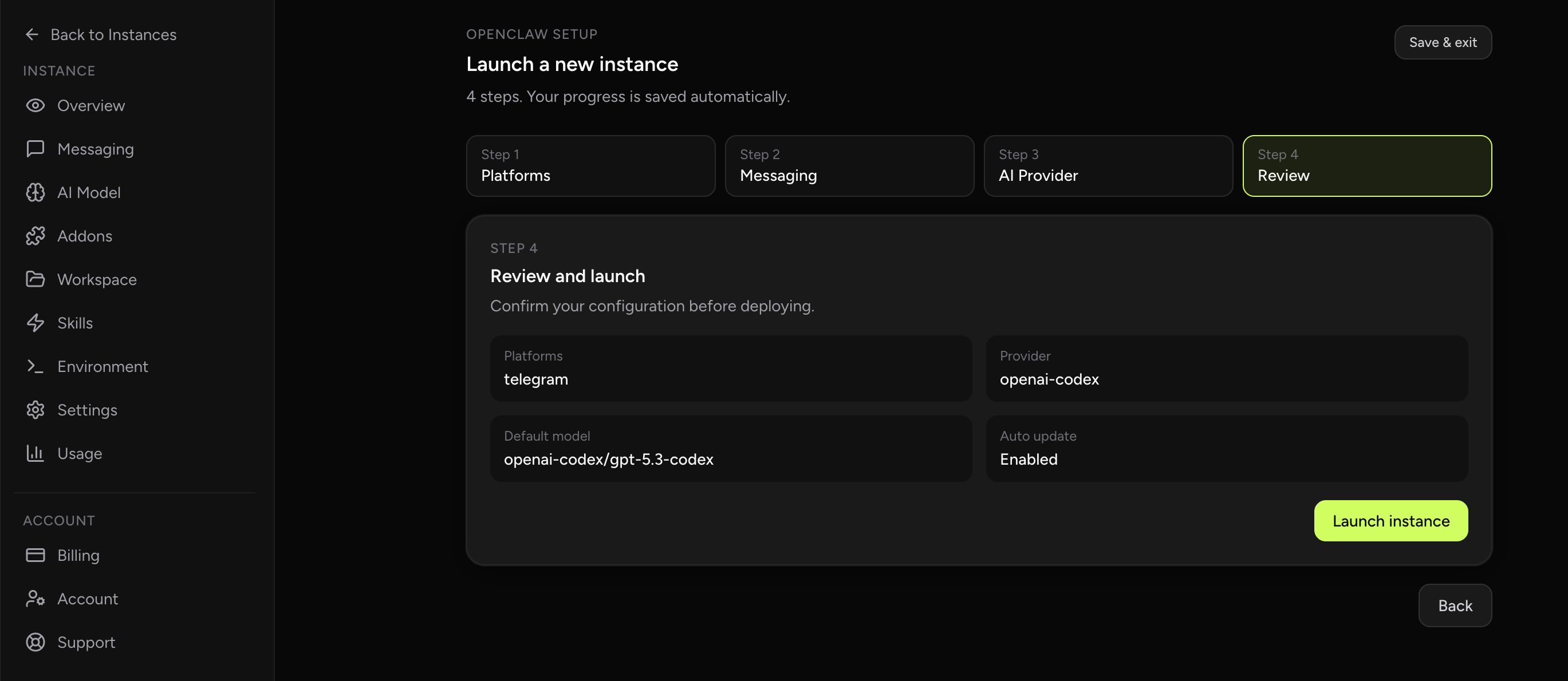
If this keeps coming back, you can move your existing setup to managed OpenClaw cloud hosting instead of rebuilding the same stack. Import your current instance, keep your context, and move onto a runtime with lower ops overhead.
- Import flow in ~1 minute
- Keep your current instance context
- Run with managed security and reliability defaults
If you would rather compare options first, review OpenClaw cloud hosting or see the best OpenClaw hosting options before deciding.
In our own production environment, we observed this issue firsthand. The WhatsApp gateway entered a reconnect loop overnight as +79671102000, with repeated disconnect/reconnect churn showing status 499. This was not a hypothetical scenario from GitHub comments. It was a live incident affecting our operations, confirming that the aggressive 30-minute heartbeat combined with the non-resetting idle counter is a real problem that impacts production deployments today.
How to verify the fix is working
- Start the WhatsApp gateway with verbose logging enabled.
- Send one test message to confirm basic connectivity works.
- Let the gateway sit idle for at least 40 minutes without any WhatsApp activity.
- Check the logs for the 30-minute heartbeat event and observe what happens immediately after.
- If the issue is fixed, you should see either no heartbeat-triggered reconnect, or a reconnect that properly resets the idle counter.
- If the issue persists, you will see the 499 status errors resuming in ~60-second intervals.
- Send a delayed test message after the idle window to confirm the gateway is still responsive and the session is intact.
Edge cases that can mask or mimic the issue
- Network-layer keepalives: some TCP keepalive or proxy configurations can delay the initial heartbeat trigger, making it appear to happen at 35 or 40 minutes instead of exactly 30.
- Multiple WhatsApp instances: if you run more than one WhatsApp gateway from the same OpenClaw instance, the idle timers may be staggered, creating overlapping reconnect storms that are harder to pattern-match.
- Concurrent gateway issues: if you also have memory_search proxy issues (GitHub issue #52162), the two problems can compound each other and make diagnosis more confusing.
- Timezone or clock skew: in rare cases, host clock issues can affect timing-based heuristics and cause the 30-minute window to behave unpredictably.
- Rate limiting from WhatsApp: aggressive reconnect behavior can sometimes trigger WhatsApp-side rate limits that introduce additional failures on top of the heartbeat loop.
Typical mistakes that keep the issue alive
- Restarting the gateway and calling it fixed without waiting 40 minutes to see if the pattern recurs.
- Treating every 499 status as a generic network error and missing the 60-second cadence pattern.
- Assuming the problem is solved because the gateway works fine during active use periods.
- Implementing network-layer fixes like different proxies or tunnels when the problem is in the application-layer heartbeat logic.
- Increasing log verbosity but not actually analyzing the timing between 499 errors to confirm the heartbeat loop signature.
- Blaming WhatsApp service instability when the pattern is perfectly repeatable and tied to idle duration, not external factors.
Internal links and related reading
The WhatsApp heartbeat loop is one of several gateway-specific issues that can affect OpenClaw reliability. For context on broader connectivity patterns, see OpenClaw WebSocket 4008 connect failed fix for auth-layer disconnects, or OpenClaw Telegram proxy configuration for restricted networks for region-specific gateway challenges. If you are evaluating whether to continue managing gateway issues yourself or move to a managed environment, compare deployment options to understand the operational tradeoffs.
When to escalate beyond troubleshooting
If you have implemented workarounds and the WhatsApp heartbeat loop continues to disrupt your operations with increasing frequency, you may be approaching the point where the cumulative maintenance cost exceeds the value of self-hosting this specific gateway. This is especially true if WhatsApp is business-critical for your workflows and downtime directly impacts team productivity or customer-facing operations.
At that stage, the honest decision is whether to continue debugging heartbeat logic or to move to a deployment model where gateway stability is handled as part of the service. Managed hosting options are specifically designed to absorb these kinds of upstream bugs so you can focus on using OpenClaw rather than operating it.
FAQ
Will upgrading to the latest OpenClaw version fix this immediately?
Check the specific release notes for GitHub issue #55030. The fix must be explicitly mentioned. As of March 2026, this is an active issue being tracked upstream, so a generic version upgrade may not resolve it yet.
Can I just disable the WhatsApp heartbeat entirely?
Not recommended. The heartbeat exists to detect genuine stale sessions. Disabling it can lead to zombie connections where the gateway thinks it is connected but WhatsApp has already dropped the session. Workarounds should focus on preventing the buggy idle state, not removing health checks entirely.
Why does the issue only happen after 30 minutes specifically?
The 30-minute threshold is hardcoded in the WhatsApp gateway heartbeat logic. This was chosen as a balance between detecting stale sessions and avoiding unnecessary reconnects during brief pauses, but the implementation has a bug where reconnecting does not reset the idle timer, creating the loop.
Is this issue specific to certain hosting environments?
No. The bug is in the gateway heartbeat logic itself, so it can occur anywhere OpenClaw is running. However, environments with natural idle periods (such as development machines, non-24/7 servers, or workflows with bursty WhatsApp usage) will trigger it more frequently than constantly-active gateways.
Sources
- GitHub issue #55030: WhatsApp aggressive 30-minute heartbeat causes cascading reconnects (created 2026-03-26, updated 2026-03-29)
- GitHub issue #52162: memory_search remote embeddings fail with ENOTFOUND when env proxy is configured (created 2026-03-22, updated 2026-03-29)
- OpenClaw official documentation: gateway configuration and WhatsApp integration
- Internal operations notes: WhatsApp gateway instability observed with repeated disconnect/reconnect churn as +79671102000, status 499 pattern (March 2026)