OpenClaw browser access after extension relay removal: migration guide that works
Problem statement: you upgraded OpenClaw and suddenly browser automation stopped working. The extension looks installed, the gateway appears healthy, and browser tasks fail with cryptic errors. Recent releases explicitly removed the legacy Chrome extension relay path, and if your setup was using the old environment variables or relay mode, you are now hitting a removed code path. This is not a random regression. It is a breaking change that was announced in release notes, and the fix is to migrate to the supported browser access modes.
- March 2026 release notes state that the legacy Chrome extension relay path was removed and early users keeping old environment variables will fail to start after updating.
- Reddit discussions from the past week include blunt complaints that upgrades keep breaking setups, with browser relay changes being a recurring pain point.
- The official guidance now directs users to 'existing-session' and 'user' modes instead of the removed relay configuration approach.
- Community chatter indicates that many users discovered this breakage only after upgrading, not by reading pre-release notes.
What was actually removed and why
The legacy Chrome extension relay relied on a specific code path that handled browser-to-gateway communication through a self-hosted relay mechanism. This approach had reliability issues, security limitations, and complex networking requirements that became harder to maintain as OpenClaw evolved. The decision to remove it was not arbitrary. The old relay mode was brittle, difficult to debug across different operating systems, and created a support burden for both the OpenClaw team and users trying to troubleshoot cross-namespace browser connections.
The replacement approach uses existing-session and user modes that integrate more cleanly with modern Chrome extension APIs and OpenClaw session management. These modes are more reliable, easier to reason about, and align with how browser automation should work in 2026. The tradeoff is that existing setups using the legacy path need to migrate, which is what you are experiencing now.
How to confirm you are hitting the removed relay path
- Check your environment variables: look for old relay-specific variables like
BROWSER_RELAY_MODEor similar that reference the removed implementation. - Review browser task errors: if messages reference relay connection failures, relay attach errors, or missing relay endpoints, you are likely using the removed path.
- Examine your Chrome extension: very old extension versions may not support the new session modes. Check if the extension was installed before the relay removal announcement.
- Compare release notes: verify that the OpenClaw version you upgraded to or past includes the relay removal in its changelog.
- Test a simple browser command: if even basic browser listing or attachment fails immediately after upgrade, the relay infrastructure is the likely culprit.
Step-by-step migration to the new browser access path
Step 1: Document your current setup before changing anything
Before you start modifying configuration, take inventory of what you have. Which browser tasks were working before the upgrade? What environment variables are set? What version of the Chrome extension is installed? This baseline matters because if something goes wrong during migration, you need to know what "working" looked like.
- List all browser-dependent workflows you regularly use.
- Export or screenshot your current environment variables related to browser relay.
- Note the Chrome extension version and installation date.
- Identify which OpenClaw version you were on before the problematic upgrade.
Step 2: Remove legacy relay environment variables
The old relay path relied on specific environment variables that are now obsolete. Remove or comment out any variables that reference the legacy relay mode, relay bind hosts from the removed implementation, or other relay-specific configuration that predates the new session modes. Be careful not to remove variables that are unrelated to browser relay, such as general OpenClaw configuration or other service integrations.
If you are unsure which variables are safe to remove, check the current OpenClaw documentation for the list of supported browser-related environment variables. Anything not in the current documentation that looks like relay configuration is likely legacy debris from the removed path.
Step 3: Update or reinstall the Chrome extension
The Chrome extension must be compatible with the new session modes. If you have an old version installed, remove it and install the latest version from the official source. The new extension will handle existing-session and user modes correctly, whereas old versions may try to use the removed relay code path.
After reinstalling, verify that the extension shows up in Chrome with the expected permissions and that it is enabled on the browser profiles where you run OpenClaw browser tasks.
Step 4: Configure the new session mode
Instead of the removed relay configuration, use the supported session modes. The two primary options are:
- existing-session mode: attaches to an already-running Chrome browser session. This is useful when you want OpenClaw to work with your existing browser windows and tabs.
- user mode: launches Chrome under a specific user profile and manages that browser session. This is better for isolated, automated workflows that should not interfere with your manual browsing.
Set the appropriate mode in your OpenClaw configuration based on how you want browser automation to interact with your Chrome installation. The choice between existing-session and user mode depends on whether you prefer shared or isolated browser contexts.
Step 5: Restart the gateway and test basic browser operations
With the new configuration in place, restart your OpenClaw gateway cleanly. Then test a simple browser operation like listing tabs or opening a specific URL. If the migration was successful, these basic operations should work without the relay-related errors you saw before.
If you still see errors, check that the environment was fully cleaned of legacy variables and that the Chrome extension is properly attached to the target browser session.
Step 6: Verify your existing browser workflows end-to-end
Once basic browser operations work, test each of your existing workflows that depend on browser automation. Start with the simplest ones and work up to complex multi-step tasks. This phased approach lets you isolate any workflow-specific issues from general browser access problems.
Pay special attention to workflows that were fragile even before the upgrade. Those may need adjustment beyond the relay migration, as they might have been relying on quirks of the old implementation that are no longer present.
Fix once. Stop recurring browser automation breaks after upgrade.
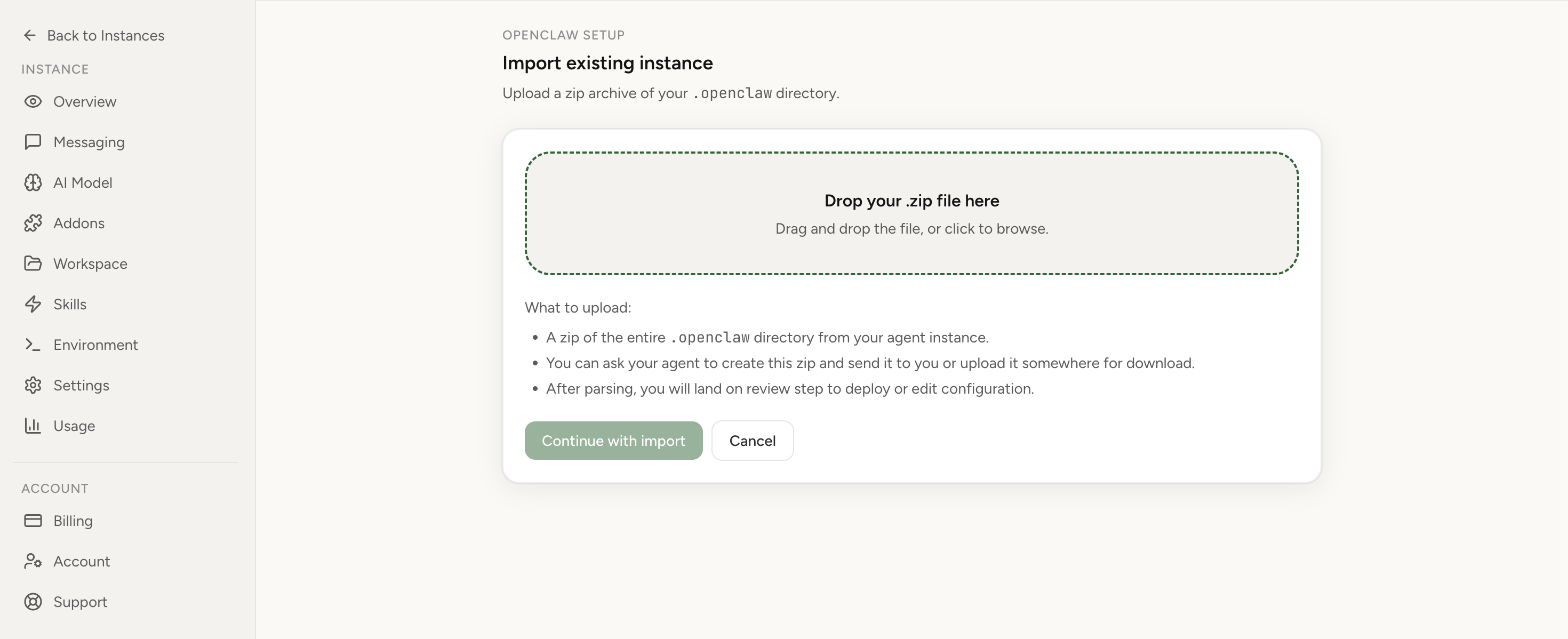
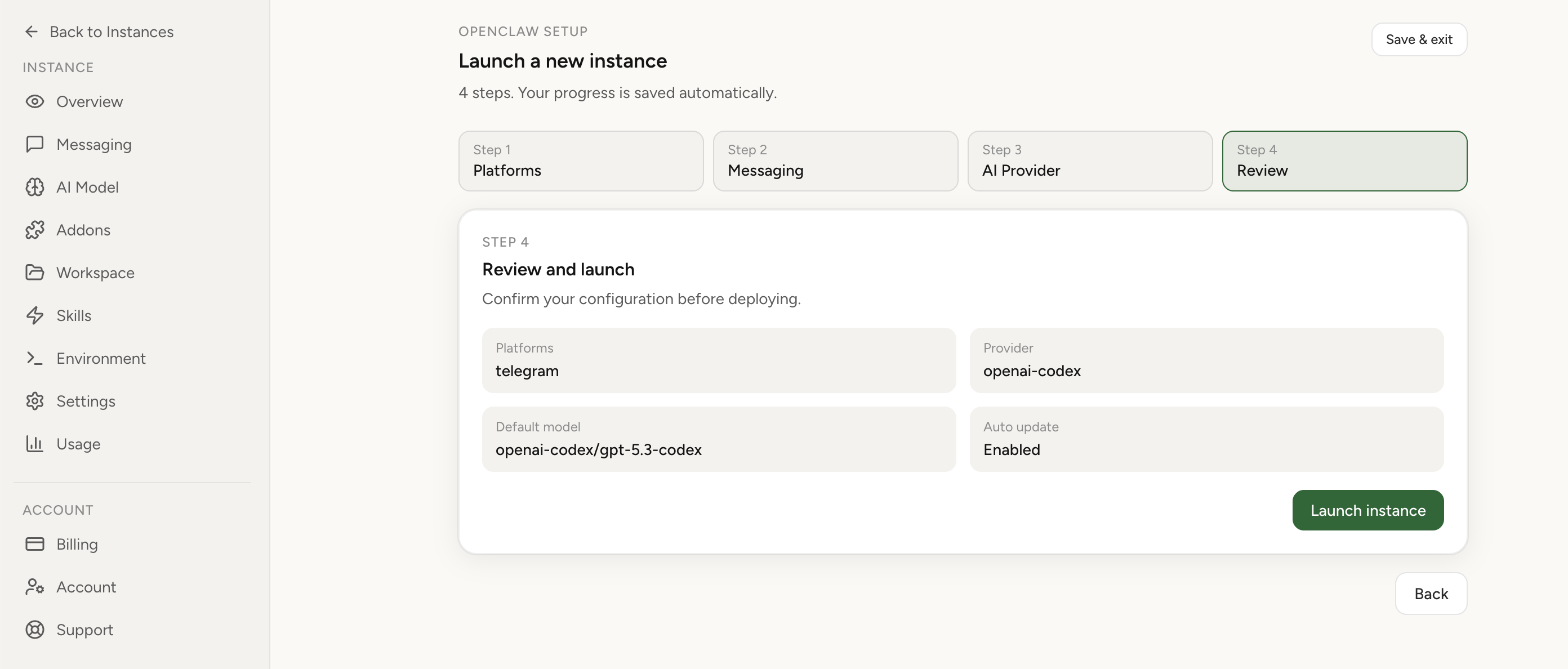
If this keeps coming back, you can move your existing setup to managed OpenClaw cloud hosting instead of rebuilding the same stack. Import your current instance, keep your context, and move onto a runtime with lower ops overhead.
- Import flow in ~1 minute
- Keep your current instance context
- Run with managed security and reliability defaults
If you would rather compare options first, review OpenClaw cloud hosting or see the best OpenClaw hosting options before deciding.
How the new session modes compare to the removed relay
| Aspect | Removed relay path | New session modes |
|---|---|---|
| Reliability | Prone to disconnects, especially across WSL2 and remote setups | More stable attachment and recovery |
| Setup complexity | Required specific environment variables and relay configuration | Simpler mode selection, fewer moving parts |
| Cross-platform support | Inconsistent across Windows, macOS, and Linux | More uniform behavior across platforms |
| Security model | Required exposing relay endpoints in some configurations | Cleaner session isolation and permission boundaries |
| Long-term viability | Removed from codebase, no longer supported | Actively maintained, forward-compatible |
Why users are frustrated with this upgrade
The Reddit reaction to the relay removal captures a real pain point: users want OpenClaw to just work, and breaking changes that require manual migration feel like a step backward. When browser automation is part of your daily workflow, waking up to find it broken after an upgrade is frustrating regardless of how well the change was communicated.
This frustration is compounded when the same setup has broken multiple times across different upgrades. Users naturally start wondering whether the next update will break something else, which creates upgrade anxiety and leads people to delay updates until they have time to deal with potential breakage. That hesitation is understandable, even if the long-term direction of removing technical debt is necessary for the project's health.
How to avoid upgrade breakage in the future
The relay removal was not the first breaking change in OpenClaw, and it will not be the last. You can reduce the impact of future changes by adopting a few practices.
- Read release notes before upgrading: this sounds obvious, but most upgrade breakage can be predicted by scanning the release notes for "breaking changes" or "removed" features.
- Avoid relying on undocumented features: if a browser access pattern or configuration is not clearly documented, treat it as experimental and subject to change.
- Use supported session modes: the further you stray from the documented paths, the more likely you are to hit removed code paths when upgrading.
- Test upgrades in a staging environment: if your OpenClaw setup is business-critical, have a parallel instance where you can test upgrades before applying them to production.
- Consider managed hosting: managed providers handle these transitions for you, so you get the benefits of new versions without the manual migration work.
When browser automation is mission-critical
If browser workflows are central to your operations, the relay removal upgrade breakage is a signal to evaluate your deployment model. Every upgrade that requires manual migration is downtime and engineering overhead. If browser automation is too important to keep breaking, you have a few options.
You can stay on an older OpenClaw version and hope the project never removes anything you rely on again. You can dedicate engineering time to testing and migrating every upgrade. Or you can move to a managed environment where the hosting provider handles these transitions and keeps your browser access stable even as the underlying platform evolves.
Internal links and related reading
For detailed information on the current Chrome extension relay implementation, see Chrome Extension Relay. If you are running OpenClaw in WSL2 and experiencing browser connectivity issues beyond the relay removal, OpenClaw Chrome relay on WSL2: fix tab attach errors covers WSL2-specific networking challenges. To compare managed versus self-hosted deployment models and understand how hosting choices affect upgrade stability, visit /compare/.
FAQ
Can I downgrade to a version before the relay removal?
Technically yes, but this is a short-term fix. The relay path was removed for valid technical reasons, and staying on old versions indefinitely means missing security patches, bug fixes, and new features. Treat downgrade as a temporary recovery measure while you plan a proper migration, not a long-term strategy.
Will my existing Chrome profiles and data be affected by the migration?
No. The migration changes how OpenClaw connects to Chrome, not your Chrome user data. Your existing profiles, bookmarks, history, and extensions are unrelated to the relay removal and should remain intact throughout the migration process.
Do I need to change all my browser automation scripts after this migration?
Usually not. Most high-level browser automation scripts work the same way regardless of the underlying connection mechanism. You might need to adjust configuration, but the actual task definitions and agent instructions typically do not need changes.
How long does this migration typically take?
For a straightforward setup with minimal custom relay configuration, expect 15-30 minutes to remove legacy variables, update the extension, configure the new mode, and verify basic operations. Complex environments with many customizations may take longer.
What if the new session modes do not work for my specific use case?
First, verify that you have fully cleaned the legacy configuration and are using the correct mode for your needs. If issues persist, check the OpenClaw documentation and community forums for known limitations. The new modes cover most use cases that the relay handled, but there may be edge cases requiring different approaches.
Sources
- OpenClaw March 2026 release notes: legacy Chrome extension relay path removal announcement
- Reddit discussions (March 2026): user complaints about upgrades breaking setups and relay migration pain
- Chrome Extension Relay feature guide (updated for new session modes)
- OpenClaw official documentation: browser automation and session management