OpenClaw Codex OAuth cost logs: avoid billing panic before you change models
Problem statement: OpenClaw is configured to use openai-codex/* through Codex OAuth, the auth check is healthy,
and the user believes the route is tied to a subscription-style login. Then the session JSONL shows usage.cost.total values such
as 0.30314. A cost parser, status report, or hand-written COST_LOG.md suddenly looks like metered API billing.
The operator has to decide whether the workflow is unexpectedly spending money or whether OpenClaw is showing a token-equivalent estimate.
This guide gives you a safe way to interpret those logs. It does not tell you to ignore usage. It tells you to separate three different concepts that often get collapsed into one number: token volume, estimated token-equivalent price, and actual billed spend. Once those are separated, you can keep useful usage tracking without triggering false billing alarms or making bad model-routing decisions.
-
GitHub issue #78760, opened on 2026-05-07, reports
openai-codex/gpt-5.4turns authenticated throughopenai-codex:defaultOAuth while session JSONL still recorded nonzerousage.cost.*fields. -
The report included a concrete assistant usage block:
input: 120568,output: 72,cacheRead: 2560, andcost.total: 0.30314. Additional turns in the same session showed totals such as0.033535,0.0340405, and0.2996525. - A maintainer-side review on the issue traced the current behavior to source paths that calculate cost from model pricing metadata and session usage, while OpenClaw documentation describes OAuth usage as token-only for dollar-cost display. That mismatch is exactly why operators should treat OAuth cost fields as non-authoritative until the route is explicit.
- Fresh social discussion also shows users watching Codex OAuth recovery and OpenClaw release behavior closely. The practical risk is not only billing. It is trust: once a cost number looks authoritative, automation starts making decisions from it.
What is actually happening
OpenClaw records usage because usage is useful. Token counts help you compare prompt sizes, spot runaway sessions, debug cache behavior, and decide when a cron job is doing too much work. The confusing part is the dollar field. In some builds, OpenClaw can take the observed token counts, look up a model cost table, and calculate a local estimate. That estimate can be written beside the message usage.
That number can be directionally useful for metered API-key routes. It is much less safe when the route is authenticated through OAuth or a subscription-style provider path. A local estimate is not the same as an invoice. If the provider does not expose authoritative billed spend for that turn, OpenClaw should not be treated as the billing source of truth.
The fast way to classify the number
- Token count: useful operational data. Keep it.
- Estimated token-equivalent cost: a local model-pricing calculation. Useful for comparisons, risky for billing alerts.
- Actual billed spend: the provider account or invoice view. This is the number that matters for money decisions.
- Billing mode: the missing context. API key, OAuth, subscription, organization quota, and unknown routes should not be mixed.
Step-by-step diagnostic flow
Step 1: confirm the model route and auth profile
Start by checking the route, not the cost number. You need to know whether the turn used an API-key provider path or a Codex OAuth path.
Capture the configured default model, resolved model, and auth profile. If the profile is openai-codex:default and OAuth status
is healthy, you are not debugging the same billing semantics as a plain platform API key.
Step 2: inspect the exact usage block
Look for input, output, cacheRead, cacheWrite, totalTokens, and
cost. If the cost appears mechanically proportional to tokens, it may be coming from static pricing metadata. That is useful
evidence, but it still does not prove actual billed spend.
Step 3: compare against the provider account
Open the provider account that owns the auth path and check billing or quota movement around the run time. If the provider does not show a matching charge or if the route is explicitly subscription-backed, label the OpenClaw value as an estimate in your own logs. If the provider does show matching metered usage, then document that route as billable and adjust alerts accordingly.
Step 4: split billing alerts by auth mode
Do not let a single parser add all usage.cost.total fields into one spend report. At minimum, group by provider and auth mode.
A safe report has separate buckets such as metered API usage, OAuth token usage, and unknown estimated usage. The
unknown bucket should trigger review, not panic.
Step 5: verify the user-facing workflow still works
Cost confusion is often discovered while reviewing a real workflow: a coding session, a cron job, a browser task, or a long research run. After you classify billing semantics, verify the actual outcome. Did the assistant produce the expected artifact? Did the message deliver? Did the cron job finish within its budget? Token tracking is only useful if the workflow result is healthy.
Fix once. Stop recurring Codex OAuth cost-log confusion.
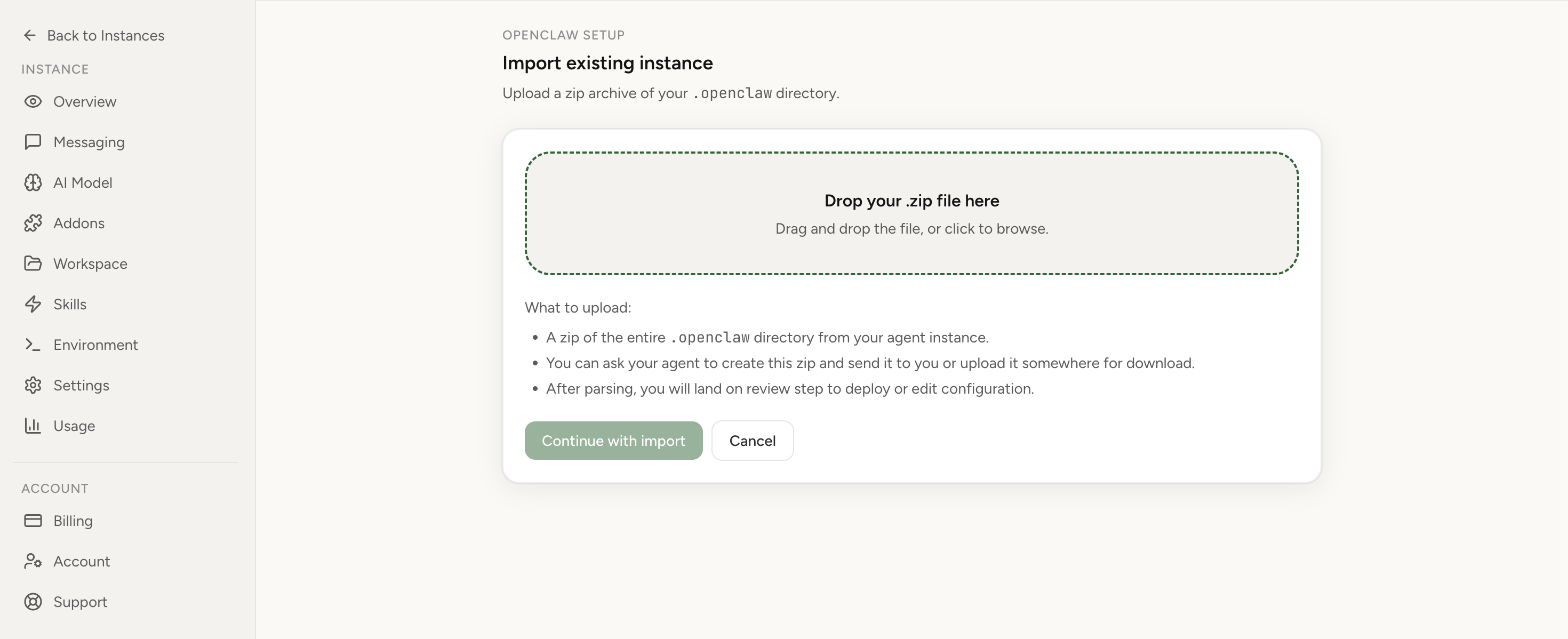
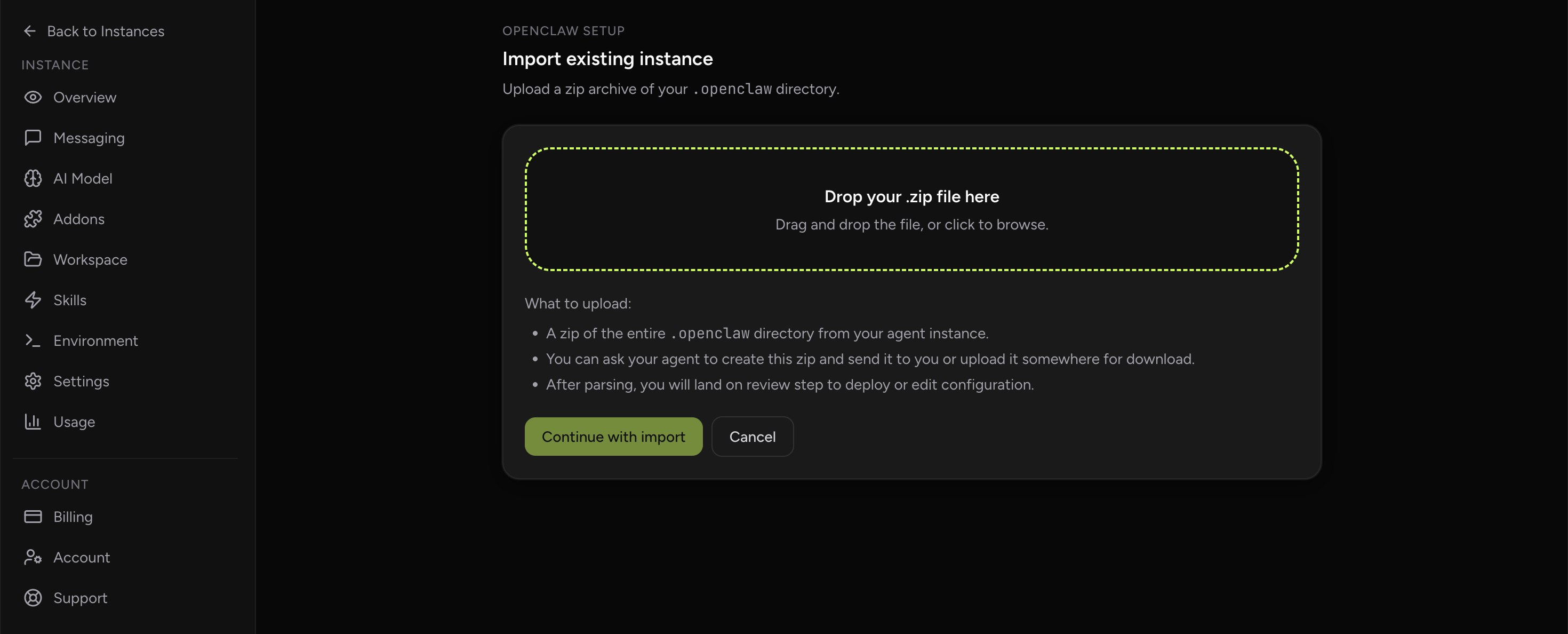
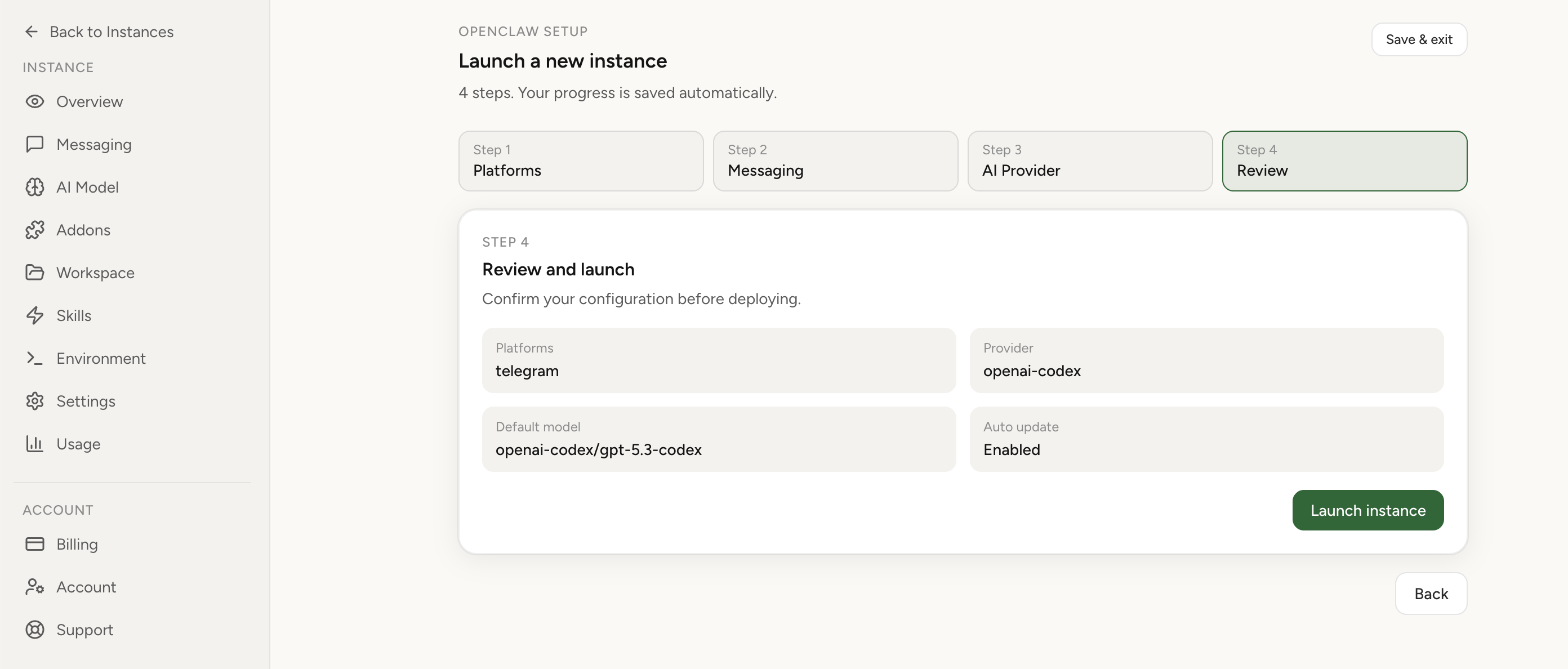
If this keeps coming back, you can move your existing setup to managed OpenClaw cloud hosting instead of rebuilding the same stack. Import your current instance, keep your context, and move onto a runtime with lower ops overhead.
- Import flow in ~1 minute
- Keep your current instance context
- Run with managed security and reliability defaults
If you would rather compare options first, review OpenClaw cloud hosting or see the best OpenClaw hosting options before deciding.
How to protect COST_LOG-style workflows
Many operators keep a local cost log because OpenClaw sessions are long-running and spread across chat, cron, CLI, and browser workflows. That is sensible. The mistake is treating every dollar-shaped field as billable spend. A safer log schema keeps the raw value but adds context before it affects decisions.
Recommended fields
providerandmodelauth_mode, such as API key, OAuth, subscription, or unknowninput_tokens,output_tokens, and cache tokensestimated_cost_usdwhen OpenClaw calculates onebillable_cost_usdonly when provider evidence supports itauthoritative_billingas true or false
Common mistakes
Mistake 1: adding OAuth estimates to API invoices
This makes spend look higher than it may be and can push teams to downgrade models unnecessarily. Keep OAuth estimates separate until the provider account proves they are billable.
Mistake 2: deleting usage tracking entirely
Usage tracking is still valuable. Token spikes reveal prompt bloat, runaway compaction, bad cron design, and expensive fallback loops. Remove the false billing interpretation, not the telemetry.
Mistake 3: assuming OAuth always means free
Do not swing to the opposite extreme. OAuth is an auth method, not a universal pricing promise. The safe rule is provider evidence first, OpenClaw estimate second.
Mistake 4: letting automation react to ambiguous cost
If a bot disables cron jobs, changes default models, or posts warnings from ambiguous OAuth estimates, it will create noise. Automation should require either metered API-key evidence or explicit billing-mode metadata before taking action.
Edge cases to watch
- Fallback chains: one turn may touch multiple providers with different billing modes. Report them separately.
- Cached tokens: cache-read and cache-write values may have different estimated rates from normal input tokens.
- Model alias changes: after upgrades, a route can resolve to a different model than the one you expected.
- Mixed workspaces: a team may use subscription-backed Codex for coding and API-key models for automation in the same instance.
- Historical logs: old JSONL files may keep ambiguous cost fields even after newer builds improve labeling.
Verification checklist
- Run one small Codex OAuth turn and capture the session usage block.
- Confirm the auth profile and OAuth health at the time of the run.
- Check whether provider billing or quota moved for the same time window.
- Update your parser to separate estimated cost from billable cost.
- Run one API-key route and one OAuth route to confirm the report buckets differ.
- Review alert thresholds so OAuth estimates create review tasks, not emergency spend pages.
When managed hosting helps
Managed hosting does not remove the need to understand provider billing. It does reduce the number of places where cost confusion can hide. Centralized defaults, cleaner model routing, safer cron practices, and operational review make it easier to distinguish a real spend problem from a misleading local estimate.
If your current instance already has useful context, you do not need to rebuild it from scratch. Import it, keep the workflows that matter, and use a cleaner operational baseline for model and usage review. For a broader buying comparison, see OpenClaw Setup compared with self-hosting. For the hosting model, see OpenClaw cloud hosting.
FAQ
Does this mean OpenClaw cost fields are useless?
No. They are useful when correctly labeled. The danger is using an estimated field as an invoice. Keep the data, improve the interpretation.
Should I trust /status for billing?
Trust it for operational visibility, then verify money in the provider account. That distinction matters most for OAuth and subscription-style routes.
What should OpenClaw show in the future?
The safest design is explicit billing metadata: estimated cost, billable cost, and whether the billing value is authoritative. Until that is universal, operators should add the same distinction in their own reporting.
What is the safest immediate fix?
Split your reports by auth mode today. Keep token counts, quarantine OAuth dollar estimates from billing totals, and require provider-side evidence before treating a number as actual spend.