OpenClaw CrashLoopBackOff recovery without restart spam
Problem statement: an OpenClaw instance crashes, Kubernetes or your process manager brings it back, and then the same failure repeats until you are staring at a noisy restart loop instead of a healthy agent. The instinct is to keep restarting until it sticks. In practice that often makes diagnosis harder, burns time, and can leave the real fault untouched. This guide shows the safer recovery pattern, the common root causes, and how to verify you actually fixed the problem.
- On 2026-04-08 we added a persistent per-instance cooldown for automatic crashloop recovery in our hosted control plane after seeing that repeated automatic restarts could requeue too aggressively when an instance briefly returned to running and failed again.
- The production fix stores the last automatic restart time and limits crashloop-triggered recovery to once every 30 minutes per instance, which preserves a recovery path without turning a real fault into restart noise.
- The same week we also hardened instance placement and watcher defaults after a failing instance hit
EMFILEduring gateway and QMD startup, which is exactly the kind of low-level failure that endless restarts do not solve. - Fresh GitHub issue activity in early April 2026 around slow starts, plugin stack overflows, broken updates, and high memory use shows that startup instability remains a live concern for OpenClaw operators.
What CrashLoopBackOff usually means in OpenClaw
CrashLoopBackOff is not a root cause. It is a symptom that the process starts, dies, and then hits a backoff policy because the environment keeps trying to revive it. In OpenClaw, that can happen during early gateway boot, plugin load, provider initialization, memory indexing startup, or later when a broken update or bad configuration leaves the runtime unstable.
The reason people get trapped here is simple. A restart sometimes works for a transient fault, so it becomes the default response for every fault. But if the instance dies for the same reason every time, repeated retries just pile more noise onto the same unresolved issue.
Common causes behind recurring restart loops
- Bad update or dependency drift: the process boots into code or bundled dependencies that no longer match the environment.
- Broken provider or plugin config: a provider key, plugin schema, or route setting causes startup failure before the gateway becomes healthy.
- File-watcher pressure: too many inotify watches or instances can produce
EMFILEand kill startup. - Memory pressure: high gateway memory use or repeated indexing work can destabilize the process.
- Corrupted state after repeated manual recovery attempts: multiple emergency edits can leave config and runtime state out of sync.
The safer recovery sequence
When an OpenClaw instance starts looping, use a controlled sequence instead of repeated blind restarts.
1. Freeze the situation
Stop making changes for a moment. Note the time the failure started, what changed recently, and whether the loop began after an upgrade, a config edit, a provider switch, or a host-level resource change. That short timeline often tells you where to look first.
2. Read the last meaningful logs, not just the final line
A crash loop often ends with a generic shutdown or restart message. The useful signal is usually a little earlier: a provider failing to load, a watcher error, a missing module, or a schema explosion. Look for the first hard failure, not the last symptom.
3. Separate boot failures from post-boot failures
Ask one question: does OpenClaw fail before it becomes usable, or only after it starts serving traffic? If it dies immediately, focus on config, plugins, dependencies, and bootstrap services. If it dies after serving requests, investigate memory growth, concurrency, background jobs, and tool-specific behavior.
4. Check for resource ceilings
Resource ceilings create surprisingly noisy symptoms. In our own operations, a failing instance recovered only after we raised inotify capacity on dedicated nodes and adjusted generated defaults away from watch-heavy behavior. If logs mention EMFILE, too many open files, or watcher startup errors, restart policy is not the real fix. Capacity and defaults are.
5. Restart once with intent
After you have a working hypothesis, apply the smallest corrective change and do a single controlled restart. Then observe. If the same error returns, stop and revise the diagnosis instead of hammering the process with more retries.
Diagnostics checklist
- List every change made in the last 24 hours.
- Inspect startup logs for the first fatal error.
- Confirm whether the failure is immediate or delayed.
- Review provider credentials, plugin settings, and any recently added tools.
- Check host or pod resource pressure, especially file watchers and memory.
- Verify whether the issue began after an update.
- Only then restart and measure whether the instance remains healthy.
Why rate-limited restarts are better than restart storms
An automatic restart policy is useful. A restart storm is not. When every crash immediately triggers another recovery attempt, three bad things happen. First, logs become harder to read because the same failure repeats over and over. Second, external systems see instability instead of a clean outage window. Third, the loop can hide the operational truth that nothing has actually been fixed.
That is why our hosted recovery flow now persists the last automatic restart timestamp and enforces a cooldown. It still gives the instance a chance to recover from transient faults, but it also creates breathing room for diagnosis. For self-hosted operators, the lesson is the same even if your tooling is different: recovery attempts should be deliberate, observable, and limited.
Edge cases that trick people
- The instance boots once, then dies later: this often points to background jobs, memory growth, or indexing behavior rather than a basic config syntax error.
- A plugin error appears unrelated: cascading failures can start from one broken provider or dependency and then make several other plugins look guilty.
- Restarting seems to help for a few minutes: transient success can still hide a persistent fault. Watch long enough to prove stability.
- The host itself is noisy: on busy nodes, poor pod spread or shared resource pressure can make an application problem look random.
Typical mistakes during recovery
- Restarting repeatedly before reading logs.
- Changing several settings at once, which destroys your ability to isolate cause and effect.
- Assuming a plugin or provider failure is harmless because another part of the stack starts normally.
- Ignoring host-level limits like inotify capacity.
- Calling the incident fixed after one clean boot.
How to verify the issue is really gone
Verification should be boring. That is the point. You want the instance to stay healthy through repeated health checks, serve a few real tasks, and stop producing the same fatal signature in logs. If the loop was tied to resource pressure, confirm the relevant metric stays under control after the change. If the issue followed an update, validate the runtime under the tasks that used to trigger the crash.
- Keep the instance up long enough to clear multiple health cycles.
- Run the workflow that failed before.
- Confirm no repeat fatal log line appears.
- Check memory, watcher, or plugin status if those were part of the incident.
- Document the root cause so the same loop does not get rediscovered next week.
Need fewer recovery incidents to babysit?
If you are tired of debugging the same self-hosted restart pattern, compare your options on Compare, review OpenClaw cloud hosting, or open the dashboard to move onto a runtime with managed health checks, safer defaults, and private access features.
Fix once. Stop recurring CrashLoopBackOff and restart-loop incidents.
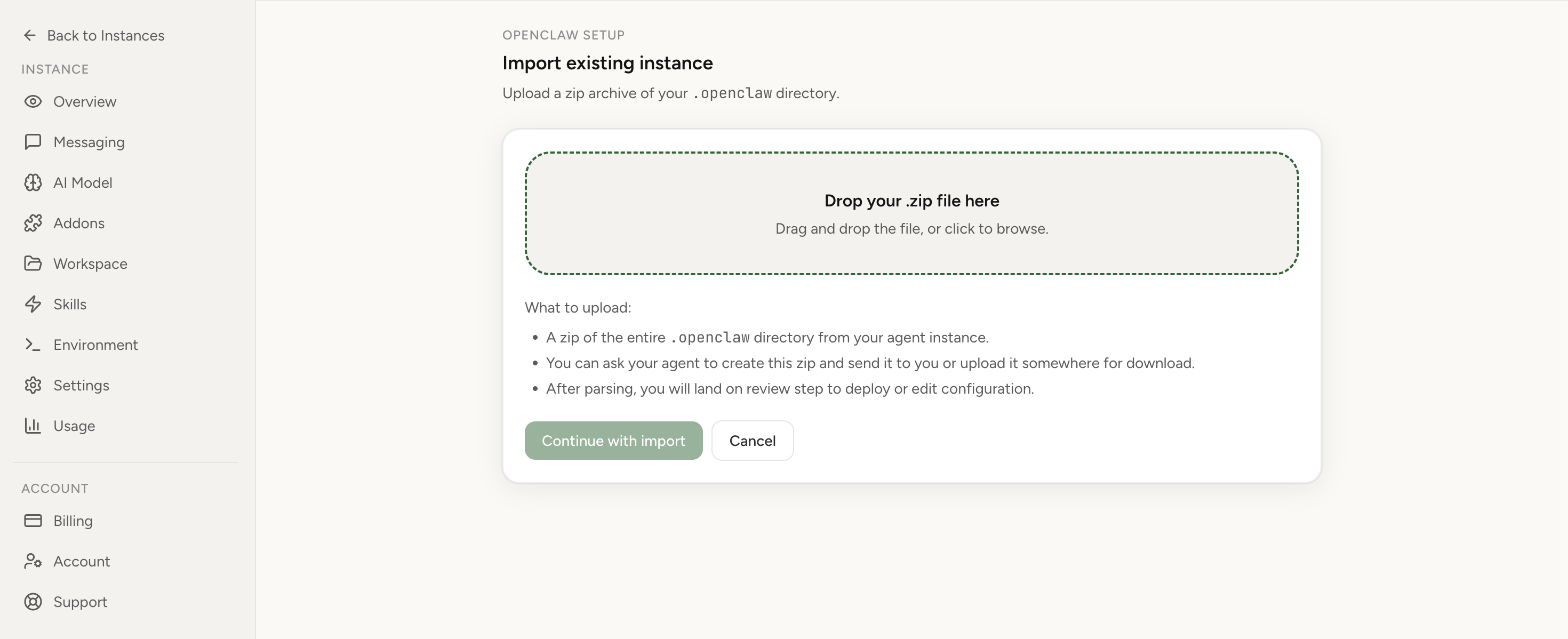
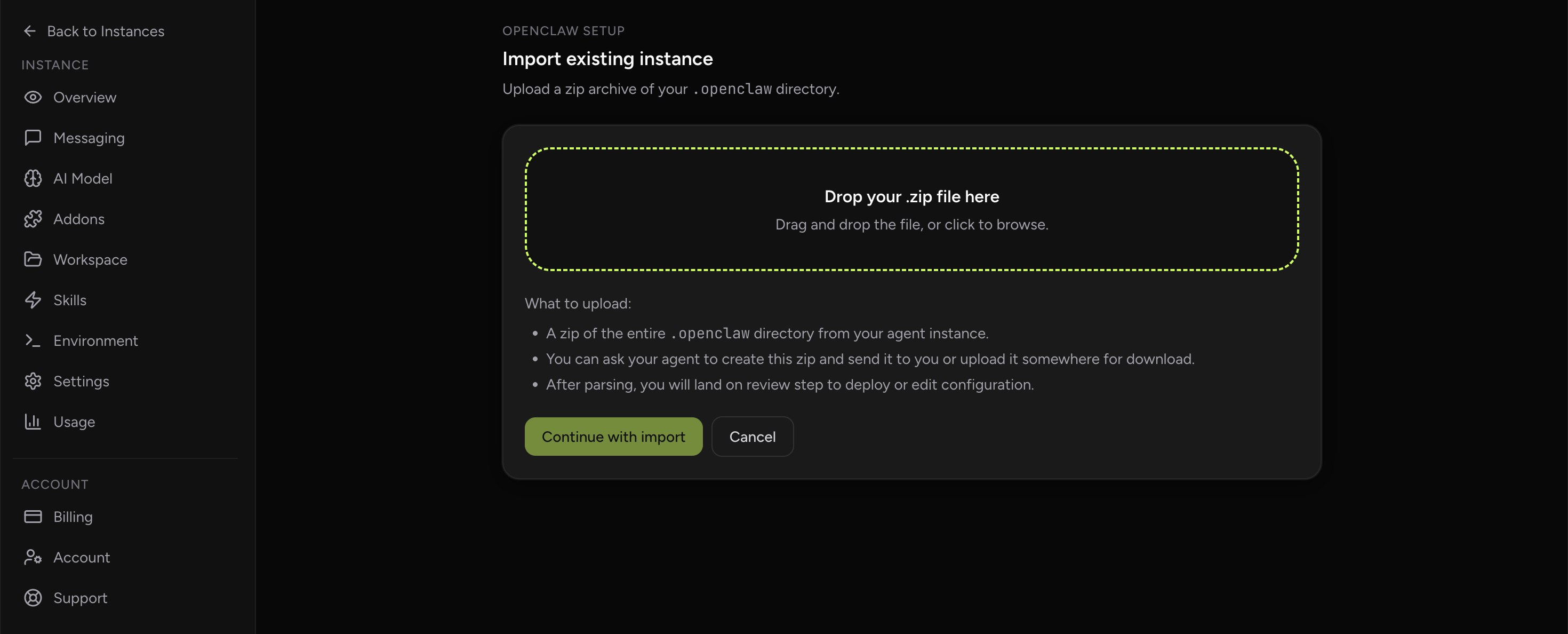
If this keeps coming back, you can move your existing setup to managed OpenClaw cloud hosting instead of rebuilding the same stack. Import your current instance, keep your context, and move onto a runtime with lower ops overhead.
- Import flow in ~1 minute
- Keep your current instance context
- Run with managed security and reliability defaults
If you would rather compare options first, review OpenClaw cloud hosting or see the best OpenClaw hosting options before deciding.
FAQ
Should I disable automatic restarts entirely?
Usually no. Automatic restarts help with transient faults. The goal is not zero automation. The goal is controlled automation with enough spacing and visibility that repeated failure does not become invisible background noise.
What if the loop started right after an upgrade?
Treat the upgrade as the leading suspect. Review release notes, verify dependencies, and check whether the issue matches known regressions before making unrelated changes.
Can file watchers really crash OpenClaw on startup?
Yes. If the environment is short on inotify capacity, watcher-heavy startup behavior can fail with file descriptor errors. That is an infrastructure problem as much as an application one.
What should I read next?
If you are comparing operating models, start with Compare. If you want a managed path, read OpenClaw cloud hosting. If you are still evaluating the platform, see OpenClaw Setup.
Final takeaway
The fastest path out of CrashLoopBackOff is rarely “restart harder.” It is to slow the loop down, find the real failure, fix the smallest thing that explains it, and verify stability over time. That is the difference between recovery and noise. If you can reduce the number of moving parts you manage yourself, you reduce the odds of meeting the same incident again.