OpenClaw delivery retry loop fix: stop permanent failures from retrying forever
Problem statement: your OpenClaw gateway keeps retrying the same failed messages for hours,
sometimes across restarts, and your logs fill with repeated Telegram errors like
message is too long and message to be replied not found.
The platform looks unstable, but the real issue is usually simpler: your delivery-recovery policy treats
permanent failures as if they were temporary outages.
-
GitHub issue #37497
(created 2026-03-06) documents indefinite retries for permanent Telegram errors, including
message is too longandmessage to be replied not found.
Why this failure hurts operations
Retry loops are expensive in hidden ways. First, they pollute error logs and make on-call triage slower, because engineers must separate new incidents from the same old failed delivery IDs. Second, they create queue pressure: real messages can be delayed behind useless retries. Third, they damage trust with product teams who depend on reliable assistant responses in Telegram, Slack, or other channels.
The danger is not only missing one message. The bigger risk is operational fatigue. Teams start restarting services as a habit, without actually fixing classification logic. That pattern turns a deterministic bug into a recurring incident class.
Permanent vs transient failures: the rule that changes everything
If you remember one principle, use this: retry only what can succeed later. A retry strategy should ask a factual question, not a hopeful one. Did the environment likely change since the first failure? If yes, retry. If no, dead-letter and alert.
Common transient failures (retry makes sense)
- Network timeout or temporary DNS failure.
- Platform rate limits such as 429 or temporary flood-control windows.
- Short-lived upstream outages (5xx).
- Ephemeral gateway restart during request handoff.
Common permanent failures (retry is wasted work)
- Message content exceeds platform hard limit and payload is unchanged.
- Reply target ID does not exist anymore (deleted or stale message reference).
- Invalid recipient metadata that fails validation before send.
- Malformed payload schema that will fail the same way every time.
Full diagnostic playbook (production-safe)
1) Capture one failing delivery end-to-end
Start with one delivery ID and gather complete context: original prompt, channel, payload size, reply metadata, failure text, and timestamps. Do not begin with restarts. If you restart first, you often lose correlation evidence that tells you whether failures are deterministic.
2) Build a failure fingerprint
Compare two or three retries for the same delivery ID. If error code, message, and payload hash are unchanged each time, you are probably looking at a permanent failure class. If fields differ between attempts (for example timeout then success then timeout), the incident is more likely transient.
3) Validate platform constraints early
Check hard limits before recovery logic runs. In Telegram, message length and reply target validity are easy to verify pre-send. A preflight validator can classify these failures immediately and avoid pointless queue churn.
4) Inspect retry policy map
Review the exact classifier that decides retryable vs non-retryable. Many teams discover fallback defaults like “unknown error => retry” accidentally catch permanent 400-level cases. Ensure your policy has explicit deny-list and allow-list behavior rather than broad default retries.
5) Check restart behavior
Restart once in a controlled window and watch whether the same delivery IDs re-enter retry loops. If yes, queue persistence is working as designed but classification is wrong. Restarting repeatedly will not fix the root cause and only increases operator noise.
6) Introduce dead-letter routing
Permanent failures should move into a dead-letter store with structured metadata, not vanish silently. Include fields for error class, delivery ID, channel, payload length, and a recommended operator action. This gives support and engineering teams a clean queue of actionable failures.
7) Add message-shaping fallback for long content
For length-based failures, build automatic chunking or summarization fallback at the formatter layer. If a response exceeds platform limits, split it into safe segments with continuation markers. This prevents many permanent failures before they hit delivery-recovery.
8) Protect reply chains with ID validation
Before sending a reply, verify that target message IDs still exist in a valid window. If stale, downgrade to a normal message with context text like “continuing from earlier thread” instead of hard failing.
9) Add queue observability
Track retry counts, age of oldest failed item, and unique permanent-failure signatures. Alert when one ID exceeds a retry threshold or when permanent failures spike. Operators need trend visibility, not only raw logs.
10) Close with acceptance tests
- Trigger one transient failure and confirm retry succeeds after backoff.
- Trigger one permanent failure and confirm it is dead-lettered without endless retries.
- Confirm queue drains under normal load within expected latency.
- Confirm dashboards show retry and dead-letter metrics correctly.
Edge cases teams miss
- Mixed channel policy: one policy file treats all channels equally, but constraints differ.
- Partial payload mutation: retry mutates metadata but not offending field, so it still fails.
- Infinite exponential backoff: delays become huge but loop never truly exits.
- Dead-letter without alert: failures disappear into storage without visibility.
- Retry storm after deploy: old failed items are requeued all at once after startup.
Typical mistakes that keep this incident alive
- Assuming every 400 response is temporary because “Telegram can be flaky.”
- Using only one global retry rule for all delivery errors.
- Treating gateway restart as a fix rather than a test.
- Ignoring payload size checks at generation time.
- Skipping dead-letter storage because “logs are enough.”
Verification checklist before you call it fixed
- No repeated retries for identical permanent-error fingerprints over 24 hours.
- Dead-letter queue receives non-retryable events with actionable metadata.
- Retry success rate improves because only transient failures are retried.
- Operator alert noise drops and incident dashboards stay readable.
- Support team has a playbook for handling dead-letter items quickly.
When self-hosted recovery policy becomes an ops tax
If your team enjoys owning message pipelines, keep self-hosting and tighten this runbook. But if retry-loop incidents repeatedly interrupt product work, the cost is no longer “just infrastructure.” It is engineering attention, delayed launches, and lower trust from internal users.
Compare paths honestly on /compare/. If you want managed runtime with lower delivery ops overhead, review /openclaw-cloud-hosting/. For teams staying self-hosted, keep your base hardening on /openclaw-setup/ and apply this classifier strategy on top.
Fix once. Stop recurring delivery retry loop incidents.
If this keeps coming back, you can move your existing setup to managed OpenClaw cloud hosting instead of rebuilding the same stack. Import your current instance, keep your context, and move onto a runtime with lower ops overhead.
- Import flow in ~1 minute
- Keep your current instance context
- Run with managed security and reliability defaults
If you would rather compare options first, review OpenClaw cloud hosting or see the best OpenClaw hosting options before deciding.
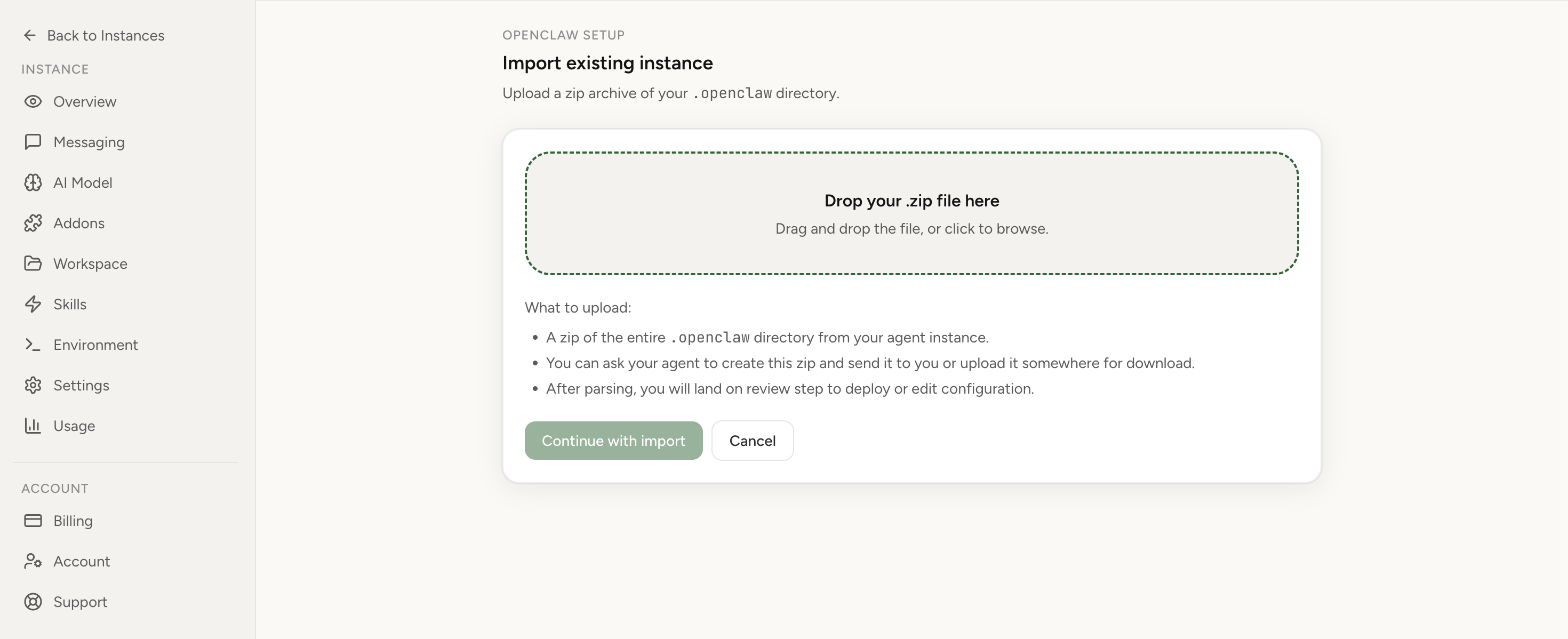
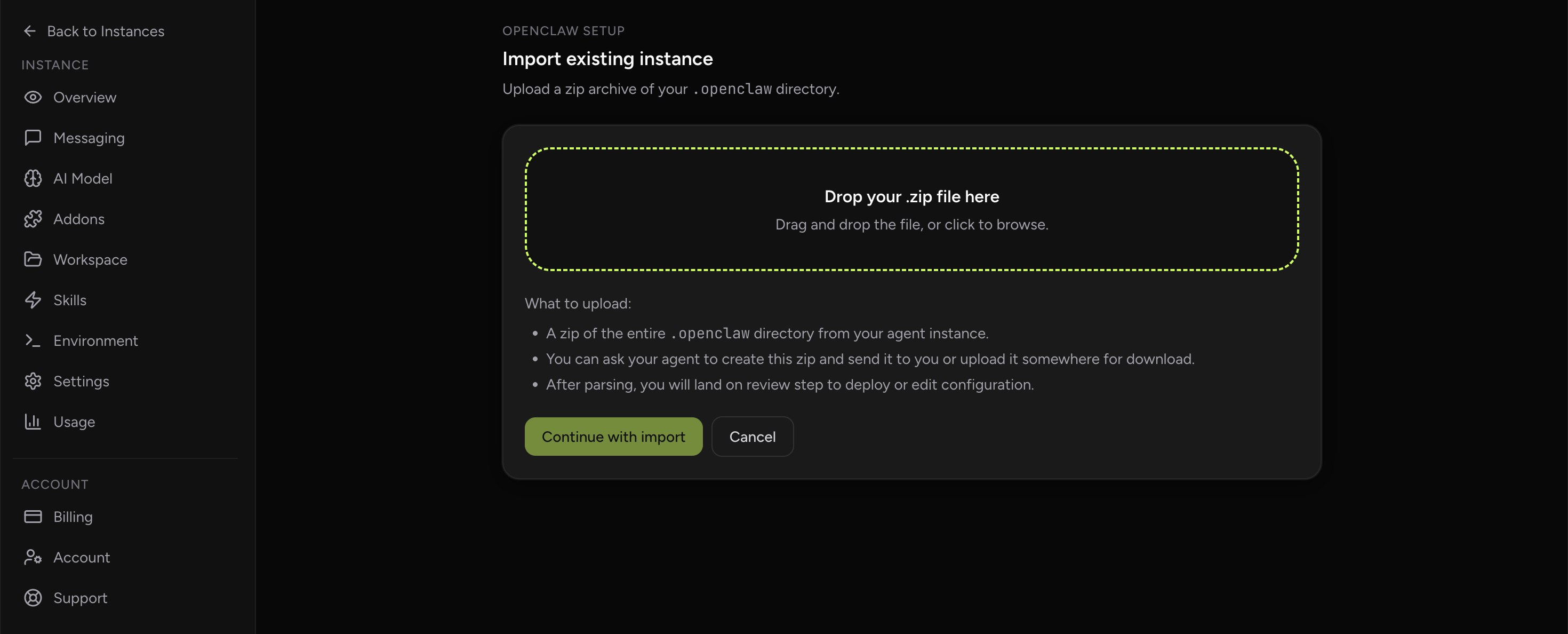
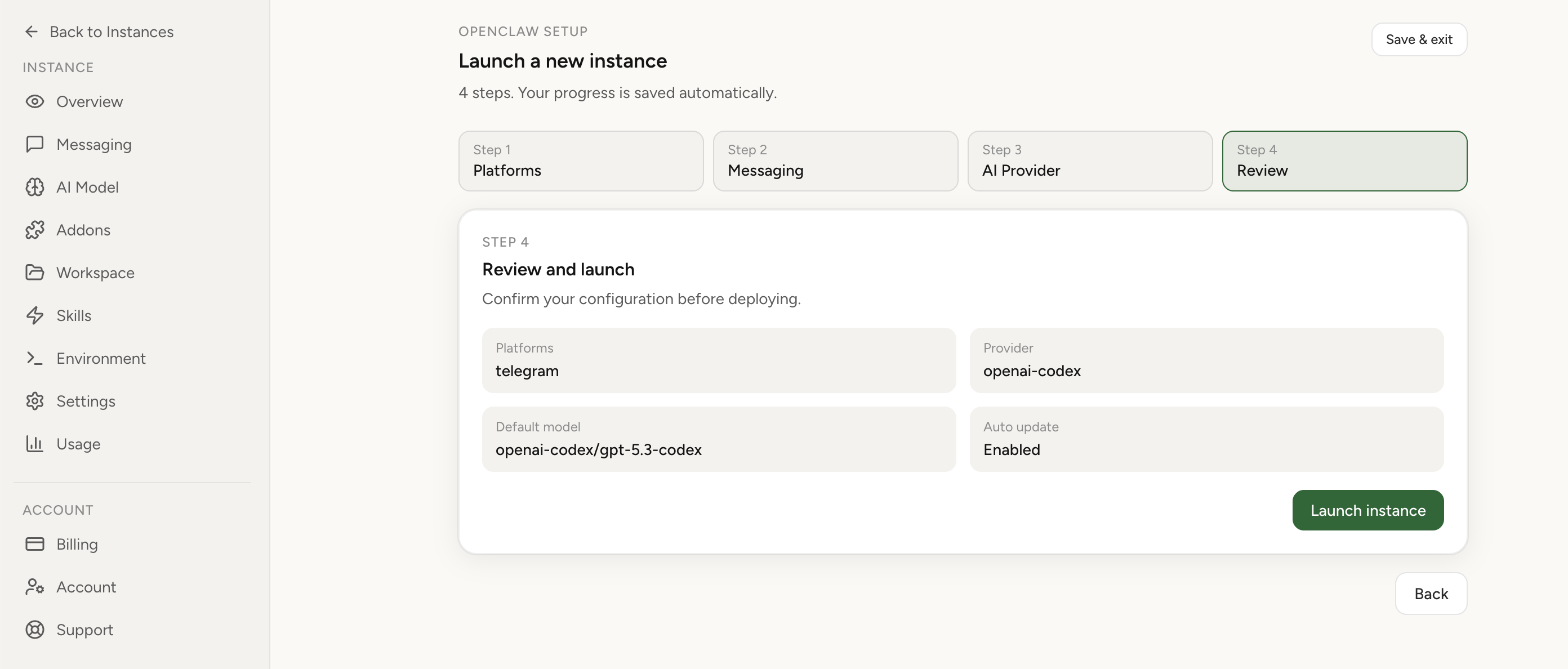
If your team is spending more time debugging delivery queues than shipping outcomes, move your current runtime into managed operations and keep your existing context.
Import your current OpenClaw instance in 1 click Enable reliable browser actions too
FAQ
Should I disable retries completely?
No. Retries are essential for temporary failures. The goal is better classification, not removing resilience.
Is dead-lettering a sign of failure?
Dead-lettering is healthy engineering. It prevents infinite loops and keeps non-recoverable items visible.
Can I solve long-message failures only by raising limits?
Platform limits are fixed. Use chunking, summarization, and formatting controls instead of assuming larger limits.