OpenClaw fake installer safety guide: verify links and stay protected
Problem statement: users are seeing fake installer repositories and copied setup instructions while trying to install OpenClaw. People are asking the same question across social and community channels: “How do I know I’m installing the real thing, and what should I do if I already ran the wrong script?” This guide gives a practical, non-panic plan.
- BleepingComputer report (published this week): fake GitHub installers were surfaced in AI-assisted search.
- Ongoing social chatter around OpenClaw safety and "which installer is real" concerns appears across X and Reddit discussions, with users sharing conflicting links.
- Community Q&A threads continue to repeat basic trust questions: official source, token exposure risk, and safe migration path.
Why this risk is serious for OpenClaw users
OpenClaw is powerful because it can access local files, run tools, and connect to messaging channels. That same power means a fake installer can do real damage quickly: steal credentials, capture tokens, install persistence, and quietly proxy your machine. This is not a generic software risk. It is higher impact because users often grant broad permissions during setup.
Quick threat model
- Entry point: fake repository or copied install command.
- Initial payload: malware loader disguised as OpenClaw installer.
- Expansion: token theft, browser/session scraping, or proxy abuse.
- Persistence: startup tasks, hidden background binaries, altered shell profile.
- Business impact: account compromise, data leakage, operational downtime.
Step-by-step safety flow
Step 1: Verify source before running anything
Never run an installer command from screenshots, random gist pages, or unknown GitHub organizations. Start from official OpenClaw documentation and official repository references. If a link looks almost right but has a slightly different organization name, stop immediately.
Step 2: Check repository trust signals
- Organization and repo names match official docs exactly.
- Commit history looks real and continuous, not copied snapshots.
- Releases and tags map to known project activity.
- No suspicious install script redirects to unrelated organizations.
Step 3: Inspect install commands before execution
If a command pipes remote script directly into shell, inspect it first. Security teams should use a simple policy: copy, review, validate source, then execute. This one habit prevents most drive-by installer compromises.
Step 4: If already installed, run integrity checks
If you are unsure whether your setup came from a trusted source, assume partial compromise until proven clean. Check running processes, startup entries, unknown binaries, and outbound connections. Validate OpenClaw config files and token storage locations for unexpected modifications.
Step 5: Rotate secrets and tokens
Rotate all model API keys, messaging tokens, and gateway auth values immediately after suspicious install activity. Do not wait for confirmation from antivirus alone. Token rotation is low-cost and high-value.
Step 6: Re-establish clean baseline
Rebuild trust from known-good sources and keep a written checklist: source verification, clean install, key rotation, post-install validation. Avoid improvisation. A written flow helps teams avoid missing one critical step.
Step 7: Harden ongoing operations
- Use least-privilege runtime settings where possible.
- Limit exposed interfaces and public access.
- Keep your instance updated and review security notes regularly.
- Document an incident response path before the next alert.
Common warning signs of fake installer pages
- Brand-new GitHub account with almost no real project history.
- Installer instructions that pull binaries from unrelated repos.
- Overly urgent wording like "must run now" or "security patch only here."
- Commands that disable local security checks before install.
- No verifiable references from official docs.
What to do if you suspect compromise
- Disconnect affected machine from sensitive networks.
- Rotate all relevant credentials and tokens.
- Capture forensic basics (logs, suspicious file hashes, process list).
- Scan and clean, or rebuild from known-good image if needed.
- Reconfigure OpenClaw from trusted sources only.
- Monitor for repeat suspicious outbound activity.
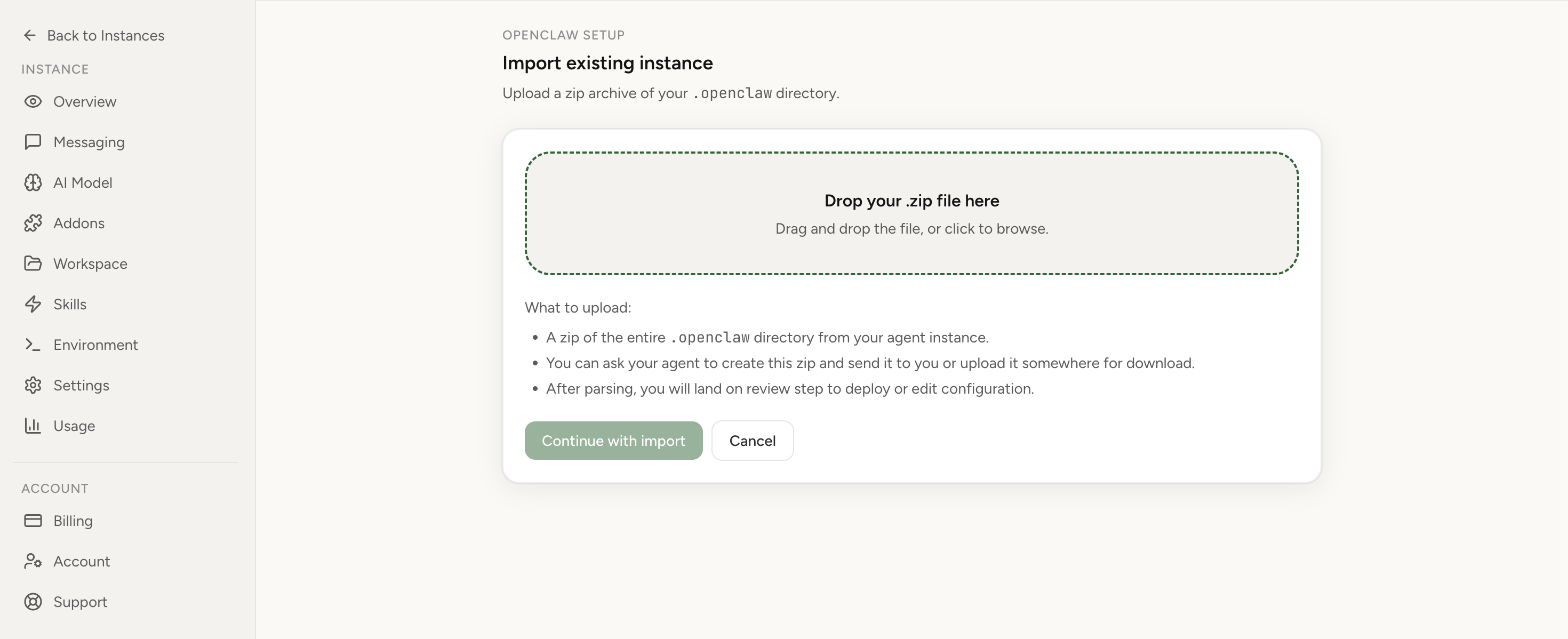
If you want a safer path after cleanup, import your existing OpenClaw instance and run with managed defaults instead of repeating manual security setup on every machine.
Import your current OpenClaw instance in 1 click OpenClaw cloud hosting
Fix once. Stop recurring installer trust and security incidents.
If this keeps coming back, you can move your existing setup to managed OpenClaw cloud hosting instead of rebuilding the same stack. Import your current instance, keep your context, and move onto a runtime with lower ops overhead.
- Import flow in ~1 minute
- Keep your current instance context
- Run with managed security and reliability defaults
If you would rather compare options first, review OpenClaw cloud hosting or see the best OpenClaw hosting options before deciding.
Migration checklist after security cleanup
After you complete local cleanup, migration can reduce ongoing risk and save time. Use this order: verify instance health, export/import with trusted flow, confirm channel integrations, then retire old unmanaged runtime. Do not run both old and new environments with the same unrotated credentials.
Post-migration validation
- All integrations reconnect with rotated credentials.
- No unknown processes remain on original host.
- Agent tasks complete normally in new environment.
- Audit logs show expected access patterns only.
- Team has one documented trusted install path.
If you still prefer self-management, follow the hardened setup baseline at /openclaw-setup/ and review trade-offs at /compare/. For teams that rely on real-browser tasking, pair this with secure relay practices at /features/chrome-extension-relay/.
How teams can reduce future exposure
The safest teams do not rely on individual memory. They use a short, shared install policy that everyone follows: approved sources only, no screenshot-based commands, mandatory token rotation after any suspicious event, and one owner responsible for security updates. Add this policy to onboarding docs so new engineers do not repeat old mistakes.
It also helps to standardize how your team validates links posted in chat channels. If someone shares an installer link, require a quick trust check before anyone runs it. This habit is especially important during high-urgency incidents, when people are more likely to click first and verify later.
Simple team checklist you can copy
- Bookmark official OpenClaw docs and repository pages.
- Reject unverified install commands from social posts.
- Rotate API keys on every suspected installer incident.
- Review startup tasks weekly on machines running OpenClaw.
- Run quarterly simulation: "fake installer detected" response drill.
From fear to confidence: practical decision framework
You do not need to choose between panic and denial. Use a simple decision tree: if source cannot be verified, do not execute; if suspicious command was executed, isolate and rotate; if local cleanup takes too long, migrate to a safer managed baseline and continue operations there. This approach keeps your team productive while reducing security risk. It also prevents the common trap of endlessly reinstalling on potentially compromised hosts.
Typical mistakes during recovery
- Only uninstalling and skipping token rotation.
- Trusting one antivirus scan as full closure.
- Reusing old credentials in a new install.
- Copying install scripts from community screenshots.
- Keeping no written source-verification policy for team members.
FAQ
Can fake repositories look almost identical to real ones?
Yes. Name lookalikes and copied README files are common. Always verify owner identity and official references.
Is this only a Windows issue?
No. Fake installer campaigns can target macOS and Linux users as well, often with shell-based payloads.
Should small teams care this much?
Absolutely. Small teams usually have fewer security layers, so one bad install can create disproportionate downtime and account risk.
Sources
- BleepingComputer: fake OpenClaw installer campaign (published this week)
- Nexbius security overview and community risk discussion (fresh community signal window)
- Official OpenClaw docs (trusted installation and operations baseline)