OpenClaw gateway restart drops chat replies: safe fix for Telegram and Discord
Problem statement: a user sends a message through Telegram or Discord, OpenClaw starts working, the gateway is restarted during that same turn, and the bot never sends the final answer. A minute later the gateway is healthy again, so the incident is easy to misread as a random channel glitch. It is not random. The active delivery path was interrupted before the reply reached the chat surface.
This guide explains how to diagnose that failure, how to restart OpenClaw without dropping in-flight replies, and how to verify that Telegram and Discord delivery really recovered. The fix is mostly operational discipline: do not restart the process from inside the chat turn that still has to answer the user. Drain the turn, restart from outside it, then test the real channel path.
- OpenClaw issue #78380 documents a 2026-05-06 case where an agent restarted its own gateway during a channel-originated turn. The restart succeeded, the service later reported healthy, but the Telegram or Discord reply for that turn was never delivered.
-
The reported environment used OpenClaw
2026.5.4 (325df3e), Linux, Node22.22.0, Telegram and Discord channels, and a Telegram forum Generic topic. Logs showedSIGTERM, clean shutdown, service start, and a later listening gateway. The missing piece was not startup. It was the reply that was still in flight. - In OpenClaw Setup operations, we treat channel delivery as the acceptance test. A listening gateway, a green status screen, or a working health endpoint is useful, but it does not prove that the user who triggered the maintenance received a reply.
What actually fails
A channel-originated OpenClaw turn has several moving parts. The channel plugin receives the inbound message, the gateway routes it to the correct session, the agent runs tools and model calls, the runtime assembles the final answer, and the channel plugin sends that answer back to the same Telegram topic, Discord channel, direct message, or thread. A gateway restart in the middle of that chain can kill the process that was holding the delivery context.
The confusing part is that the restart can be clean. The service manager may stop the old process, start a new process, and show a healthy gateway. That only describes the new process. It does not resurrect the old in-flight response, and it does not automatically replay the final message that was supposed to be sent before shutdown.
How to recognize the pattern quickly
- The user message is received and routed to the expected OpenClaw session.
- The agent performs a restart or asks the host to restart the gateway during the same turn.
- Gateway logs show normal shutdown and a later healthy startup.
- The user gets no final answer for that exact turn.
- A new message after the restart may work, which makes the lost reply look like a one-off.
- Telegram forum topics or Discord threads may make the symptom harder to spot because routing state matters.
Likely causes, in order
1) Restart from inside the active turn
This is the primary risk. If the agent uses a tool command to restart the gateway while the current response has not yet been delivered, it is effectively cutting the branch it is sitting on. The restart may fix the underlying configuration problem, but it can still destroy the reply that was supposed to explain the fix to the user.
2) Delivery context is process-local
Channel delivery depends on runtime state: the inbound channel, target chat, topic or thread, message metadata, and the final assistant payload. Some of that state can be reconstructed for future turns. The current turn is more fragile. If the old process exits before final delivery, the new process may not know that it owes the user a response.
3) Health checks verify startup, not the missed reply
A gateway health check is necessary, but it is not sufficient. It tells you the process is alive. It does not tell you whether the user-visible message that was in progress before the restart reached Telegram or Discord. Treat health checks as the first gate, not the last gate.
4) Topic and thread routing hide the failure
Telegram forum topics and Discord threads add one more place for confusion. A reply can fail because the active turn died, because the wrong topic was targeted, or because a separate channel bug affected delivery. Start by proving whether new messages in the same topic work after restart. If they do, the restart likely dropped the old turn rather than breaking the channel permanently.
Safe restart runbook
Step 1: decide whether restart is truly needed during the conversation
If the bot can still reply, do not restart immediately. Send a short visible acknowledgement first, then perform maintenance outside the active turn. The practical goal is simple: no process restart should happen before the user receives either the answer or a clear maintenance acknowledgement.
Step 2: pause new work before touching the gateway
Disable or pause scheduled jobs that could begin during the restart window. If your instance receives high-volume chat traffic, tell the team the bot is entering maintenance. For one-person setups, this may only mean waiting until the current message completes. For team channels, it means avoiding a pile of half-started turns.
Step 3: restart from outside the active agent turn
Use a host terminal, dashboard action, service manager, or deployment workflow that is not part of the same OpenClaw chat turn. The important rule is not the specific command. The important rule is isolation: the process being restarted should not be the process responsible for delivering the final answer to the message that triggered the restart.
Step 4: wait for the gateway to listen, then verify channels
After restart, check the gateway and channel status, but keep going. Send a fresh message through Telegram and Discord. If you use Telegram forum topics, test the same topic that failed. If you use Discord threads, test the same thread shape. The verification message should produce a normal user-visible reply, not only a log line.
Step 5: record the missed-turn evidence
Save timestamps for the inbound message, restart, gateway stop, gateway start, and first successful post-restart reply. This lets you distinguish a lost in-flight turn from a broader channel outage. It also gives upstream maintainers useful evidence if you file a bug.
Fix once. Stop recurring chat replies after gateway restarts.
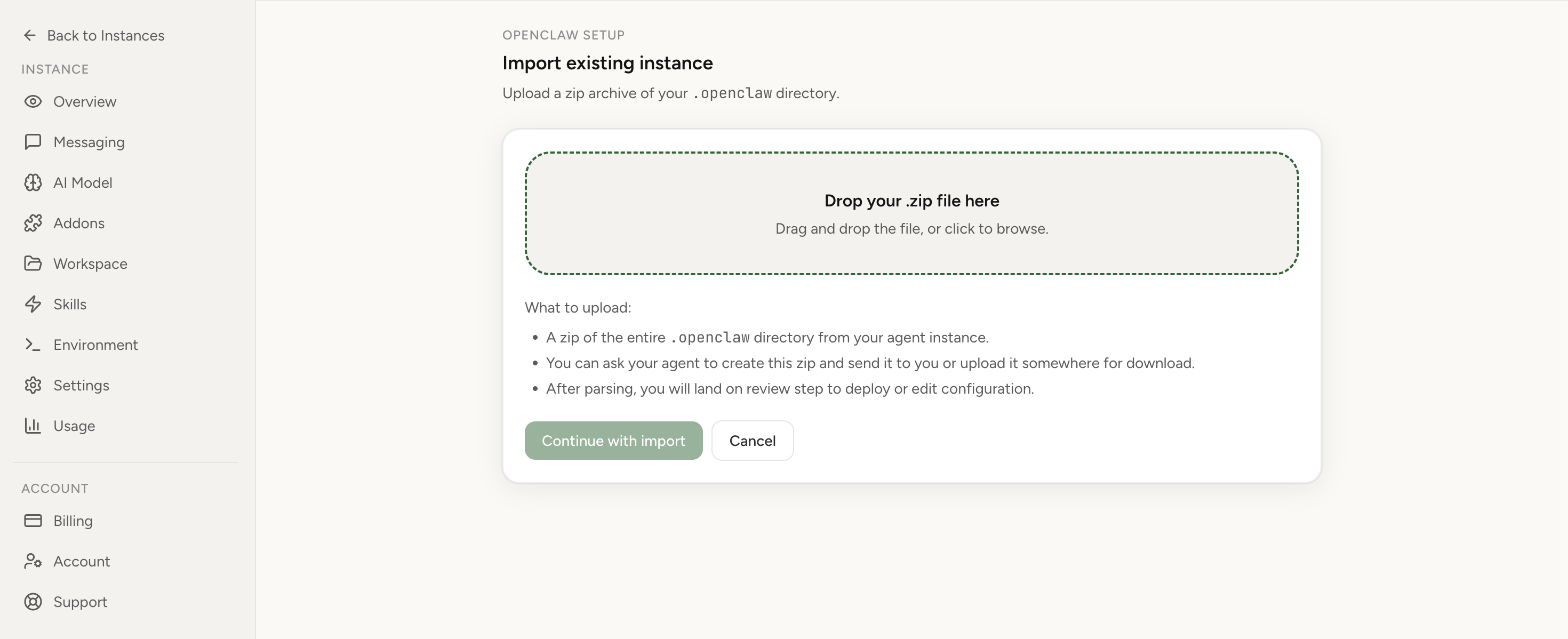
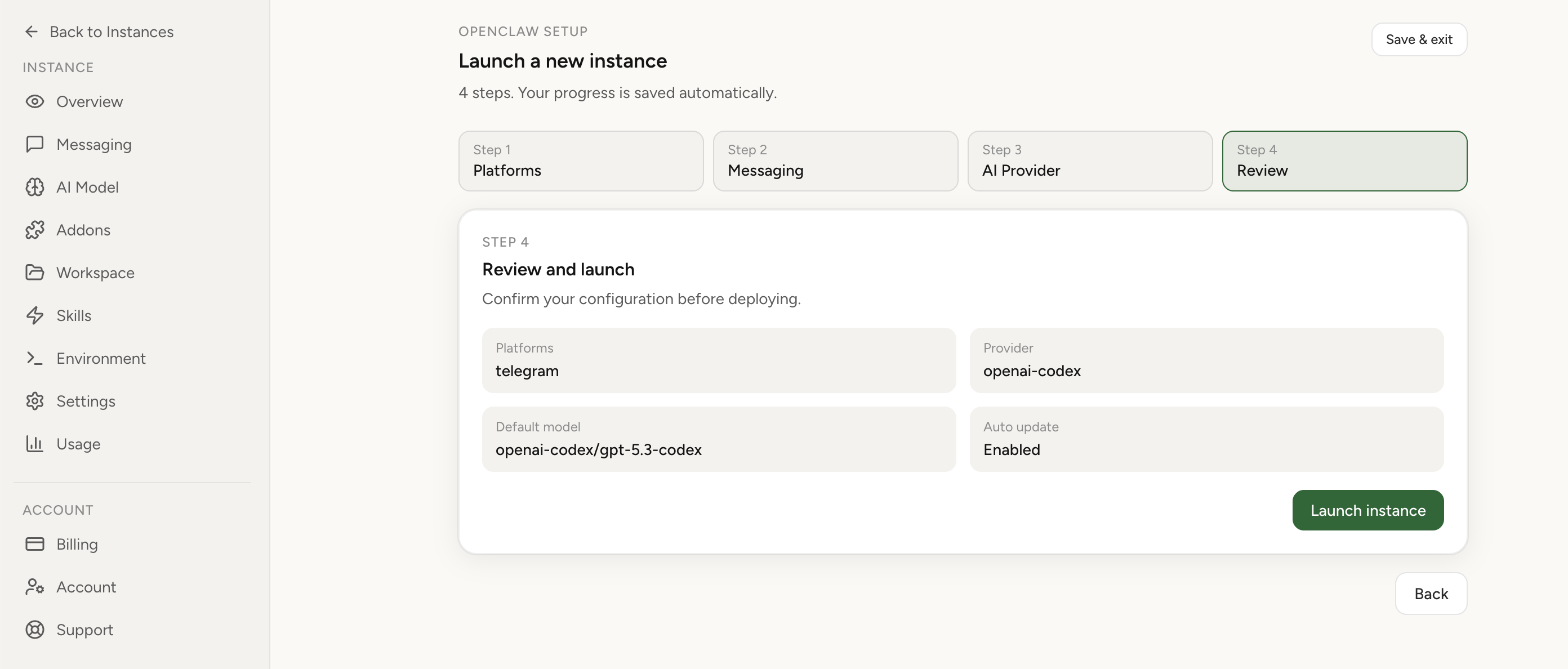
If this keeps coming back, you can move your existing setup to managed OpenClaw cloud hosting instead of rebuilding the same stack. Import your current instance, keep your context, and move onto a runtime with lower ops overhead.
- Import flow in ~1 minute
- Keep your current instance context
- Run with managed security and reliability defaults
If you would rather compare options first, review OpenClaw cloud hosting or see the best OpenClaw hosting options before deciding.
Diagnostics checklist
- Confirm the inbound message reached OpenClaw before the restart.
- Confirm the restart happened before final channel delivery.
- Check whether a new message after restart receives a normal reply.
- Compare Telegram direct messages, Telegram topics, Discord channels, and Discord threads if you use more than one surface.
- Look for a final assistant payload in session history. If the payload exists but the chat did not receive it, focus on delivery.
- If no final payload exists, focus on execution interruption rather than channel formatting.
Edge cases
The bot sends a reply in Web UI but not Telegram
That points toward channel delivery, not necessarily restart loss. Test a new Telegram message after restart, then inspect channel plugin logs. If Web UI and Telegram disagree only for media or topic replies, compare against known Telegram-specific incidents before changing gateway lifecycle policy.
The bot never produced a final answer anywhere
The turn may have been killed before completion. In that case, restarting more aggressively will not help. Reduce the task, rerun it after the gateway is stable, and verify the model path separately.
The restart is part of an automated fix
Automated repair is useful, but it needs a safe handoff. Prefer a two-step flow: tell the user maintenance is required, schedule or trigger the restart outside the active turn, then send a new confirmation after the gateway is back. A self-restart that tries to also deliver the final chat answer is brittle.
Typical mistakes
- Restarting the gateway before the current reply is visible in the chat.
- Assuming a green status check proves the missed reply was delivered.
- Testing only Web UI when the incident happened in Telegram or Discord.
- Ignoring Telegram topic IDs or Discord thread context during verification.
- Letting cron jobs start while maintenance is already underway.
- Filing a vague bug report without restart timestamps or channel evidence.
How to verify the fix
A restart procedure is fixed when it protects both process health and user-visible delivery. Use this acceptance test: send a message, wait for a visible acknowledgement, perform the restart from outside the turn, wait for the gateway to return, then send a fresh verification message through the same channel. If the verification reply appears in the correct topic or thread, the channel is back. If the maintenance acknowledgement also appeared before restart, no user was left wondering whether the bot died.
FAQ
Can OpenClaw replay the reply after restart?
Do not depend on replay for this failure mode. Treat the in-flight answer as lost unless you can see a delivered message or a durable queued delivery record. The safer operational pattern is to avoid restarting until the current turn has visibly finished.
Should I restart the gateway from chat at all?
Avoid doing it during the same turn that needs to answer the user. If chat is your control surface, use it to request maintenance and then run the restart from a separate operator path. That separation prevents the maintenance action from killing its own response.
Where should I send users after repeated restart problems?
If the team wants less runtime babysitting, compare the self-hosted path with OpenClaw cloud hosting or review managed versus self-hosted tradeoffs. For teams that already have an instance, the fastest path is usually to import the current setup instead of rebuilding from scratch.