Why fast teams are shifting OpenClaw operations to managed hosting
Problem statement: self-hosted OpenClaw gives control, but many teams now hit a predictable wall: too much engineering time goes to upgrades, reliability incidents, and security hardening. When that happens, growth slows even if product demand is rising.
Community conversations this week are heavily focused on two themes: rapid adoption and operational risk. Public discussion threads highlight both excitement around broader OpenClaw usage and concern about production security/reliability. This is exactly the moment teams ask: “Do we keep owning the full stack?”
The new reality: adoption is growing faster than ops bandwidth
OpenClaw is moving quickly from experimentation to daily operations. That shift changes the economics. During early testing, a senior engineer can absorb occasional breakage. In production, every regression, networking surprise, credential incident, or routing bug impacts real users and real revenue.
Teams that scale successfully are not the teams with the most clever shell scripts. They are the teams that protect product velocity. If your developers spend Monday patching infrastructure and Tuesday validating broken automations, your roadmap quietly slips even when everyone is working hard.
How to decide if migration is worth it
Use this scorecard. If you answer “yes” to 4 or more questions, migration should be evaluated now:
- Did your team handle two or more OpenClaw reliability incidents in the last month?
- Do upgrades require manual firefighting before normal operation resumes?
- Do non-infra engineers wait on infra specialists to unblock workflows?
- Are security checks and patch cycles taking planned feature time?
- Do you lack clear runbooks for incident response and rollback?
- Is there no measurable SLO for agent execution success and latency?
Migration playbook: move without chaos
Phase 1: map your live system
Inventory channels, workflows, scheduled jobs, model routing, and external dependencies. Most failed migrations happen because teams move infra first and behavior second. Reverse that: map behavior first.
Phase 2: classify workloads by business criticality
Group automations into three buckets: mission-critical, revenue-adjacent, and experimental. Migrate revenue-adjacent first for low-risk confidence gains. Keep mission-critical with strict canary rules.
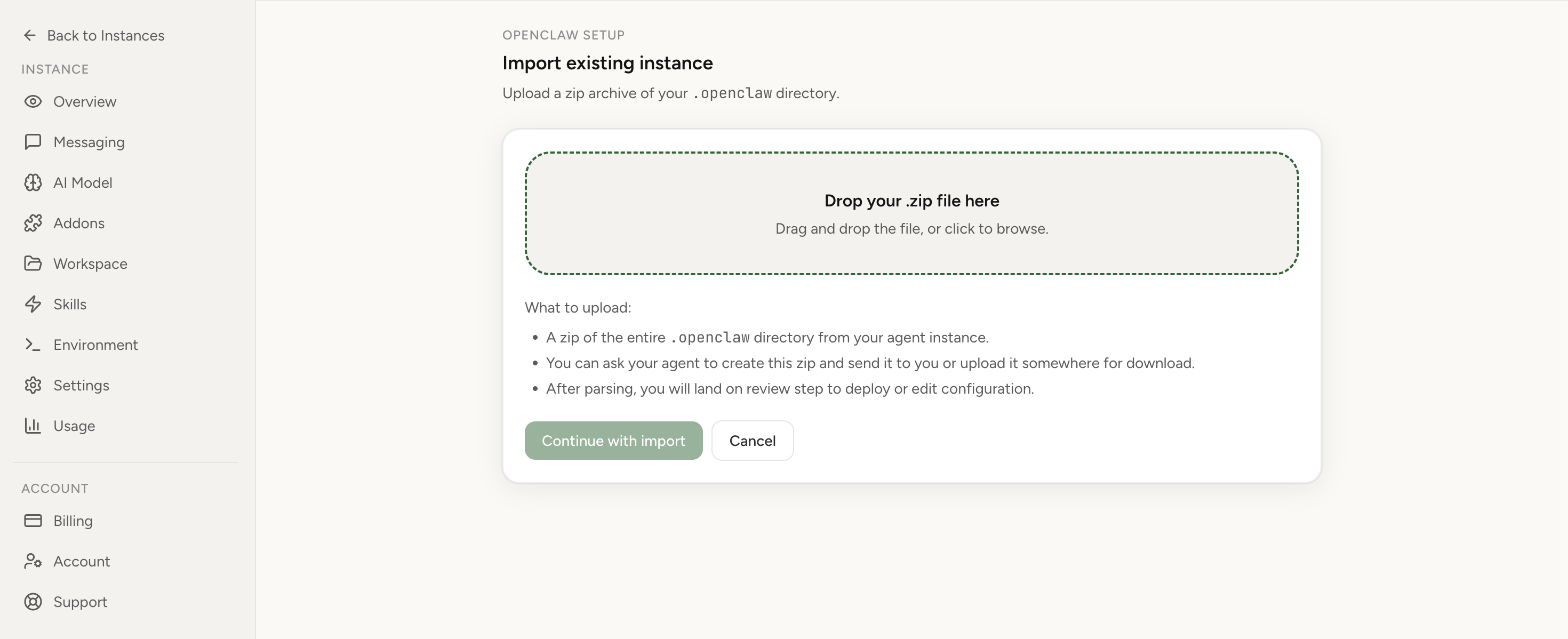
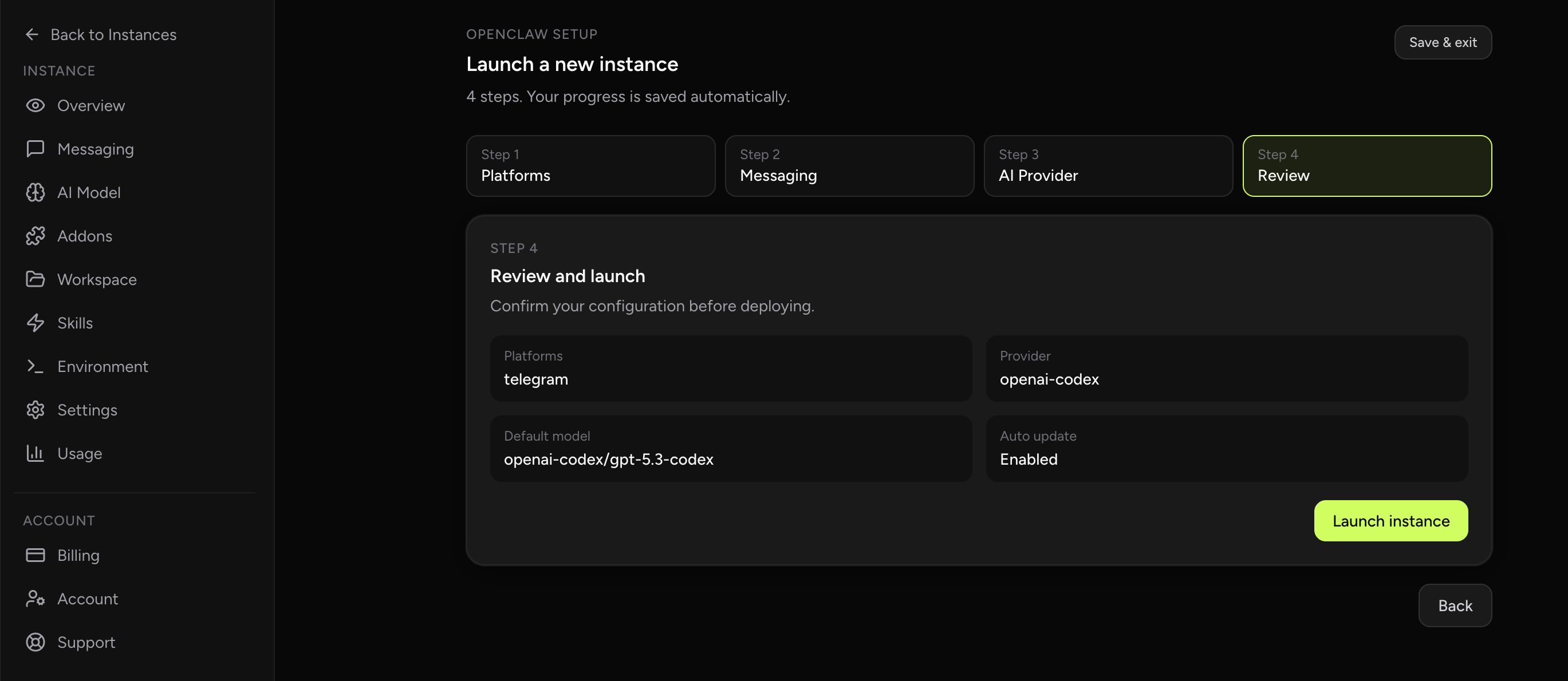
Phase 3: import one representative workflow
Start with a workflow that includes at least one external tool call and one channel delivery path. If that workflow reaches parity, you have confidence your architecture assumptions are valid.
Phase 4: run dual-path validation
For a limited window, run old and new environments in parallel for selected workloads. Compare output quality, execution time, delivery reliability, and operator effort. This removes guesswork and gives objective go/no-go criteria.
Phase 5: migrate in waves with rollback gates
Move a small set, observe for 24-72 hours, then proceed. Every wave should have explicit rollback criteria: error-rate threshold, latency threshold, and delivery-failure threshold.
Practical details that make migration succeed
1) Keep prompt and tool contracts stable
Infrastructure migration should not silently change how prompts are structured or how tools are called. Freeze these interfaces for the migration period. Change one axis at a time.
2) Make observability non-negotiable
Define core dashboards before cutover: run success rate, trigger-to-response latency, channel delivery success, and top error types. Without baseline metrics, every migration argument becomes opinion-driven.
3) Assign clear ownership
Migration fails when everyone assumes someone else is tracking edge cases. Assign one technical owner and one business owner for each migrated workflow so quality and outcomes stay aligned.
4) Document edge-case handling
Include what happens when API providers rate-limit, channels go offline, or browser automation targets change. The right response must be documented, not improvised under pressure.
Financial lens: where migration ROI usually appears first
Teams often underestimate the hidden cost of self-hosted operations: context switching, delayed releases, after-hours incident response, and compliance rework. ROI from managed hosting usually appears first in three places: fewer blocked feature sprints, lower incident recovery time, and faster onboarding for new teammates. Even before pure infrastructure cost changes, execution speed improves because engineers can stay focused on customer-facing work.
Build a simple before/after scorecard for 30 days: hours spent on maintenance, number of reliability interruptions, and median time from idea to shipped workflow. Those numbers make the decision clear.
Common edge cases during managed migration
- Channel permission mismatch: message channel works in staging, fails in production due to scope mismatch.
- Cron timezone drift: jobs execute on UTC assumptions while team expects local-time behavior.
- Browser relay assumptions: operators forget tab attach/relay state and blame unrelated components.
- Secrets parity gaps: keys exist in old setup but not in imported environment.
- Operator workflow mismatch: runbooks still reference old control paths after migration.
How to verify migration success
- Same or better run success rate for migrated workflows over a full week.
- Lower incident time spent per engineer compared with pre-migration baseline.
- Faster mean time to recover for workflow failures.
- No increase in security exceptions or policy violations.
- Improved delivery predictability during peak usage windows.
Import your current OpenClaw instance in 1 click
Keep your workflows, reduce infrastructure drag, and move faster with a migration path built for real teams.
FAQ
Will migration lock us in?
Lock-in risk is reduced when you preserve prompt/tool contracts, export runbooks, and maintain clean workflow definitions. Treat portability as a design requirement from day one.
How long does a realistic migration take?
Most teams can validate the first production-grade workflow in days, then complete staged migration over several weeks depending on workflow complexity and compliance constraints.
Where should we start if we are overloaded right now?
Start with a single painful workflow that frequently breaks. Prove reliability and operator time savings there, then expand. You can use the setup guide and managed hosting page to plan the first migration wave.