OpenClaw npm install missing module errors recovery
Problem statement: you run npm install -g openclaw@latest, the install appears to finish, you start setup,
and then OpenClaw crashes with MODULE_NOT_FOUND errors for packages that you never chose manually. This week’s fresh reports pointed to missing extension dependencies such as
@larksuiteoapi/node-sdk and nostr-tools. In practice, that means a clean global install can fail before you ever reach useful work.
- The install command appears successful, so the later crash feels random.
- The missing package names often look unrelated to the task you were trying to do.
- Reinstalling globally can reproduce the same broken state and waste more time.
- Manual one-off fixes can get you unstuck, but they leave you with a brittle machine-specific setup.
What the error usually means
A missing module error after a clean install usually means the runtime is trying to load code that depends on packages that are not available in the installed distribution. In other words, the problem is often not your API key, not your provider choice, and not your shell. It is a packaging or dependency-path mismatch between what the startup process expects and what was actually installed.
That distinction matters because many users lose hours fixing the wrong layer. They re-enter credentials, switch Node versions, or restart the gateway repeatedly when the real problem is that the runtime dependency graph is incomplete.
Common causes
- Bundled dependency gaps: runtime code references extension packages that are not present after the global install.
- Release drift: a package release can install cleanly while still failing on first startup.
- Blind reinstall loops: repeated reinstall attempts keep pulling the same broken artifact.
- Machine drift after manual fixes: emergency installs patch one box, but upgrades later reintroduce the same failure.
- No rollback plan: operators overwrite the only known-good state before preserving logs or a fallback target.
How to diagnose the problem fast
- Capture the first crash exactly. Save the literal missing package name and the first stack trace you see.
- Confirm the install path that failed. This guide is about fresh global npm installs that appear successful and then break during startup.
- Check whether the failure happens before any real provider work. If it does, treat this as a runtime packaging issue first.
- Look for repeatability on a clean shell. If the same install path fails the same way on a fresh attempt, stop assuming it is a local typo.
- Preserve a known-good baseline if you have one. If another machine or another pinned setup still works, keep it untouched until you finish diagnosis.
Step-by-step recovery flow
1) Stop the blast radius
Do not keep running the same global install and launch loop without notes. That creates noise and makes it harder to tell whether anything changed. Save the exact failing command, the exact missing package, and the exact startup output.
2) Decide whether you need immediate continuity or local purity
If you are only experimenting, you can spend more time trying to repair the local install path. If your configured OpenClaw environment already matters to work, the priority is continuity. That usually means choosing a controlled rollback or a migration path instead of fighting the same broken global install over and over.
3) Use a rollback if you have one
A rollback is often the fastest route back to useful work. Restore the last known-good environment, verify one real workflow, and only then continue investigating the bad install. The goal is to separate business continuity from root-cause investigation.
4) Avoid permanent one-off patching unless it is clearly temporary
Installing missing packages manually can confirm the class of problem, but it should not become your long-term operating model. If every successful startup depends on undocumented local patching, the next reinstall or upgrade can erase the fix.
5) Choose a cleaner path for stable daily use
If you already have a working OpenClaw configuration and you are tired of local global install fragility, move toward a setup where you preserve the configuration shape and reduce machine-specific drift. That is where migration-first recovery starts making sense.
Evidence from the field
We have seen the same operational lesson in our own hosted work: dependable recovery comes from explicit validation, not from hopeful retries. In our 2026-03-16 work on hosted lossless-claw support, first-time enablement validated that runtime dependencies were actually loadable and explicitly reinstalled broken pieces before continuing. That matters because a package manager saying “installed” is not the same as a runtime saying “usable.”
We applied the same principle again in later guardrail work. Our 2026-04-09 email dedupe changes used persistent markers to stop duplicate sends, and the 2026-04-08 crashloop recovery update added a durable cooldown so automated retries would not keep thrashing the same instance. The shared lesson is simple: durable state and explicit checks beat blind repetition. That is the right mental model for missing-module incidents too.
What to do if you want a safer migration path
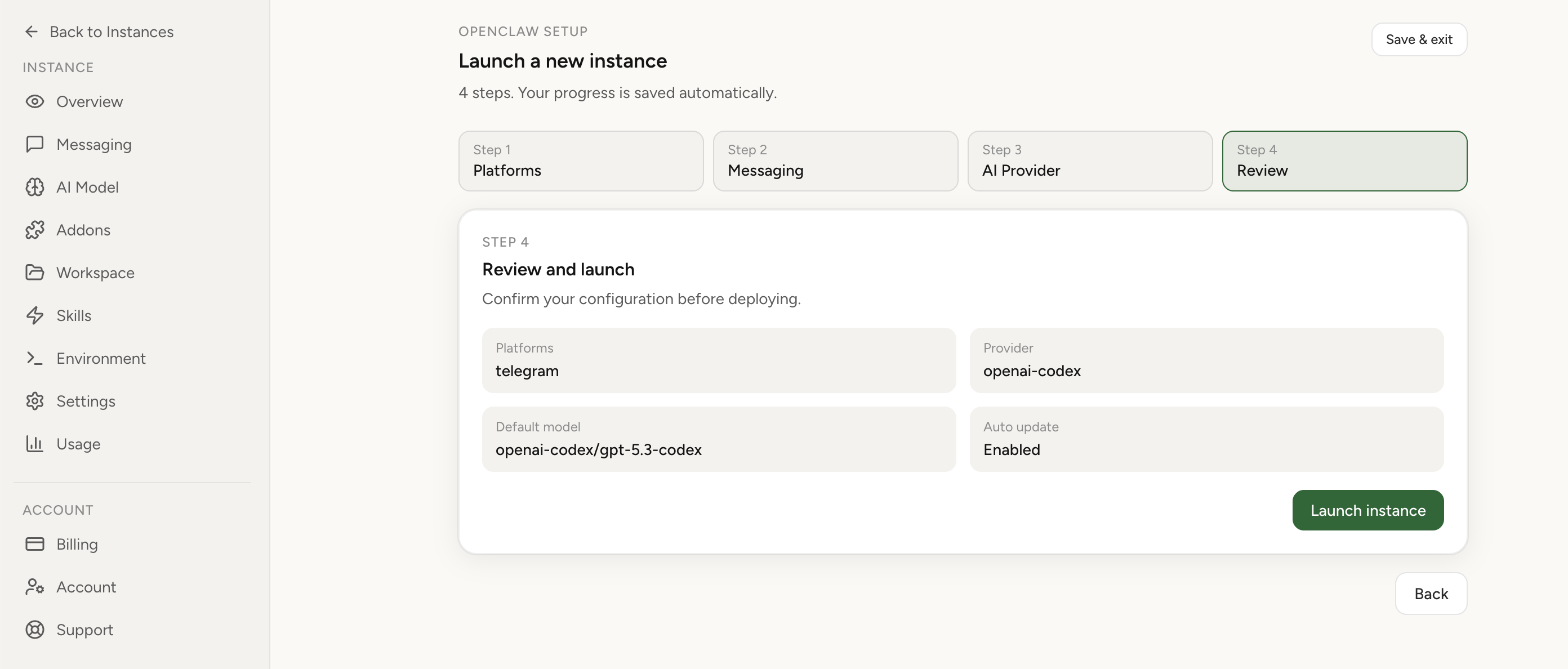
If your current environment already contains the prompts, settings, agents, or plugins you care about, rebuilding everything from zero is often the slowest response. A migration-first approach is usually better: preserve the shape of the working setup, then verify the parts that matter in a more stable runtime.
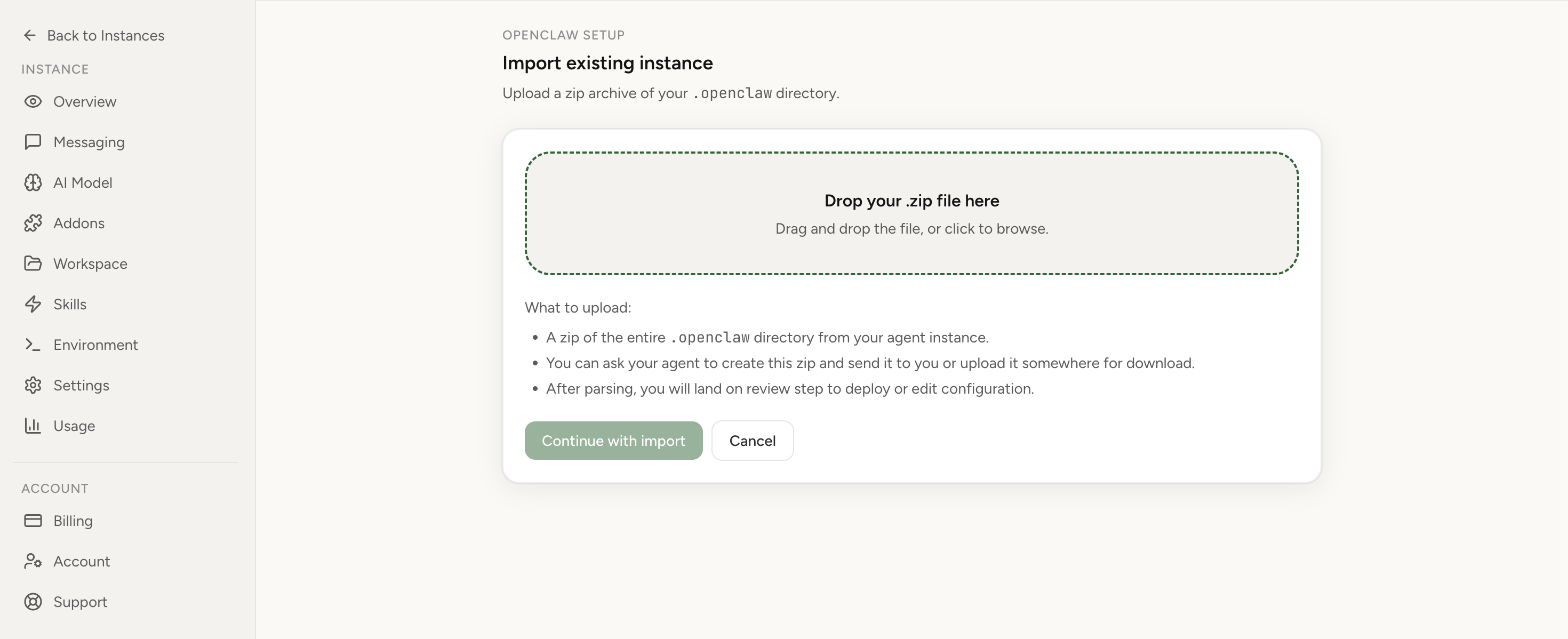
That is especially relevant because our import path already preserves compatibility with the existing main-agent archive shape, and import parsing work has already had to deal with real plugin configuration details. In plain language, import is designed for continuity, not for forcing a manual rebuild every time a local install goes sideways.
Fix once. Stop recurring npm install failures and missing-module startup crashes.
If this keeps coming back, you can move your existing setup to managed OpenClaw cloud hosting instead of rebuilding the same stack. Import your current instance, keep your context, and move onto a runtime with lower ops overhead.
- Import flow in ~1 minute
- Keep your current instance context
- Run with managed security and reliability defaults
If you would rather compare options first, review OpenClaw cloud hosting or see the best OpenClaw hosting options before deciding.
Edge cases to think about
The missing package changes between attempts
That still points to dependency inconsistency. Do not treat that as proof your machine is uniquely cursed. It usually means the startup path is touching different missing edges of the same broken graph.
The install works on one machine but not another
That is not necessarily good news. It often means you already have machine drift, hidden manual fixes, or different cached states.
You only use one provider, so you assume unrelated extension modules should not matter
Startup paths can still touch code you are not actively using. That is why the crash can mention packages you never selected directly.
How to verify recovery
- The startup path completes without missing-module crashes.
- You can perform one real workflow, not just open the UI.
- A restart still works. Recovery is not real until it survives a second start.
- You know which recovery path you chose: rollback, temporary local patch, or import/migration.
- You have notes showing what changed, so the next upgrade does not become archaeology.
Typical mistakes
- Reinstalling globally over and over without preserving the first failure evidence.
- Mixing emergency package patches with production work and then forgetting what was changed.
- Deleting a known-good setup before the new one has passed a real workflow test.
- Assuming a successful install log means the runtime is healthy.
- Treating repeated local repair as free. The cost shows up later in upgrades, downtime, and operator attention.
When the better fix is a better operating model
If missing-module incidents keep interrupting real work, compare the tradeoffs on /compare/, review OpenClaw cloud hosting, and start from OpenClaw Setup if you want a path that spends less time on global install archaeology.
Import your current OpenClaw instance in 1 clickFAQ
Can I just install the missing package manually and move on?
You can for urgent testing, but it is risky as a permanent answer because it creates machine-specific drift.
Does this always mean npm itself is broken?
No. The install command can succeed while the runtime distribution is still incomplete for startup.
Is this only a macOS problem?
No. This week’s reports covered both macOS and Ubuntu environments, which is one reason the pattern matters.
What should I read next?
Start with OpenClaw Setup if you want the migration path, /compare/ if you are weighing self-hosted versus managed tradeoffs, and OpenClaw cloud hosting if reliability is now the main decision point.