OpenClaw “pairing required” loop on remote UI: exact diagnosis and stable fix
Problem statement: you open remote Control UI, but it stays on pairing required even after setting permissive auth values. This creates a false sense of misconfiguration and blocks teams from daily operations.
- Issue #42931 (2026-03-11): remote Control UI via Tailscale remains stuck on pairing required despite expected auth settings.
Why pairing loops are hard to debug
Pairing loops are rarely caused by one wrong line. They usually come from trust-boundary mismatch between gateway, proxy, and browser origin. Teams often toggle auth mode repeatedly and still fail because forwarded identity and canonical origin settings remain inconsistent.
The practical impact is immediate: no dashboard access, no fast troubleshooting, no controlled session visibility. If your team depends on remote administration, this is an operational outage, not a cosmetic bug.
Fast architecture map before changing config
- Client browser connects through one URL (domain or private network name).
- Reverse proxy rewrites and forwards request headers.
- Gateway validates origin, trusted proxy chain, and auth mode.
- UI session state reflects trust result and capability checks.
If any of these layers disagree on host, protocol, or identity source, pairing can fail even when settings appear valid.
Most common root causes
1) Forwarded header mismatch
If proxy does not pass consistent X-Forwarded-Proto, X-Forwarded-Host, and
X-Forwarded-For, gateway trust decisions can diverge from what UI expects.
2) Multiple origins used by the same team
Opening UI from both internal hostname and public domain causes session trust confusion. Pick one canonical entry URL and keep it consistent in docs, bookmarks, and runbooks.
3) Proxy trust rules too broad or too narrow
Overly broad trusted proxy settings can create ambiguous trust behavior. Too narrow settings can reject valid headers. Either side can produce the same endless pairing loop symptom.
4) Gateway mode drift after updates
During quick upgrades, config files or environment variables can drift. What worked yesterday may now conflict with new defaults or stricter validations.
Step-by-step fix workflow
- Freeze one access path.
Choose a single canonical URL for Control UI. Stop using alternate hostnames while debugging. - Inspect effective runtime config.
Confirm actual loaded values, not only file contents. Environment overrides are frequent hidden causes. - Validate proxy header forwarding.
Ensure protocol, host, and client IP headers are present and consistent. - Align trusted proxy range and gateway trust policy.
Use explicit ranges instead of broad wildcards whenever possible. - Restart gateway and clear stale UI session.
Test in a private browser window to avoid old local storage state. - Run acceptance checks from two networks.
Validate from office/VPN and external network to confirm stable behavior.
Reference checks
# Runtime health and mode
openclaw status
openclaw gateway status

# Check active listeners and proxy targets
ss -tulpn | grep -E "18789|openclaw"

# Restart and test
openclaw gateway restart

# Optional: verify headers via reverse proxy logs
# (Nginx / Caddy / Traefik depending on your stack)
Edge cases teams hit in real deployments
Edge case: works locally, fails only through VPN mesh
Mesh routing can alter source identity and forwarding assumptions. Validate proxy trust ranges against the actual network addresses presented by your overlay network.
Edge case: works in one browser, fails in another
Local cached session metadata can trap old trust values. Test with private windows and clear stale storage entries.
Edge case: auth mode set to none, still blocked
Inconsistent origin handling can still block UI activation even when auth is relaxed. Resolve origin and proxy trust alignment before changing security posture.
Validation checklist for a complete fix
- UI opens without pairing loop from canonical URL.
- No repeated trust or pairing warnings in gateway logs for 30+ minutes.
- Two operators can access UI from separate networks.
- Gateway restart does not reintroduce the loop.
- Deployment docs include exact proxy and origin policy.
Operational hardening after recovery
- Create one deployment template for all environments.
- Pin one canonical UI hostname per environment.
- Automate config validation in CI before rollout.
- Run quarterly remote access drills to catch drift early.
- Keep a rollback procedure for proxy and gateway configs.
If pairing incidents keep returning, compare your current model against managed hosting where proxy trust, secure defaults, and patch rollouts are pre-hardened. Use /compare/ for decision criteria and /openclaw-cloud-hosting/ for deployment options.
Fix once. Stop recurring Control UI pairing loops.
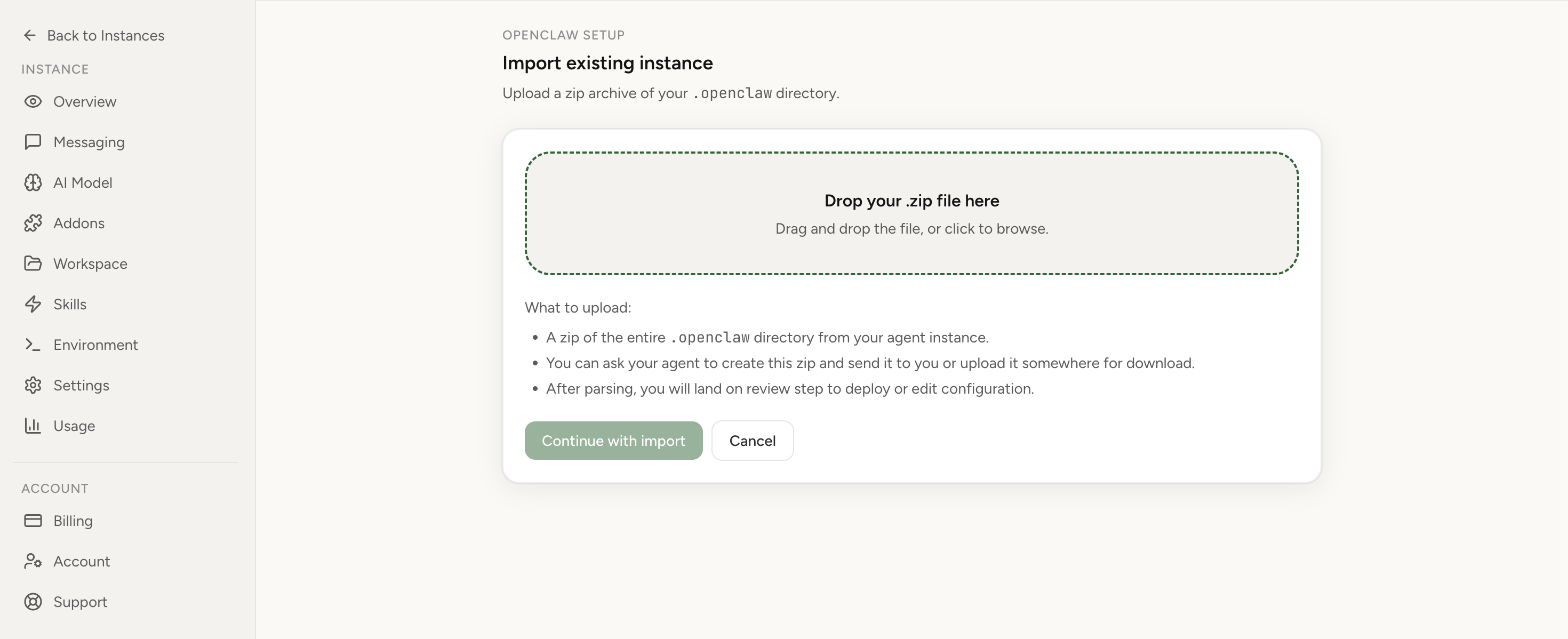
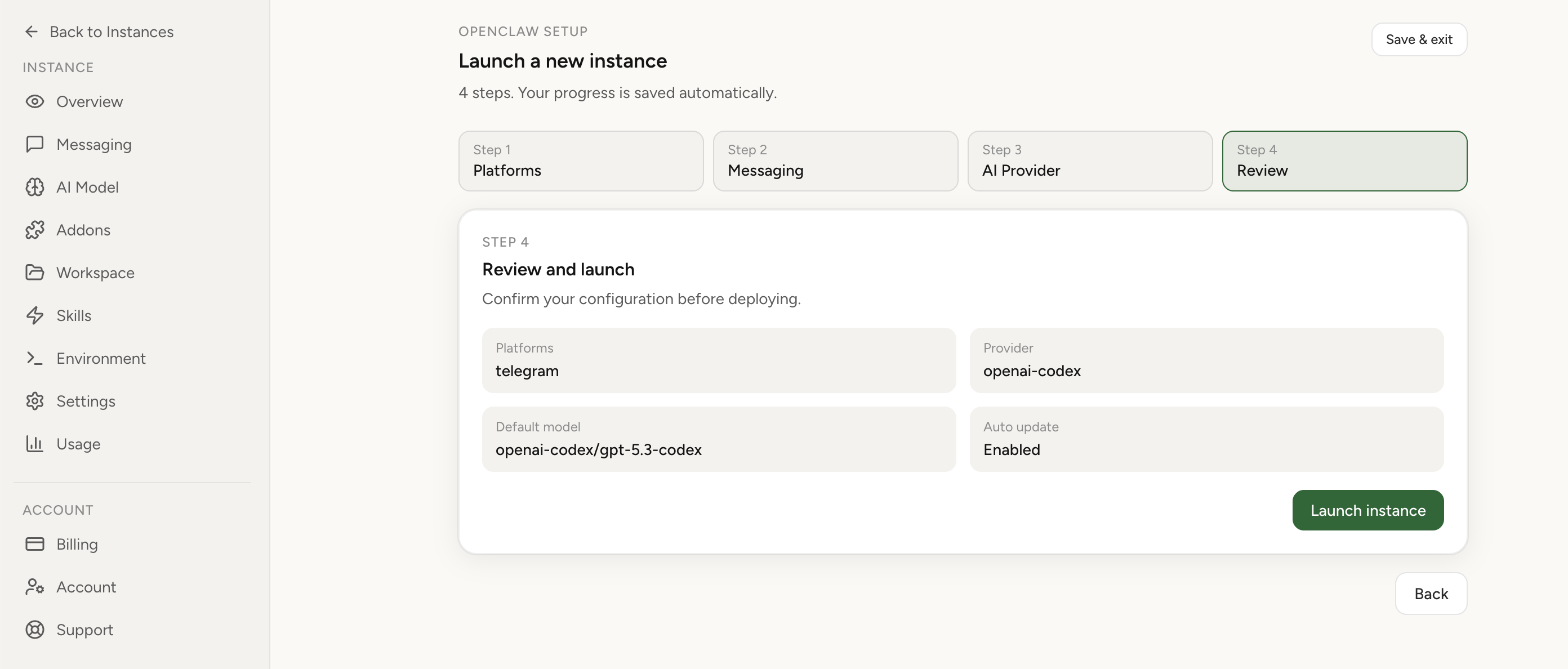
If this keeps coming back, you can move your existing setup to managed OpenClaw cloud hosting instead of rebuilding the same stack. Import your current instance, keep your context, and move onto a runtime with lower ops overhead.
- Import flow in ~1 minute
- Keep your current instance context
- Run with managed security and reliability defaults
If you would rather compare options first, review OpenClaw cloud hosting or see the best OpenClaw hosting options before deciding.
Advanced troubleshooting matrix for stubborn environments
| Symptom | Likely cause | Fastest safe action |
|---|---|---|
| Pairing loop only behind reverse proxy | Forwarded host/proto mismatch | Align proxy headers and verify one canonical origin |
| Loop returns after restart | Config drift from env overrides | Print effective runtime config and remove conflicting overrides |
| Works for one user, fails for another | Browser cache/session persistence mismatch | Retest in private window and clear stale local data |
| Fails only on overlay network | Trusted proxy ranges exclude overlay addresses | Update trust ranges to explicit overlay CIDRs |
Verification script for your runbook
After every gateway or proxy change, run a repeatable verification checklist instead of manual guesswork. This avoids the common trap where one engineer gets access back, assumes incident closed, and the next operator still sees pairing lockout. A reliable runbook should include browser test mode, network path, timestamp, and expected UI evidence.
- Open UI from canonical URL in private window and confirm dashboard load.
- Check gateway logs for trust and origin warnings during login.
- Repeat from secondary network path to confirm no hidden network dependency.
- Restart gateway and repeat the same two-network check.
- Record results in incident notes with config hash or deployment ID.
Design choices that prevent future pairing incidents
Mature teams stop treating remote UI access as ad hoc configuration. They define a standard interface contract between browser, proxy, and gateway: one hostname, explicit protocol, explicit trust chain, and validated health checks after each deployment. This creates predictable behavior and makes onboarding much faster for new operators.
FAQ
Is this issue specific to Tailscale?
No. It can happen with any remote path where proxy forwarding and origin trust are misaligned.
Should I disable security checks to make UI work quickly?
Avoid that in production. You may temporarily restore access but create larger exposure. Fix trust boundaries instead.
Where do I start if I am deploying from scratch?
Start with /openclaw-setup/ and keep browser control workflows consistent with /features/chrome-extension-relay/ when your team needs stable tab-based actions.