OpenClaw tool calls stop mid-run? Diagnose the failure before you retry
Problem statement: OpenClaw starts a real task, calls tools, maybe edits a file or sends progress, and then the run simply stops. Sometimes the chat shows a vague failure. Sometimes the session looks idle. Sometimes the next retry continues from a damaged transcript and fails again. The dangerous part is not the error message. The dangerous part is not knowing whether the agent finished, failed cleanly, or left partial work behind.
This guide gives you a practical recovery path for truncated, interrupted, or silent OpenClaw tool turns. It is written for people running OpenClaw on a VPS, desktop, or team server where the agent can touch files, chats, browser sessions, cron jobs, APIs, and other systems that have real side effects. The goal is simple: prove what happened, repair the session when possible, retry safely, and prevent the same failure from becoming a weekly operations tax.
-
On May 9, 2026, OpenClaw issue #79710 described tool calls truncated
mid-stream:
stopReasonbecomeserrororaborted, incompletetool_useblocks are skipped, and the session can silently stop withabortedLastRun: true. -
The same day, issue #79637 reported long tool-heavy sessions producing
[openclaw] missing tool result in session history; inserted synthetic error result for transcript repair, followed bySomething went wrong while processing your request. The report said this became dramatically more frequent across recent update builds. -
Issue #79689 showed a related provider failure mode: bare
stream_read_errorcould bypass retry and fallback classification. That matters because users often see the symptom as an agent that stopped, not as a clearly labeled provider transport failure. -
First-party search performance data for openclaw-setup.me from May 2-May 6, 2026 shows troubleshooting demand around similar runtime
failures, including queries for
[assistant turn failed before producing content],health check failed: gateway timeout after 10000ms,openclaw session file locked, andtool exec does not exists.
What “stopped mid-run” can mean in OpenClaw
A normal chat failure is easy to reason about: the model did not answer. A tool-call failure is messier because work may already have happened. The assistant could have read files, written a draft, clicked a browser button, created an issue, sent a Telegram message, queried a paid API, or kicked off a sub-agent before the final answer disappeared. Retrying without inspection can duplicate work or make the state harder to unwind.
In practice, mid-run stops usually fall into one of five buckets: provider stream interruption, structured tool-call truncation, transcript mismatch, gateway or lane activity confusion, and external side-effect uncertainty. Each bucket needs a slightly different recovery path. Treat the symptom as an incident until you prove the last safe point.
Quick triage: decide whether it is safe to retry
Before you touch the run, answer one question: could the previous attempt have changed anything outside the chat transcript? If the task was pure reading or summarization, a clean retry is usually acceptable. If it touched files, infrastructure, messages, billing, tickets, CRM records, or browser forms, verify side effects first.
- Safe to retry quickly: a read-only question, a draft that was never sent, a local analysis with no file writes, or a failed model turn before tool execution.
- Inspect first: file edits, browser actions, outbound messages, calendar/email operations, API writes, package installs, server restarts, or cron-triggered workflows.
- Do not retry blindly: payments, account changes, production deploys, public posts, destructive shell commands, or anything that can create duplicate external state.
Step 1: capture the exact visible symptom
Start with the interface where the problem appeared. Was the final message absent, edited into an ellipsis, replaced by a generic failure, or followed by stale progress text? Did Telegram or Discord show typing forever? Did the dashboard show the session as idle, running, or aborted? Write down the visible state before restarting anything. It gives you a timeline and helps distinguish a display problem from a runtime stop.
Also note whether the failure happened during a long turn, a tool-heavy turn, a provider switch, a cron job, a sub-agent run, or a channel reply. Long sessions and multi-tool turns are more likely to expose transcript repair and truncation problems than short single-answer chats.
Step 2: inspect gateway and session logs for the failure class
Look for the earliest runtime error before the chat stopped. The useful line is often not the final user-facing failure; it is the first sign that the stream, transcript, or tool result became invalid. Search around the timestamp for these patterns:
stopReason: "error"orstopReason: "aborted"after partial tool output.abortedLastRun: trueon the session state.missing tool result in session historyor synthetic transcript repair warnings.stream_read_error, provider read failures, socket resets, or timeout-class transport errors.- Repeated lane task errors on the same chat channel or session.
- A tool call that opened but never produced a result block.
If you find a provider transport error first, focus on model route and fallback behavior. If you find transcript repair first, focus on session integrity. If you find a channel lane loop, focus on delivery state. If you find no runtime error at all, inspect the UI or chat-channel path before assuming the model failed.
Step 3: verify external side effects before repair
The right verification depends on the tools the agent used. OpenClaw’s transcript is helpful, but the destination system is the source of truth. If the agent said it would write a file, check the file. If it was filing an issue, check the issue tracker. If it was sending a Telegram message, check the target chat. If it was making a browser change, reload the page and inspect the actual state.
A good recovery note has three fields: what definitely completed, what definitely did not complete, and what is unknown. Only the unknown part should be retried. This avoids the classic failure mode where an agent creates the same resource twice because the first run failed after the write but before the final confirmation.
Side-effect verification checklist
- Files: check modification time, diff, and whether the expected content is complete.
- Messages: confirm the target, message count, attachments, and whether a final receipt was sent.
- APIs: inspect the destination record by ID, not only the OpenClaw transcript.
- Browser actions: reload the app and confirm the state persisted after navigation.
- Infrastructure: check process status, health endpoint, and logs after the attempted command.
Fix once. Stop recurring tool-call interruptions and silent agent stops.
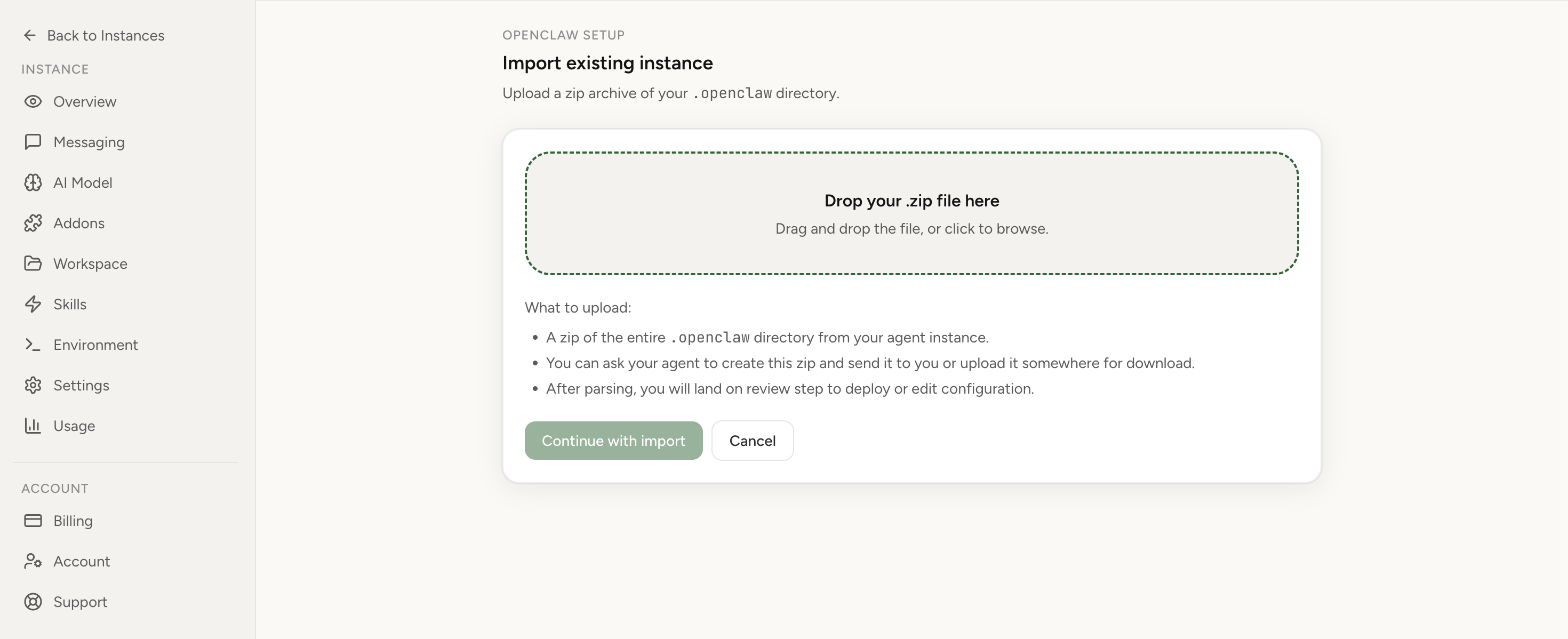
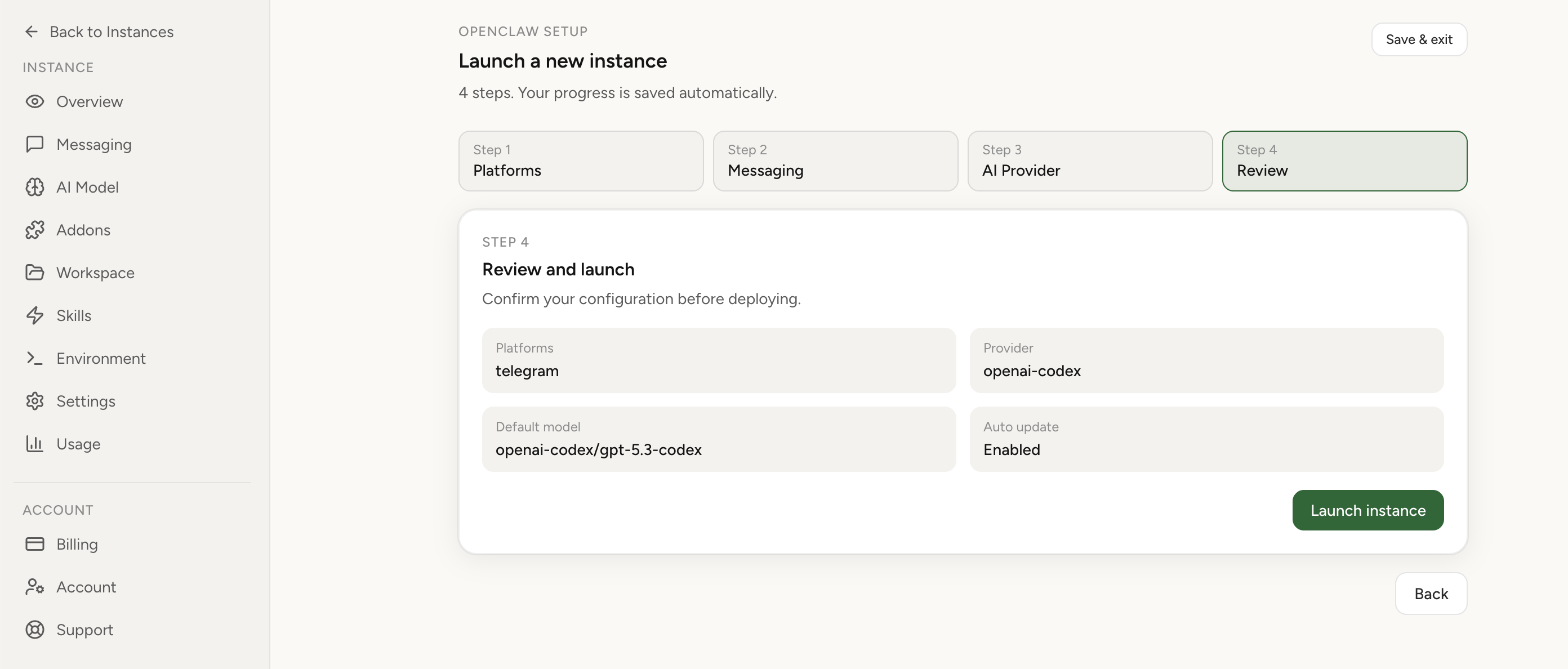
If this keeps coming back, you can move your existing setup to managed OpenClaw cloud hosting instead of rebuilding the same stack. Import your current instance, keep your context, and move onto a runtime with lower ops overhead.
- Import flow in ~1 minute
- Keep your current instance context
- Run with managed security and reliability defaults
If you would rather compare options first, review OpenClaw cloud hosting or see the best OpenClaw hosting options before deciding.
Step 4: repair the session or branch around it
If the transcript contains a missing tool result warning, the safest path is often not to keep pushing the same damaged session. Start a fresh session with a short factual handoff: the original task, what completed, what did not, the relevant file paths or destination IDs, and the exact instruction to continue only the unfinished part. This gives the model clean context without asking it to infer state from a broken trace.
If you must keep the same session, reduce the next turn. Do not ask the agent to “continue everything.” Ask it to inspect one artifact, produce one status summary, or complete one remaining step. Smaller turns reduce context pressure and make any next failure easier to localize.
Step 5: make the retry smaller and idempotent
The retry should be designed so it can run twice without damage. That means checking before writing, using stable IDs, avoiding duplicate sends, and asking the assistant to report what it skipped because it already existed. For code work, retry by diff and test status. For messaging, retry by target and previous message ID. For browser flows, retry from a clean page state rather than from the middle of a form.
When the original failure involved provider streaming, also lower the complexity of the retry. Split large edits, avoid asking for huge inline outputs, and use a fallback model route that is known to support the tool-call format OpenClaw expects. A model can be excellent at prose and still be a poor fit for long structured tool turns if its stream is unstable in your route.
Step 6: protect long tasks with visible completion receipts
The easiest operational improvement is to make every long task end with a durable receipt. A receipt should say what changed, where to verify it, and what was intentionally left untouched. For chat channels, prefer a final message that is separate from transient progress updates. For cron jobs, write a result artifact or send a concise summary to a monitored channel.
This is especially important for Telegram, Discord, and other channels where streaming, edits, typing indicators, and progress messages can hide the true end state. A final receipt turns “I think the agent stopped” into “the agent either produced the receipt or it did not.” That is much easier to monitor.
Step 7: add a runtime health gate for tool-heavy work
If tool-call interruptions happen more than once, add a small health gate before important work. The gate should run one model turn, one safe tool call, one channel delivery check if relevant, and one log scan for recent transport errors. This is not overengineering. It is the smallest useful proof that the runtime is healthy before you ask it to perform a task with consequences.
For team deployments, pair that gate with a retry policy. Define when OpenClaw may retry automatically, when it should ask for approval, and when it should stop and report the partial state. Read-only tasks can retry aggressively. Write-heavy tasks should retry only after a verification step proves the previous attempt did not complete.
Common mistakes that make recovery harder
- Restarting first: a restart may clear useful in-memory evidence before you know what happened.
- Retrying the full prompt: this can duplicate side effects and re-trigger the same context pressure.
- Trusting the final chat state only: the destination system may have changed even if the assistant never confirmed it.
- Mixing repair and new work: finish the recovery before assigning a new task in the same session.
- Ignoring provider format fit: some routes fail on assistant prefill, tool syntax, long streams, or image/file paths even when simple chat works.
When managed hosting is the more rational fix
Self-hosting is still the right choice when you want full control and have someone who owns runtime operations. It stops being the right choice when tool-call reliability becomes a recurring blocker for work the team depends on. If people are asking “did it finish?” more often than “what should we automate next?”, the deployment needs stronger operations, not another heroic manual retry.
Managed OpenClaw hosting does not remove the need to design safe workflows. It does reduce the amount of runtime maintenance your team has to own directly: health checks, recovery defaults, update hygiene, browser access paths, and import flow. If your current instance already has useful context, start with OpenClaw cloud hosting and compare the tradeoffs on managed versus self-hosted OpenClaw before deciding.
Practical recovery summary
- Capture the visible symptom and timestamp before restarting.
- Search logs for stream, transcript, lane, and tool-result errors.
- Verify side effects in the destination system.
- Continue from a clean session if the transcript is damaged.
- Retry only the unfinished work, with idempotent checks.
- Add completion receipts and health gates for recurring long tasks.
- Move to managed hosting if the runtime burden is now slowing the team down.
If you already know the instance is valuable but too fragile to babysit, you can import your current OpenClaw instance in 1 click and keep the work moving while you reduce operations risk.
FAQ
Why do OpenClaw tool calls sometimes stop mid-run?
The usual causes are interrupted provider streams, truncated structured tool calls, context pressure, transcript mismatch, channel lane retries, or a gateway state issue. The recovery path starts by proving which class happened before you retry.
How do I know whether a stopped run changed anything?
Check the destination system directly. Inspect files, messages, API records, browser state, or infrastructure health. Do not rely only on the absence of a final assistant message.
Is a new session safer than continuing the old one?
Often, yes. If the old session has missing tool results or synthetic transcript repair warnings, a fresh session with a factual handoff is usually safer than asking the same damaged context to continue.
Can managed hosting prevent every tool-call failure?
No hosting model can make every provider stream or workflow design perfect. Managed hosting helps most when the recurring problem is runtime operations: health, updates, access paths, monitoring, and recovery discipline around an already useful OpenClaw instance.