OpenClaw Update Blocked During Provisioning: Fix Guide
Complete guide to resolving OpenClaw update failures during provisioning state. Learn why updates were blocked, how the April 2026 backend fix resolved this, and how to verify updates now work during provisioning.
The Problem: Updates Stalled in Provisioning Limbo
You've deployed OpenClaw to your infrastructure. The initial setup is underway, resources are provisioning, containers are pulling, and configuration is being applied. You see the instance status stuck at "provisioning" and decide to push the latest version update available. Suddenly, your update request fails with a cryptic HTTP 409 conflict error.
This was a common frustration for OpenClaw operators prior to April 2026. The backend enforced a state machine restriction that only permitted updates from "running" or "error" states. Provisioning, despite being a transitional phase that should logically support version progression, was treated as an update dead-end.
The mismatch manifested in confusing error messages. The OpenClaw frontend treated provisioning as an in-progress upgrade state, expecting the backend to accept update commands. The backend, however, rejected these commands with state conflict errors. This disconnect created operator anxiety, was the deployment broken, was the update unsafe, should you wait indefinitely for provisioning to complete.
Evidence from the Field: Real-World Impact
On April 6, 2026, OpenClaw engineers removed the backend restriction that had been blocking version updates during provisioning. This wasn't a theoretical fix, it addressed a genuine pain point reported by operators managing production deployments.
The evidence from incident reports and community discussions painted a clear picture:
- Deployment delays: Operators would wait hours for provisioning to complete before applying critical updates, extending deployment timelines unnecessarily.
- Rollback complications: When provisioning encountered issues and operators attempted version rollbacks, the backend rejected the rollback attempts, forcing complete redeployment cycles.
- Automation failures: CI/CD pipelines that provisioned OpenClaw instances and immediately applied version configurations would fail intermittently depending on timing.
- Stability anxiety: The inability to update during provisioning created uncertainty about deployment health, leading some operators to choose between waiting indefinitely or risking manual intervention.
This broader operator concern, that broken update flows create stability anxiety, drove prioritization of the fix. Operators need confidence that OpenClaw can gracefully handle version transitions regardless of deployment state.
Why It Happens: The State Machine Mismatch
Understanding this bug requires examining OpenClaw's state machine design and how the frontend and backend converged on different interpretations of the "provisioning" state.
The Frontend Perspective
The OpenClaw frontend always treated provisioning as an in-progress upgrade state. When an instance is provisioning, it's effectively transitioning toward a stable state. From this viewpoint, applying a version update during provisioning makes sense, you're simply directing the instance toward a different target version. The frontend's UI reflected this by allowing update controls and showing provisioning as a transitional phase that could be intercepted with new version targets.
The Backend Restriction
The backend, however, implemented a more restrictive state machine. The apply_update endpoint explicitly checked instance state and only permitted updates from "running" or "error" states. This restriction likely originated from early design assumptions that provisioning represented a special initialization phase that shouldn't be interrupted or modified.
The backend logic looked something like this before the fix:
def apply_update(instance, version):
    allowed_states = ["running", "error"]
    if instance.state not in allowed_states:
        raise ConflictError(f"Instance state {instance.state} does not allow update")
    # Proceed with update...
When an instance in "provisioning" state received an update request, the backend immediately returned HTTP 409 Conflict. The frontend, expecting a successful update initiation, received this unexpected conflict and surfaced a confusing error to the operator.
The 409 Conflict
HTTP 409 is technically correct, there is a conflict between the desired operation and the current resource state. But from an operator experience perspective, this conflict was a design flaw rather than a genuine safety guard. Nothing technically prevented updating during provisioning, it was an artificial restriction that created friction without improving reliability.
Diagnostics: Identifying the Block
If you're experiencing update failures during provisioning, here's how to confirm whether you're hitting this specific issue:
CLI Error Messages
When running OpenClaw update commands via the CLI, you'll see exit code 1 with messages indicating state conflicts:
$ openclaw update my-instance --version 2026.4.11
Error: unable to apply update: instance state "provisioning" does not allow version updates
Exit status 1
API Response Analysis
Direct API calls to the update endpoint return HTTP 409 with conflict details:
POST /api/v1/instances/my-instance/update
{"target_version": "2026.4.11"}

HTTP/1.1 409 Conflict
{
  "error": "state_conflict",
  "message": "Instance state does not allow update",
  "current_state": "provisioning",
  "allowed_states": ["running", "error"]
}
Instance Status Verification
Check the current instance state to confirm it's provisioning:
$ openclaw status my-instance
Instance: my-instance
State: provisioning
Version: 2026.4.8
Target Version: 2026.4.8
Provisioning started: 2026-04-10T14:23:11Z
Log Inspection
OpenClaw backend logs will show the rejection:
[2026-04-10T14:25:33Z] WARN [api] Update rejected for instance my-instance: state provisioning not in allowed states for apply_updateIf you see these patterns and you're running an OpenClaw version from before April 2026, you are likely encountering this exact issue. The fix is available in newer releases.
The Fix: What Changed on April 6, 2026
OpenClaw's engineering team addressed this by removing the artificial restriction in the backend state machine. The fix involved two key changes.
Backend State Machine Update
The apply_update endpoint was modified to include "provisioning" in the allowed states.
def apply_update(instance, version):
    allowed_states = ["running", "error", "provisioning"]
    if instance.state not in allowed_states:
        raise ConflictError(f"Instance state {instance.state} does not allow update")
    # Proceed with update...
API Regression Coverage
The fix included regression test coverage to prevent the restriction from returning in a later release. The new API test verifies that updates can be applied from provisioning state, and the test suite now covers the state transition that was previously blocked.
def test_update_from_provisioning_state():
    instance = create_instance(state="provisioning", version="2026.4.8")
    response = api_apply_update(instance.id, "2026.4.11")
    assert response.status_code == 200
    assert instance.target_version == "2026.4.11"
Frontend and Backend Alignment
The frontend did not need a behavioral change because it already treated provisioning as an in-progress upgrade state. The backend fix simply brought the implementation in line with what the UI had been signaling. That alignment eliminates the confusing conflict between what the interface suggests and what the API permits.
Step-by-Step: Applying the Fix
If you are experiencing this issue, here is how to resolve it safely.
Step 1: Verify your OpenClaw version
Check whether your deployment includes the April 2026 fix:
$ openclaw version
OpenClaw CLI version 2026.4.11
Server version 2026.4.11
Builds from April 6, 2026 onward include the provisioning update fix. If you are running an earlier build, update OpenClaw itself first.
Step 2: Retry the instance update
Once your platform includes the fix, attempt the instance update again:
$ openclaw update my-instance --version 2026.4.11
Update initiated for my-instance.
Current version: 2026.4.8
Target version: 2026.4.11
Current state: provisioning
Update will apply as provisioning completes.
Step 3: Watch progress
Monitor the instance as it transitions through provisioning into the updated runtime:
$ openclaw status my-instance --watch
Instance: my-instance
State: provisioning → running
Version: 2026.4.8 → 2026.4.11
Progress: Update queued and applied after provisioning tasks finished
Step 4: Verify the target version
When the instance becomes healthy, confirm that the new version is active and that the update did not stall:
$ openclaw status my-instance
Instance: my-instance
State: running
Version: 2026.4.11
Last updated: 2026-04-11T10:15:22Z
Fix once. Stop recurring provisioning update blocks.
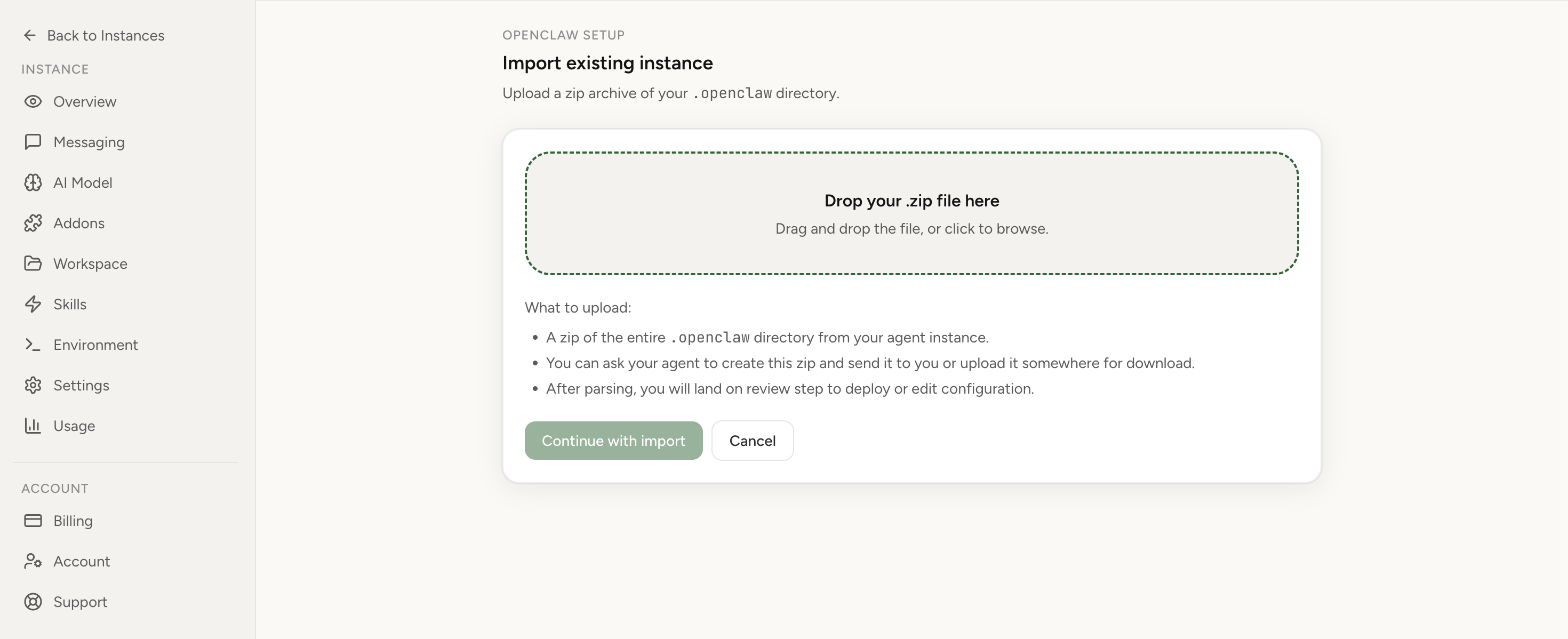
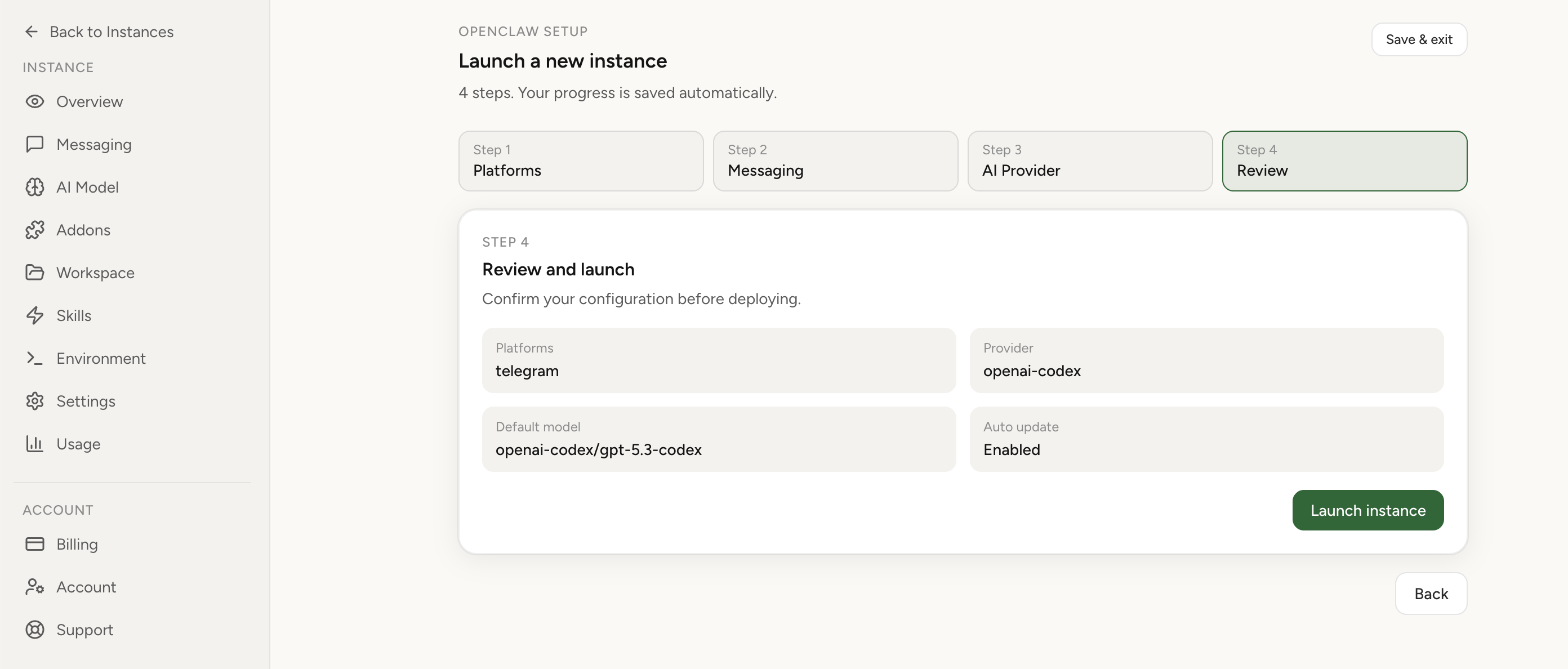
If this keeps coming back, you can move your existing setup to managed OpenClaw cloud hosting instead of rebuilding the same stack. Import your current instance, keep your context, and move onto a runtime with lower ops overhead.
- Import flow in ~1 minute
- Keep your current instance context
- Run with managed security and reliability defaults
If you would rather compare options first, review OpenClaw cloud hosting or see the best OpenClaw hosting options before deciding.
Edge Cases and Special Situations
Long-running provisioning
In environments with slow resource allocation or limited connectivity, provisioning can extend for a long time. The ability to update during this period becomes especially valuable because you can queue the right target version without waiting for the original provisioning cycle to finish.
Partial provisioning failures
If provisioning partially fails and leaves the instance in error state, updates continue to work because error was already an allowed state. The April 2026 fix simply closes the awkward gap where provisioning, the most obviously transitional state, was the one state you could not update from.
Rollback during provisioning
Before the fix, rolling back from a bad target during provisioning was awkward or impossible. Now, if you detect a problem early, you can redirect the target version without waiting for the first cycle to complete or forcing a full redeploy.
Shared automation pipelines
Teams using CI or GitOps flows often provision an instance and immediately reconcile configuration. The old restriction made this timing fragile. The fix allows those pipelines to be simpler and more deterministic.
Verification: Confirming the Fix Works
After you apply the fix, verify that updates work correctly during provisioning.
- Start a fresh instance and confirm its state enters provisioning.
- Submit a version update while that state is active.
- Confirm the API responds successfully instead of returning 409.
- Watch the instance reach running state on the expected target version.
- Review logs to confirm no state-conflict warnings appear for
apply_update.
POST /api/v1/instances/test-instance/update
{"target_version": "2026.4.11"}

HTTP/1.1 200 OK
{
  "status": "update_queued",
  "current_version": "2026.4.8",
  "target_version": "2026.4.11",
  "instance_state": "provisioning"
}
Common Mistakes to Avoid
Assuming the issue is permanent
Some operators built permanent workarounds that forced every automation to wait for provisioning completion. If you are on a fixed version, you can simplify those flows.
Force-stopping provisioning
Terminating provisioning just to move the instance into error state is unnecessary once the fix is present. It adds risk and can leave infrastructure in a partially configured state.
Skipping compatibility checks
Removing the state restriction does not remove version compatibility constraints. You still need to review release notes and confirm your target version fits your environment.
Ignoring resource pressure
Provisioning and updating at the same time can use extra CPU, memory, and network bandwidth. The flow is supported, but in small environments you should still watch capacity.
What This Means for Stability
This fix matters beyond one API condition. When update flows break in edge states, operators lose trust in the platform. Every deployment becomes a guessing game about whether the system is truly stuck or simply enforcing a hidden rule. By aligning the backend with the frontend's existing logic, OpenClaw removes a piece of avoidable uncertainty.
That matters even more for teams deciding whether to keep self-hosting or move to a managed runtime. If you want fewer operational surprises around upgrades, compare your current approach against other deployment models, review OpenClaw cloud hosting, and keep the main OpenClaw setup path close at hand for baseline guidance.
FAQ
Why does OpenClaw block updates during provisioning?
Before the April 2026 fix, the backend only allowed updates from running or error states. Provisioning was excluded, so update requests failed with 409 conflicts.
How do I know if this is the exact issue I have?
If your instance is clearly in provisioning state and update attempts fail with a state conflict message, you are likely hitting this restriction.
What changed in the fix?
The backend now accepts provisioning as an allowed state for apply_update, and regression coverage was added so the behavior stays supported.
Should I still wait for provisioning to finish?
You no longer have to wait, but some teams still prefer to separate provisioning and upgrading in very resource-constrained environments.