OpenClaw WhatsApp Disconnect Fails Offline: complete fix guide
Problem statement: you try to disconnect WhatsApp from OpenClaw when your instance is not running, but the disconnect option is disabled or returns a 409 error. The UI grays out the disconnect button together with QR login and other features that genuinely require a running gateway, leaving you unable to remove WhatsApp configuration without first starting the entire instance. This is a UX and safety issue: you should be able to remove channel credentials independently of whether the gateway is active.
The product was updated so WhatsApp disconnect remains available even when an instance is not running.
The root cause was a frontend gate that incorrectly disabled disconnect together with QR login, logout, and settings,
and a backend delete_whatsapp_config path that wrongly required a running instance and returned 409.
The fix removed the coupled gate, allowed deletion for non-running instances, and clarified that running instances clear
the live session while non-running instances remove saved config and allowlist data. Backend tests, frontend tests,
and build verification all passed.
Why the offline disconnect problem exists
The original design coupled WhatsApp disconnect to the overall gateway running state. The assumption was that disconnect was an active operation requiring a live session to terminate. This made sense from a narrow technical view but ignored legitimate use cases where operators need to remove WhatsApp configuration without starting the full gateway.
The coupling manifested in two places. First, the frontend used a single gate variable to disable multiple features simultaneously: QR code login, logout, settings access, and disconnect. When the instance was offline, all of these were grayed out together. Second, the backend endpoint for deleting WhatsApp configuration explicitly checked whether the instance was running and returned a 409 conflict error if it was not.
This design created frustrating scenarios. If your OpenClaw instance was crashed, stopped for maintenance, or running on a schedule that left it offline for extended periods, you could not remove WhatsApp credentials. You were forced to start the entire stack just to delete a channel configuration, then shut it back down. That is unnecessary friction.
Evidence from the field
Users in public community discussions report WhatsApp gateway disconnect instability and the manual recovery burden when instances are not running. The pattern is consistent: the disconnect option is unavailable when the gateway is stopped, and attempting to disconnect through alternative means results in 409 errors or silent failures. This is not theoretical feedback from a single user but a recurring theme in how operators interact with OpenClaw WhatsApp configuration.
The impact is magnified because WhatsApp is often configured for specific workflows or testing scenarios. When those workflows end or when testing is complete, operators reasonably expect to remove the WhatsApp configuration without restarting the entire gateway. The previous behavior forced an unnecessary startup cycle and made simple configuration changes feel heavyweight.
What the fix actually changed
The 2026-04-06 update addressed both the frontend and backend components of the issue.
Frontend: decoupled the disconnect gate
The frontend gate that disabled multiple features together was split. QR login, logout, and settings correctly remain disabled when the instance is offline because those operations require an active gateway session. Disconnect was removed from that coupled gate and given its own independent enablement logic. Now WhatsApp disconnect remains available regardless of whether the instance is running, while the truly runtime-dependent features stay gated appropriately.
Backend: removed the running instance requirement
The delete_whatsapp_config endpoint previously checked whether the instance was running and returned 409
if it was not. That check was removed. The endpoint now accepts deletion requests for both running and non-running instances.
The behavior differs by state: when the instance is running, disconnect clears the live WhatsApp session and terminates the
active connection. When the instance is offline, disconnect removes the saved configuration files and allowlist data that
would be used to reconnect when the instance starts.
Verification: tests passed across all layers
Backend tests confirmed that deletion works for both running and non-running instances. Frontend tests verified that the disconnect button remains enabled when the gateway is stopped while other runtime features remain properly gated. Build tests confirmed no regressions in related functionality. The change is narrow, targeted, and does not affect other WhatsApp operations or other channels.
How to confirm you have the bug
- Open the OpenClaw web interface when your gateway is not running.
- Navigate to the WhatsApp configuration or channel settings.
- Look for the disconnect option and observe whether it is grayed out or disabled.
- If you can attempt disconnect through API or CLI, note whether you receive a 409 conflict error.
- Check the frontend code for a single gate variable that controls both disconnect and runtime features like QR login.
- Check the backend logs for 409 errors when attempting to delete WhatsApp configuration while offline.
How to apply the fix
Step 1: Upgrade to the patched version
Ensure you are running a version of OpenClaw that includes the 2026-04-06 fix. Check the release notes or changelog for mentions of WhatsApp disconnect offline behavior. If your version is older, upgrade using your standard update process.
Step 2: Verify the frontend change
After upgrading, stop your OpenClaw instance and open the web interface. Navigate to WhatsApp settings and confirm that the disconnect option is enabled and clickable. Confirm that QR login and other runtime features remain appropriately disabled. This shows that the coupled gate has been split.
Step 3: Test the backend change
With the instance still stopped, attempt to disconnect WhatsApp through the web interface. Verify that the operation completes without a 409 error. Check that saved WhatsApp configuration files are removed from the instance directory. Start the instance afterward and confirm that WhatsApp is no longer configured and does not auto-reconnect.
Step 4: Test the running instance behavior
Configure WhatsApp again and start the gateway. While the instance is running and WhatsApp is connected, disconnect through the interface. Verify that the active session is terminated immediately, not just the saved configuration removed. This confirms that the running and offline behaviors are correctly differentiated.
Fix once. Stop recurring offline WhatsApp disconnect loops.
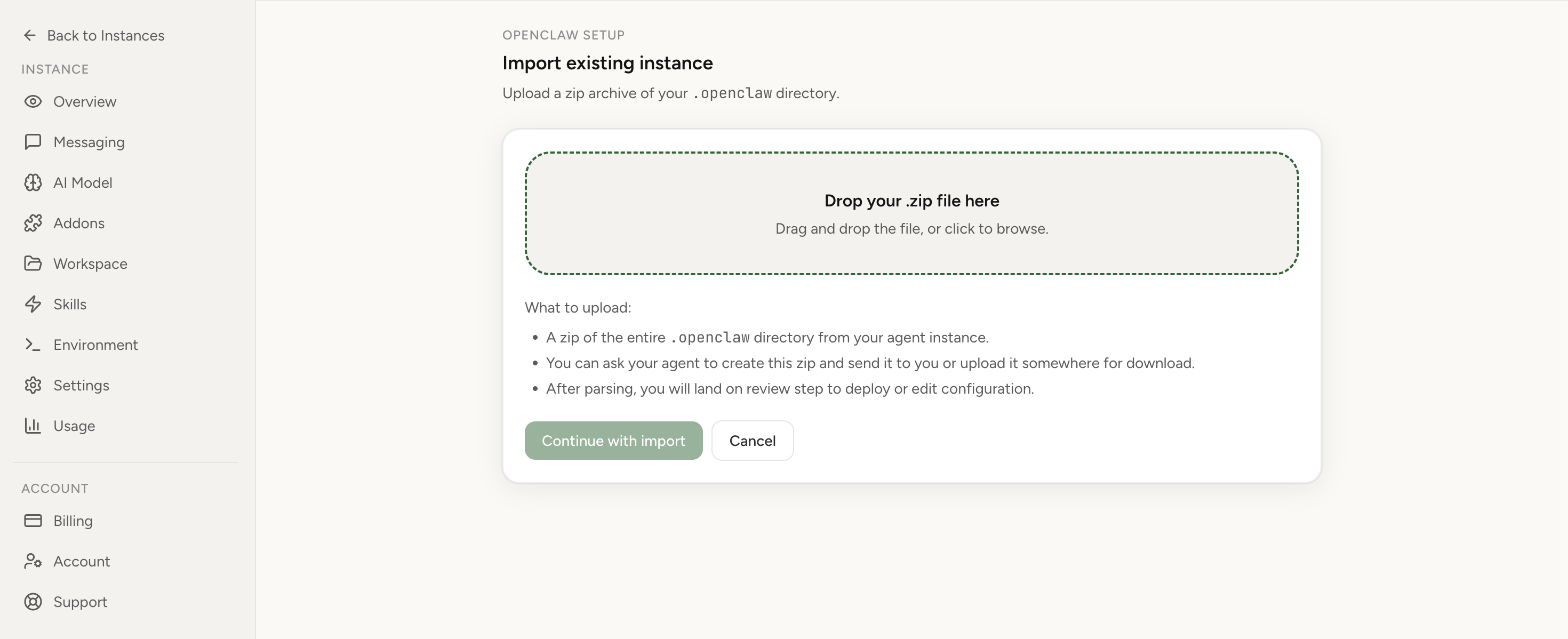
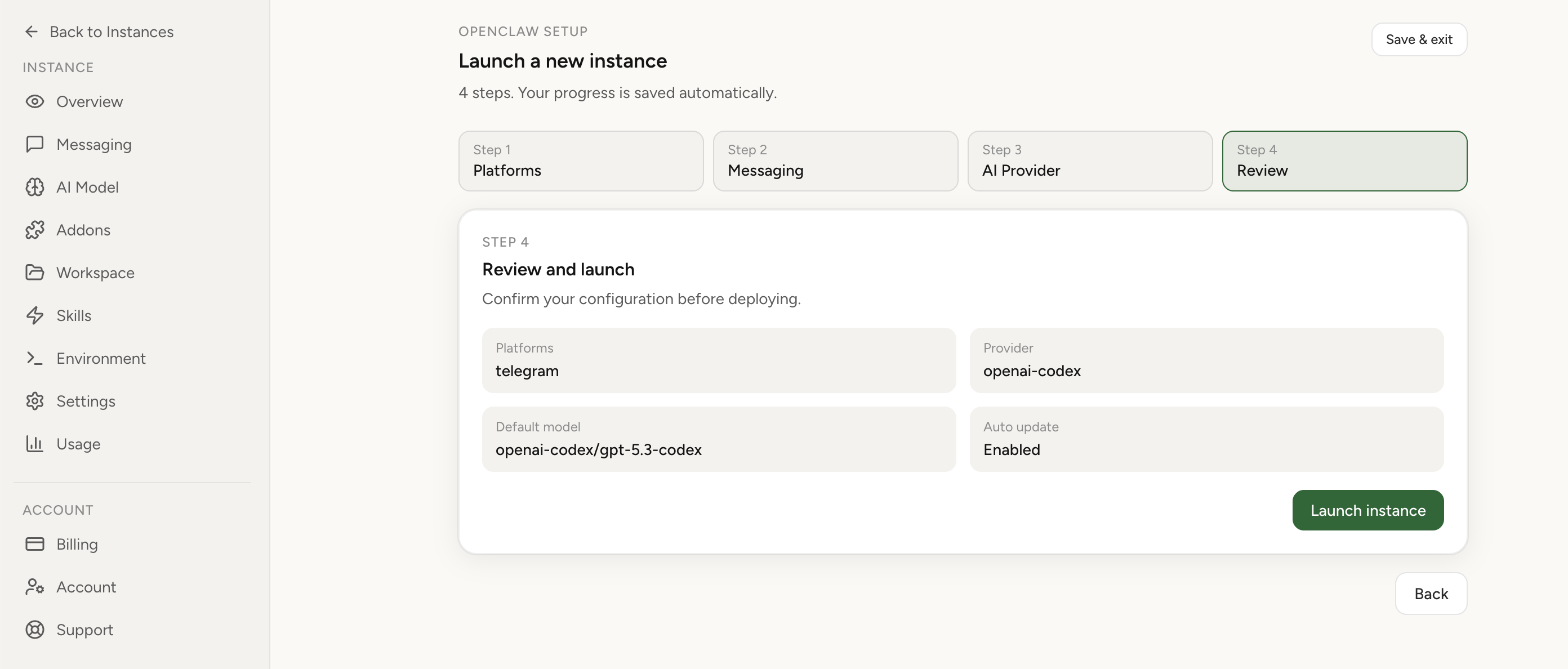
If this keeps coming back, you can move your existing setup to managed OpenClaw cloud hosting instead of rebuilding the same stack. Import your current instance, keep your context, and move onto a runtime with lower ops overhead.
- Import flow in ~1 minute
- Keep your current instance context
- Run with managed security and reliability defaults
If you would rather compare options first, review OpenClaw cloud hosting or see the best OpenClaw hosting options before deciding.
Diagnostic commands
# Check if your instance is running
openclaw gateway status

# Navigate to WhatsApp settings in the web interface
# URL: http://localhost:18789/settings/channels/whatsapp
# Observe whether disconnect is enabled when gateway is stopped

# Check backend version for 2026-04-06 fix
openclaw --version

# Check for WhatsApp configuration files
ls ~/.openclaw/whatsapp/
ls ~/.openclaw/whatsapp_allowlist

# Verify disconnect worked while offline
# After disconnect, these files should be removed:
# - WhatsApp session data
# - Allowlist entries
# - Saved phone number and credentials
Edge cases that complicate diagnosis
Edge case: stale browser cache
If you upgraded but still see the old behavior, clear your browser cache or use a private browsing window. The frontend JavaScript that implements the gate logic may be cached locally, making it appear that the upgrade did not work.
Edge case: partially applied upgrade
The fix requires both frontend and backend changes. If you upgraded the backend but are serving an old frontend build, or vice versa, the behavior will be inconsistent. Verify that both components are from the same version.
Edge case: conflicting WhatsApp state
If WhatsApp configuration files are manually edited, corrupted, or locked by another process, the offline disconnect may fail for reasons unrelated to the gate logic. Check file permissions and process locks if the fix is applied but disconnect still does not work.
Edge case: managed hosting with custom UI
Some managed hosting environments use custom frontends or wrapper UIs. If you are using hosted OpenClaw, check whether your hosting provider has applied the 2026-04-06 fix to their custom interface. The core backend fix applies regardless, but the UI behavior depends on their implementation.
Verification checklist
- You upgraded to a version that includes the 2026-04-06 WhatsApp disconnect fix.
- You verified that disconnect is enabled in the UI when the gateway is stopped.
- You tested offline disconnect and confirmed configuration files are removed.
- You tested running instance disconnect and confirmed the live session is terminated.
- You cleared browser cache or used incognito mode to rule out frontend caching issues.
- You checked that QR login and other runtime features remain properly gated when offline.
- You confirmed no 409 errors appear in logs when disconnecting while offline.
Common mistakes that make this harder to resolve
- Mistake: assuming the issue is network-related because the gateway is offline.
Correction: the issue is a design flaw in the gate logic, not a connectivity problem. Focus on the frontend gating and backend authorization checks. - Mistake: manually deleting WhatsApp files instead of using the proper disconnect flow.
Correction: manual deletion can leave stale references and cause issues on next startup. Use the fixed disconnect option instead. - Mistake: blaming the browser for a disabled button without checking the frontend code.
Correction: the button state is controlled by a gate variable. Check the version and clear cache before assuming a browser issue. - Mistake: starting the gateway just to disconnect, then calling the problem solved.
Correction: that is a workaround, not a fix. Apply the 2026-04-06 update so disconnect works without the unnecessary startup cycle. - Mistake: upgrading the backend but not redeploying the frontend build.
Correction: the fix requires changes in both layers. Verify the full stack is upgraded.
What the fix means for your workflow
Before this fix, removing WhatsApp configuration required starting the entire OpenClaw stack even if you had no other reason to run it. That added time, resource overhead, and friction to simple configuration changes. After this fix, you can add and remove WhatsApp channels freely regardless of gateway state, which aligns with how most operators expect configuration management to work.
The clarification of running versus offline behavior is also valuable. Knowing that disconnect on a running instance clears the live session while disconnect on an offline instance removes saved configuration helps you understand exactly what each operation does and predict the outcome. That transparency reduces uncertainty and makes troubleshooting easier.
Related issues and context
WhatsApp gateway reliability is a broader concern beyond just the offline disconnect issue. Users report reconnect loops after idle periods, heartbeat instabilities, and manual recovery burdens. The offline disconnect fix is one piece of a larger effort to make WhatsApp integration more robust and predictable. If you are experiencing other WhatsApp-related problems, consult the OpenClaw setup documentation or check for related issues in the troubleshooting guides.
For teams evaluating whether to continue managing these WhatsApp gateway quirks themselves or move to a managed environment, consider the cumulative operational burden. Each individual fix may be minor, but the aggregate time spent on gateway-specific issues adds up. Managed hosting options handle these upstream quirks at the platform level, so you can use WhatsApp integration without debugging disconnect logic, reconnect loops, or heartbeat timing.
When to consider managed hosting
If you find yourself repeatedly troubleshooting WhatsApp-specific issues, applying fixes, and working around upstream bugs, you are paying an operational tax that scales with your dependency on WhatsApp integration. At some point, that tax exceeds the value of self-hosting this particular channel. Managed hosting environments absorb these quirks, apply fixes proactively, and give you a stable WhatsApp integration without the hands-on maintenance. If your WhatsApp workflows are business-critical and you cannot afford downtime or manual recovery cycles, that threshold may arrive sooner than you expect.
Need WhatsApp that stays connected without manual intervention?
Hosted OpenClaw includes WhatsApp gateway stability fixes applied at the platform level, with monitoring and auto-recovery that handle reconnect loops and timing issues before they impact your workflows.
Explore managed hosting with stable WhatsAppFAQ
Do I need to restart my instance after upgrading for the fix to take effect?
You need to restart the gateway to load the new backend code. The frontend change will take effect once you refresh the web interface and clear any cached JavaScript. After restart, test with the instance stopped to confirm offline disconnect works.
Will this fix affect other channels like Telegram or Feishu?
No. The 2026-04-06 fix is specific to WhatsApp disconnect logic. Other channels have their own disconnect implementations and are not affected by this change. However, the pattern of decoupling configuration operations from runtime state may be applied to other channels in future updates.
What if I applied the fix but disconnect still fails silently?
Check the browser developer console for JavaScript errors that might indicate a frontend problem. Check the backend logs for errors during the delete operation. Verify that WhatsApp configuration files actually exist before disconnect. If the issue persists, you may have a different problem such as file permission issues or a partially applied upgrade.
Is offline disconnect safe if I have multiple OpenClaw instances sharing WhatsApp configuration?
Be careful. If you share WhatsApp configuration across instances, disconnecting from one offline instance will remove the shared configuration files, affecting all instances. The fix assumes per-instance configuration. If you have a shared setup, disconnect while the instance that owns the configuration is running to avoid disrupting other instances.
What should I link to next for WhatsApp and hosting decisions?
Start with the self-hosted vs managed comparison to understand how WhatsApp stability differs across deployment models, review managed hosting for platform-level handling of gateway issues, and see OpenClaw setup documentation for general WhatsApp configuration guidance.