Founder / Ops
Ops Dashboard in Chat (KPI digest)
Get the operating numbers that matter without manually stitching dashboards together every morning.
Metrics are scattered.
Revenue, signups, churn signals, support volume, and cash visibility often live in different tools, so founders reconstruct the same picture repeatedly.
Use OpenClaw to produce the daily operating brief.
OpenClaw can collect the key numbers, compare them to recent baselines, and write a concise summary of what changed and what needs attention.
Why OpenClaw Setup fits this workflow
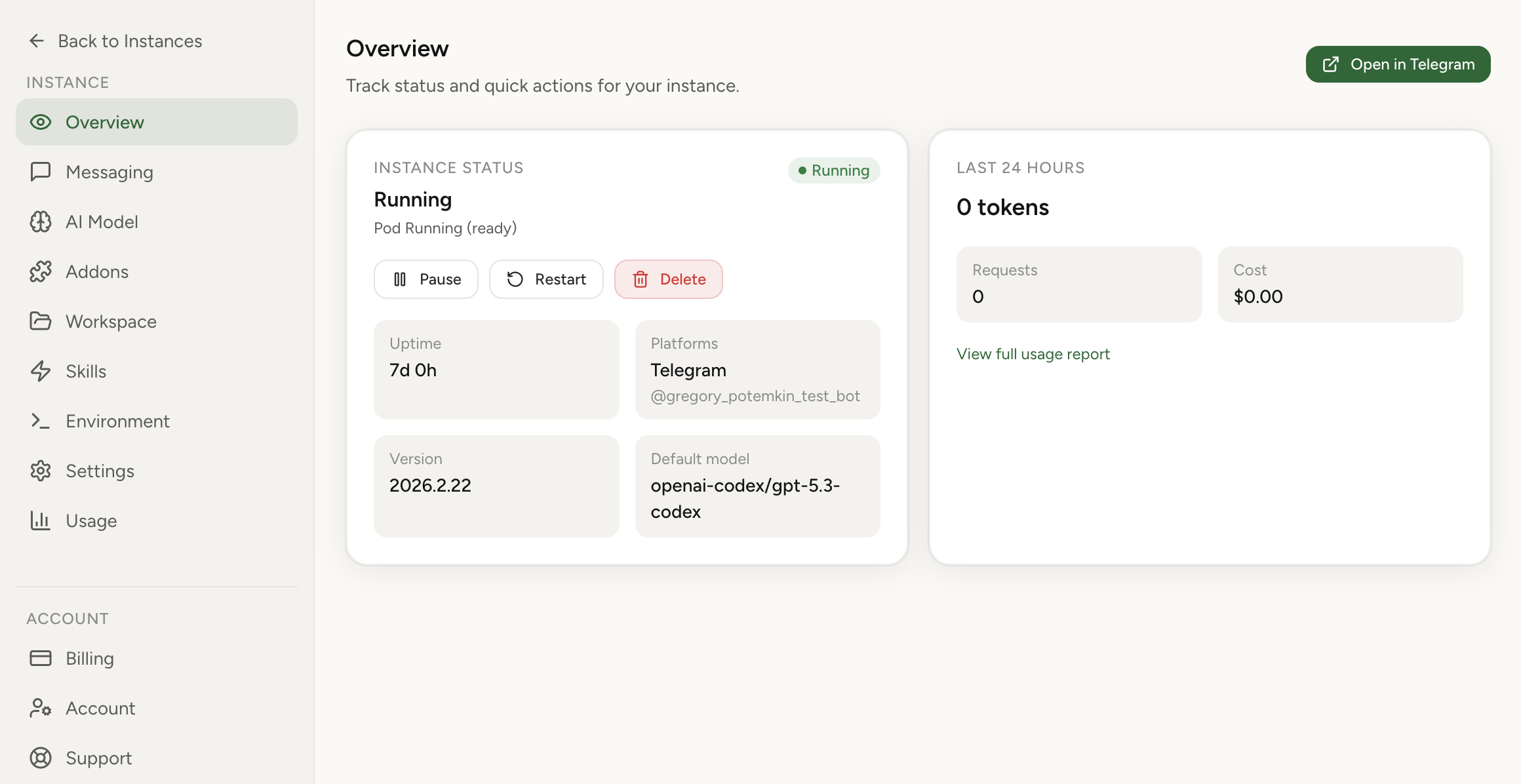
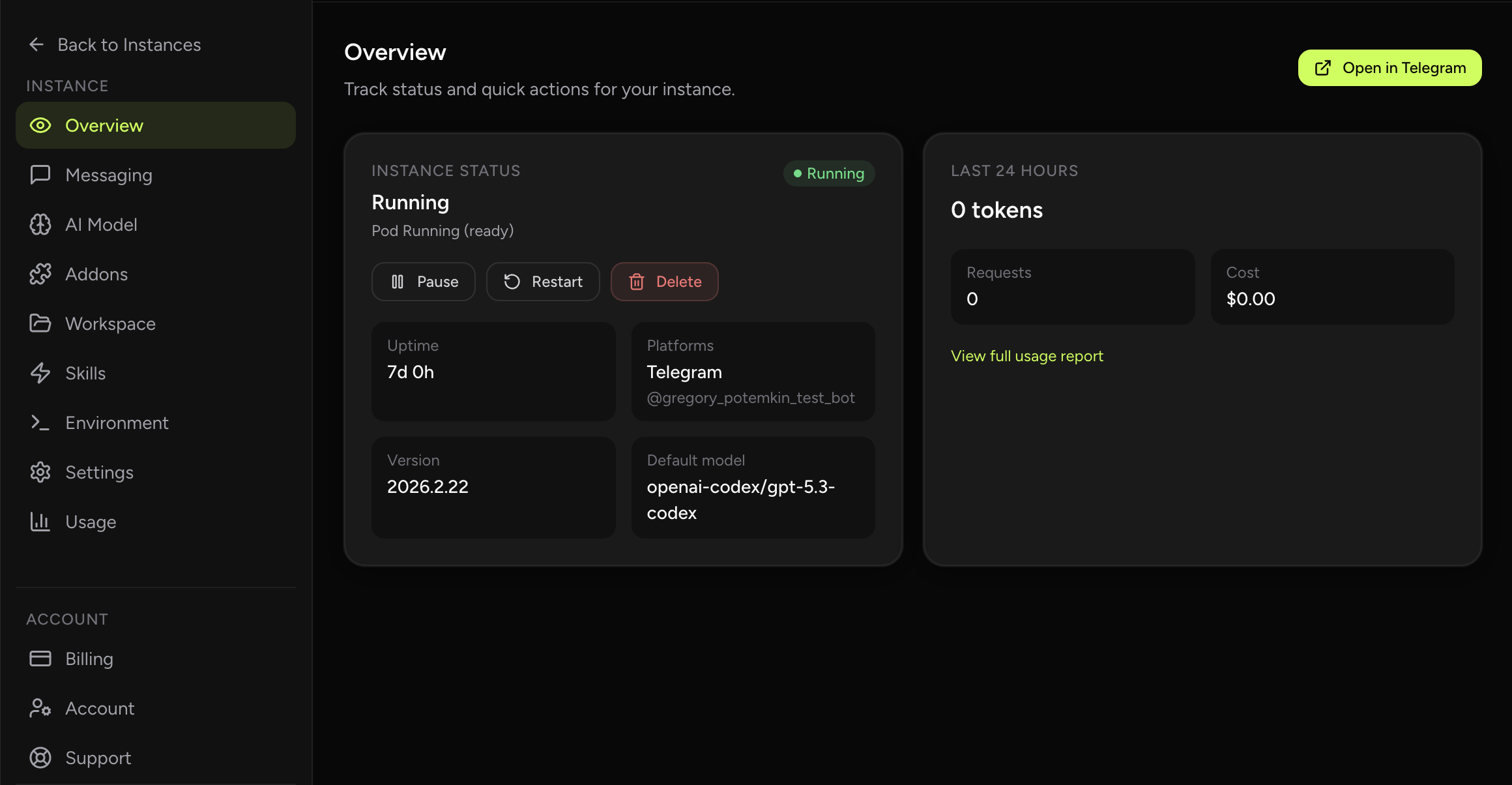
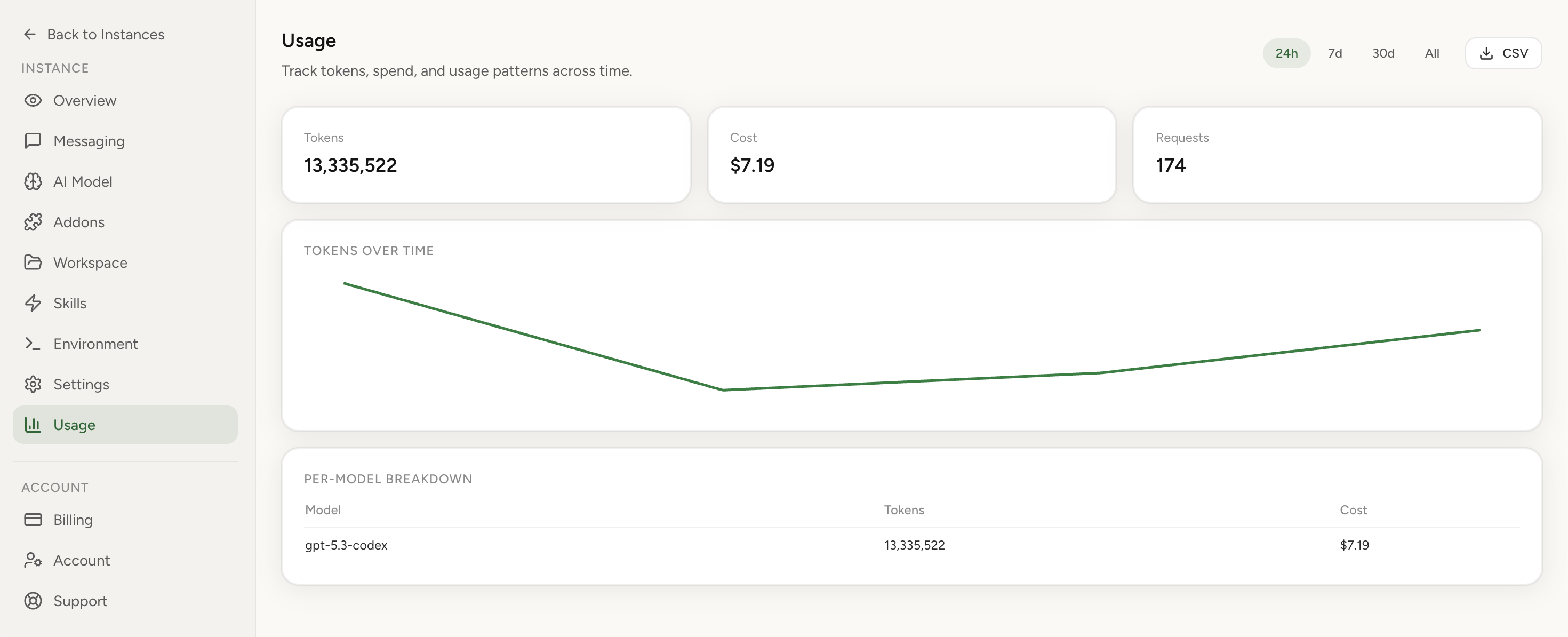
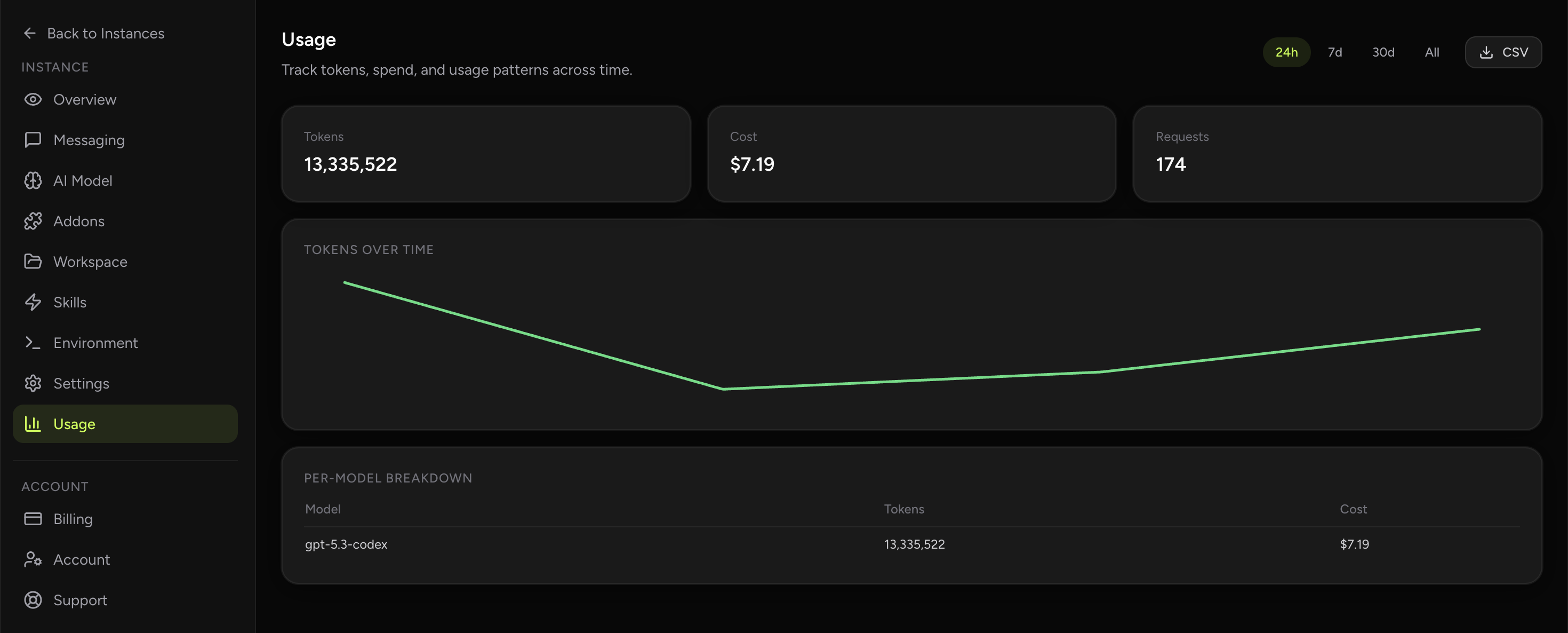
The founder-ops use case is the most obviously product-specific one because OpenClaw Setup already exposes dashboard overview, usage analytics, built-in chat, and recurring automation in one hosted environment. That combination is exactly what a founder needs for a compact daily operating brief.
Instead of another abstract AI assistant story, the product argument here is simple: OpenClaw Setup gives the founder a place to centralize operating metrics, keep the reporting prompts stable, and review the daily digest inside the same environment that already tracks usage and instance state.
- Dashboard overview and usage analytics give the founder a native product surface for operational visibility.
- Built-In Chat is the right review loop for turning raw numbers into a short daily brief or standup update.
- Cron management supports scheduled KPI digests and anomaly checks.
- Workspace files can preserve metric definitions, memo templates, and escalation thresholds so the daily brief stays consistent.
Why this workflow matters
Founders do not need more dashboards. They need one brief that answers a small set of recurring questions: what changed since yesterday, what looks off versus the recent baseline, and where should attention go first. A chat-based KPI digest works because it compresses that multi-tool reconstruction into a fast operational ritual. Stripe’s reporting documentation makes the finance side of the workflow concrete: payouts, balances, fees, reconciliation, and revenue reporting can already be exported and queried. Microsoft’s Work Trend Index adds the broader organizational context: leaders are rethinking workflows around agents because coordination and context load are outpacing human attention. A founder dashboard in chat is a direct response to that capacity problem.
That is why ops dashboard in chat (kpi digest) is a meaningful OpenClaw use case. The managed-hosting angle matters because many teams want the workflow gains of an always-on assistant without turning a side project into another system they need to harden, patch, and babysit. In practice, the assistant becomes a persistent operator for the repetitive coordination layer around the work while humans keep the authority for the consequential calls.
Real-world signals and examples
The external evidence around this workflow is already visible in the market. Stripe reporting | Stripe Documentation and Revenue Recognition reports | Stripe Documentation both point to the same pattern: teams are formalizing repetitive knowledge work into structured workflows that can be delegated, reviewed, and improved over time. That does not mean the role disappears. It means the role spends less time assembling context manually and more time on judgment.
Stripe’s reporting and revenue-recognition docs show that the core financial numbers already exist in structured form; the issue is aggregation and interpretation. Microsoft’s 2025 research is relevant because founders are often the most overloaded knowledge workers in the business and benefit from agent-assisted coordination first. The best use case is not a giant all-company dashboard. It is a compact operating brief that can be read and acted on in minutes.
For a production team, that distinction matters. An OpenClaw workflow should be designed around repeatability, inspectability, and bounded scope. The assistant should gather evidence, produce a draft, or maintain a checklist faster than a human would, but the final decision point should still sit with the function owner. That is exactly what makes the workflow credible to skeptical operators.
How OpenClaw fits the workflow
The operational model is straightforward. First, OpenClaw connects to the small set of tools that already define the work: the inbox, dashboard, repository, report source, or web pages that this role checks repeatedly. Second, it runs a fixed prompt pattern on a schedule or on demand. Third, it returns structured output in a chat thread, summary note, or task-creation surface that the human already uses. Nothing about this requires a magical autonomous system. It requires disciplined workflow design.
The right prompt design for ops dashboard in chat (kpi digest) is evidence-first. Ask the assistant to separate observed facts from inference, missing information, and recommended next step. That single habit dramatically improves trust because the human can see what the model actually knows, what it suspects, and what still needs verification. In other words, the assistant behaves more like a good operator taking notes and less like a black box pretending to be certain.
OpenClaw is particularly well suited to this pattern because it can blend scheduled jobs, tool use, messaging, and human review into one thread. Instead of running a point solution for summarization and another tool for reminders and another for browser work, the team gets one place where the workflow can live end to end. That reduces coordination overhead, which is often the real tax on the role.
High-leverage automation patterns
The most useful automation patterns for ops dashboard in chat (kpi digest) are the ones that remove queue work and repeated context assembly. They give the role a cleaner first pass at the problem and make the human step more focused. In practice, that often means one or two scheduled routines, a handful of on-demand prompts, and a very explicit handoff point when ambiguity or risk rises.
- Daily KPI brief: gather revenue, cash, signups, active usage, support burden, and open operational risks into one recurring digest.
- Anomaly highlighting: compare each number to a recent baseline and explain what likely deserves a closer look today.
- Standup preparation: draft the founder or ops update for the team from the same source data so everyone starts from the same facts.
- Weekly deepening: roll the daily digests into a weekly memo that identifies persistent trends rather than isolated blips.
Rollout plan for a real team
A staff-level rollout starts smaller than most teams expect. You do not begin by automating the highest-stakes decision in the process. You begin by automating the most repetitive preparation step. Once the team trusts the assistant’s retrieval, formatting, and summarization quality, you expand to higher-leverage steps such as draft creation, queue management, or suggested next actions. That sequencing protects trust while still delivering value early.
The change-management side matters too. Someone should own the prompt, the review criteria, and the weekly feedback loop. The fastest way to kill adoption is to drop an assistant into the workflow and never tighten it again. The best teams treat the assistant like a process asset: they measure output quality, trim noisy steps, add missing context, and gradually turn a generic workflow into one that feels native to the team.
- Define the five to ten numbers that really drive decisions before you build any digest.
- Begin with read-only reporting sources and clear comparison windows such as day-over-day and seven-day average.
- Label anomalies as prompts for investigation, not as conclusions.
- Review the digest weekly and remove any metric that never changes action.
Example prompts to start with
A good starting prompt set should be narrow, repetitive, and easy to judge. The goal is not creative novelty. The goal is a repeatable operating motion where the assistant produces something the human can accept, correct, or reject quickly. The sample prompts below work best when paired with your own team-specific instructions, naming conventions, and output format.
- "Daily 9am: revenue + signups + churn summary"
- "Flag anomalies vs last 7 days"
- "Draft the daily standup update"
How to measure success
Success for this use case should be measured in operating outcomes, not novelty. If the assistant is helpful, cycle time should drop, the quality of handoffs should improve, and humans should spend less time on clerical reconstruction of context. If those outcomes do not move, the workflow probably is not integrated deeply enough yet or it is automating the wrong step.
This is also where many teams discover whether the workflow is actually sticky. A strong OpenClaw use case keeps getting used because it becomes part of the team’s routine cadence. A weak one gets demoed once and forgotten. The metrics below are meant to catch that difference early.
It is worth reviewing these metrics with examples, not just numbers. Look at one week where the assistant clearly helped and one week where it clearly created rework. That comparison usually exposes whether the underlying issue is prompt quality, missing tool access, weak review discipline, or simply a bad workflow choice. Teams that keep tuning from real examples tend to compound value; teams that only watch dashboards often miss the practical reasons adoption rises or stalls.
- Time founders spend assembling morning metrics manually
- Number of anomalies caught via digest before they escalate
- Consistency of daily operating review across the leadership team
- Percentage of reported KPIs tied to an owner or follow-up action
What a mature setup looks like
A mature ops dashboard in chat (kpi digest) workflow does not live as an isolated demo prompt. It becomes part of the team’s normal weekly rhythm. There is a named owner, a clear destination for outputs, a review habit for bad suggestions, and a stable connection to the systems that hold the source data. Once that happens, the assistant stops feeling like an experiment and starts feeling like operational infrastructure. That transition is usually when teams notice the real gain: not just faster task completion, but less managerial drag around reminding, summarizing, and chasing the same work every week.
This is also where managed hosting changes the economics. If the assistant needs to be available on schedule, hold credentials securely, and run the same workflow repeatedly, the team benefits from an environment that is already set up for continuity. OpenClaw works best when the workflow is specific, the boundaries are explicit, and the outputs land where the team already works. In that setting, the assistant is not replacing the profession. It is removing the repetitive coordination tax that keeps the profession from spending enough time on its highest-value judgment.
Guardrails and common mistakes
The main design principle is bounded autonomy. Let the assistant gather, summarize, compare, and draft aggressively. Keep final authority with the human where money, security, compliance, customer commitments, or irreversible operational changes are involved. That split is not a compromise; it is usually the most efficient design. Humans should review only the parts where review creates real value.
Most failures in agent rollouts come from one of two extremes: either the team keeps the assistant so constrained that it saves no time, or it removes safeguards too early and loses trust after one bad output. The practical middle path is to give the assistant a lot of preparation work, visible logs, and explicit escalation boundaries. That makes the system useful without making it reckless.
- Including too many vanity metrics and hiding the numbers that matter
- Confusing anomaly detection with diagnosis
- Building a digest no one reads because it is too long
- Skipping source-of-truth alignment before aggregating metrics into one narrative
Suggested OpenClaw tools
This workflow usually combines the following tool surfaces inside one managed thread: cron, web_fetch, message.
Sources and further reading
- Stripe reporting | Stripe Documentation Stripe documents prebuilt payment, payout, reconciliation, and revenue reports that founders rely on for operating visibility.
- Revenue Recognition reports | Stripe Documentation Stripe explains how teams move from transaction data to recurring revenue and deferred revenue reporting inside finance workflows.
- The 2025 Annual Work Trend Index: The Frontier Firm is born Microsoft says leaders are rethinking staffing models around humans plus agents, especially in customer service, marketing, and product work.