OpenClaw Gemini stream timeout: diagnose silent runs before they waste hours
Problem statement: OpenClaw sends a request to a Gemini preview model, the run appears to be thinking, no useful text arrives, and the turn eventually fails with a stream idle timeout. In chat, the user sees no answer. In cron, the job may burn minutes or hours before the outer timeout finally stops it. The hard part is deciding whether the model is truly dead, silently buffering, or trapped behind a runtime timeout that your current configuration cannot tune.
This guide gives you a practical diagnostic path for silent Gemini runs in OpenClaw. It covers the evidence to collect, what the timeout pattern means, how to contain the problem without guessing, and how to verify that critical workflows are safe again. The goal is not to blame one provider. The goal is to stop a silent model stream from becoming an operational black hole.
-
OpenClaw issue #78361 reports model calls aborted after roughly
120 seconds of stream silence. The trajectory fields included
idleTimedOut: true,timedOut: true,usage: null, and zero output tokens. - The report reproduced with Google Gemini preview model variants through the Google provider path. A fallback chain repeated the same idle-timeout pattern model after model and ended with a failed turn after several minutes.
- The same report described a cron run that lasted about 6.8 hours on a single Gemini call before the wall-clock timeout stopped it. That case behaved differently because stream activity appeared to keep the idle watchdog from firing, but no useful content was emitted. The operational lesson is the same: cron needs result verification and a job-level limit, not only model-level hope.
- In OpenClaw Setup operating practice, provider checks are accepted only when they produce user-visible output or a durable artifact. A model route that consumes time but produces no answer is treated as unhealthy for production workflows, even if the upstream provider is technically reachable.
What the timeout means
Streaming model integrations depend on progress. OpenClaw expects bytes, events, tokens, tool calls, or another stream signal that proves the request is alive. If nothing arrives for long enough, an idle watchdog may abort the call. That watchdog is valuable when a provider connection is genuinely dead. It is painful when a long-thinking model buffers internally and stays quiet long enough to look dead from the outside.
The important clue is not just that the turn failed. The useful clue is the shape of the failure: no output, no usage, an idle timeout marker, and repeated fallback attempts with the same outcome. That pattern means the model response never became a usable OpenClaw assistant turn.
Fast symptom checklist
- Trajectory or logs show
idleTimedOut: trueor equivalent timeout fields. - The run emits no visible assistant text before aborting.
- Usage is missing or null for the failed call.
- Fallback models repeat the timeout instead of rescuing the turn.
- Large prompts or long reasoning tasks reproduce more often than tiny prompts.
- Cron jobs complete late, fail without an artifact, or run until an outer wall-clock limit catches them.
Likely causes
1) Silent stream buffering
Some model paths can spend a long time thinking before they emit useful text. If the stream stays silent, the runtime cannot easily tell the difference between productive hidden work and a dead connection. When the timeout is shorter than the silent period, OpenClaw aborts the call before the model produces the answer.
2) Prompt size and task shape
Large contexts, broad list-generation tasks, and vague requests increase the chance of long silent periods. A prompt that asks for a complete audit, a large extraction, or a high-reasoning plan can push the model into a slow path. If you see the timeout mostly on bigger tasks, split the job before you tune anything else.
3) Fallbacks that repeat the same failure mode
A fallback chain is only useful if the fallback has different failure characteristics. If every fallback is another long-thinking preview model through the same provider path, the chain can simply repeat the same idle timeout. That creates the illusion of resilience while adding minutes to the failed user turn.
4) Cron jobs without artifact checks
A cron job can look like it ran because the scheduler launched it. That is not enough. For long model jobs, the acceptance test should be the output: a report file, a message, a commit, a database update, or another durable artifact. Without that check, a silent model run can waste a full maintenance window and still leave no useful result.
Step-by-step diagnostic flow
Step 1: reproduce with a tiny prompt
Start with a boring prompt that should return in seconds. If that works, the provider route is basically reachable. Then test a medium prompt and the original prompt. This separates total provider failure from task-shape failure.
Step 2: inspect the trajectory, not only the chat window
The chat window only tells you the user got no answer. The trajectory tells you whether OpenClaw aborted because of stream idleness, wall-clock timeout, external cancellation, tool failure, or another runtime condition. Capture the exact timeout fields and timestamps.
Step 3: compare one non-preview or faster model
Do not test only adjacent preview variants. Use at least one model path with a different latency profile. If the faster path returns a normal answer on the same prompt, the workflow may need model policy changes rather than more retries.
Step 4: shorten the prompt and cap the output
Remove unnecessary transcript, split large lists, ask for one section at a time, and set a clear output target. Long silent runs often get worse when the model has to plan too much before emitting anything. A smaller task gives you faster evidence and a safer recovery path.
Step 5: protect cron with an outer success condition
For scheduled jobs, define what success means before the run starts. A daily report should create a report. A publishing job should create files and pass checks. A monitoring job should send or save a result. If that artifact is missing, mark the job failed even if the model process eventually exits.
Fix once. Stop recurring silent Gemini stream timeouts.
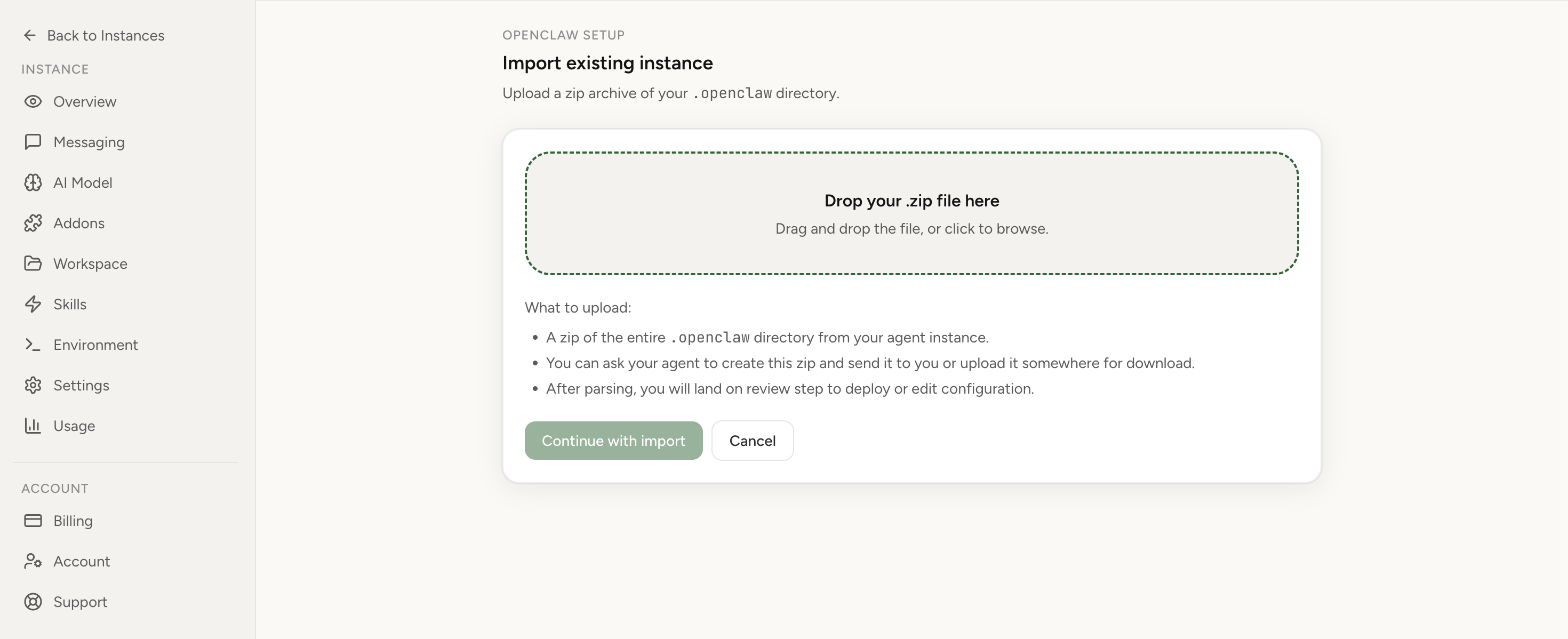
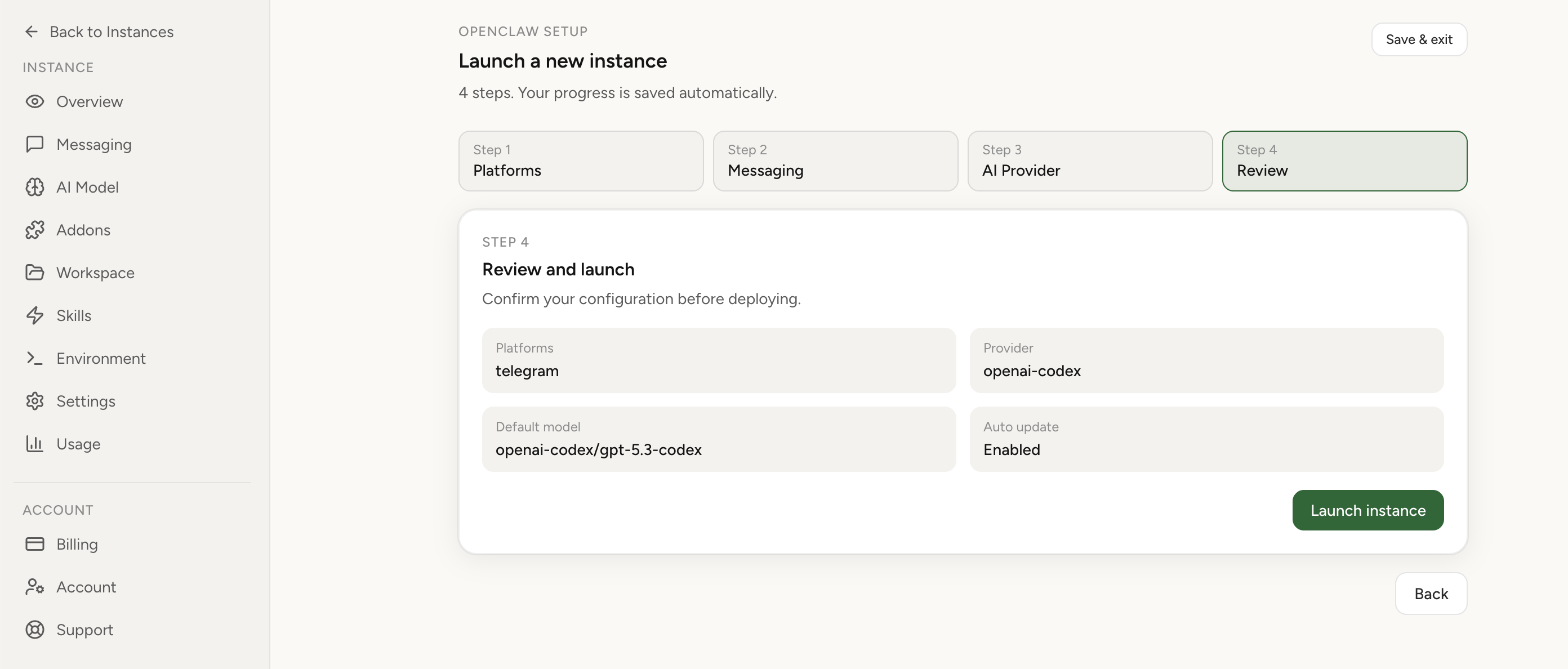
If this keeps coming back, you can move your existing setup to managed OpenClaw cloud hosting instead of rebuilding the same stack. Import your current instance, keep your context, and move onto a runtime with lower ops overhead.
- Import flow in ~1 minute
- Keep your current instance context
- Run with managed security and reliability defaults
If you would rather compare options first, review OpenClaw cloud hosting or see the best OpenClaw hosting options before deciding.
Practical containment options
Use a safer model policy for operational work
Keep experimental or preview models away from workflows that must finish on a schedule. They can be excellent for exploratory work, but scheduled reports, channel replies, and customer-facing tasks need predictable output. Use the model that finishes reliably, not the model that looks best on paper.
Design fallbacks with diversity
A good fallback should change the failure mode. Mix provider paths, latency profiles, and reasoning settings where appropriate. Then test the chain with real prompts. A fallback list that fails the same way three times is not resilience; it is a slower failure.
Split long jobs into checkpoints
Instead of asking for one huge answer, run smaller stages: collect evidence, summarize evidence, draft the output, verify the output. Each stage should save a partial artifact. If a later stage stalls, you do not lose the entire run.
Move recurring operations to a managed runtime when drift becomes the work
If your team spends more time babysitting provider behavior, runtime timeouts, and failed crons than using the agent, the hosting model is now part of the problem. OpenClaw Setup is built for teams that want OpenClaw workflows without turning every model/runtime edge case into a host-maintenance project. You can compare options at /compare/ or review OpenClaw cloud hosting before importing an existing instance.
Edge cases
The run is active but no useful text appears
Treat that as unhealthy for production until proven otherwise. Hidden thinking may be real, but the operator still needs a result. If a job must finish in ten minutes, a silent stream that might finish eventually is not acceptable.
The model works in a direct provider console
That does not rule out an OpenClaw streaming mismatch. Direct consoles can use different transport, buffering, timeout, and retry behavior. Compare the same prompt through OpenClaw and capture the runtime fields, not only the provider-side result.
Only cron fails, but manual chat works
Cron jobs often include larger context, fewer human checkpoints, and longer wall-clock windows. They need their own prompt size limits, artifact checks, and timeout policy. Do not assume a manual chat success proves the scheduled version is safe.
Typical mistakes
- Adding more same-provider preview fallbacks without testing whether they emit output faster.
- Debugging API keys when the real symptom is stream silence and zero usable output.
- Letting a cron job run for hours without checking for a produced artifact.
- Using one huge prompt when a staged workflow would create recoverable checkpoints.
- Calling a model route healthy because it accepts requests, even though it does not return useful answers.
- Ignoring the exact trajectory fields that explain how the run ended.
How to verify recovery
A recovery is real when the same workflow produces a visible answer or durable artifact within the time window your operation requires. Test a small prompt, the real prompt, and the scheduled version if cron is involved. Confirm that logs show normal completion, usage is present where expected, and the final result appears in the destination surface. For chat, that means a visible reply. For cron, that means the expected file, message, commit, or report exists.
FAQ
Is the Gemini model broken?
Not necessarily. The issue can be an interaction between model streaming behavior, hidden thinking, prompt shape, and OpenClaw timeout policy. For production work, the practical question is not whether the model is theoretically capable. The question is whether it returns useful output reliably through your OpenClaw runtime.
Should I disable Gemini entirely?
You do not have to disable it everywhere. Keep it for workflows where long thinking is acceptable and a human can retry. For scheduled, channel-facing, or time-sensitive tasks, use a route that has already passed your end-to-end reliability test.
What should I link internally from this fix?
If model timeouts are one symptom of wider self-hosting overhead, review OpenClaw cloud hosting. If you are still deciding whether to keep self-hosting, use the comparison guide. If browser workflows are part of your agent stack, also review the Chrome Extension relay so browser control does not become another fragile local dependency.