OpenClaw Migration Without Losing Cron or Sub-Agents
A practical migration guide for teams moving OpenClaw workflows without dropping cron jobs, agent bindings, auth assumptions, or browser control patterns.
Problem statement
A lot of migration talk around agent products sounds simpler than real operations. Teams hear "one-click migration" and assume the hard part is moving prompts, model settings, or a single agent persona. Then the new environment goes live and the important parts are missing. The overnight cron jobs are gone. The CEO agent no longer hands work to specialist agents. Browser steps fail because the old setup assumed a local browser relay while the new one assumes a server-side browser. The system technically moved, but the workflow did not.
Fresh social chatter over the last week reflects exactly that pain. People reported migration paths that did not carry cron jobs across. Others described running old and new stacks in parallel because their sub-agent setup or browser expectations did not survive the move. That kind of friction is predictable. OpenClaw operations are more than prompts. They are schedules, bindings, auth artifacts, control surfaces, and runtime assumptions.
If you want a migration that actually preserves working behavior, you need to map those dependencies before you export anything. This guide shows what to preserve first, how to test it, and where teams most often lose functionality without noticing until production.
Evidence from the field
We can ground this in first-party implementation details, not just abstract advice. Three parts of our own hosted OpenClaw work make the migration problem very concrete.
Multi-agent structure is explicit state, not a vibe
In our multi-agent implementation, each instance gets explicit agent records and binding records. Enabled agents receive their own auth profile outputs, session paths, and non-main workspace paths. That means a migration that only recreates the main agent prompt is not a real migration. It is a partial rebuild that happens to keep the most visible part.
Cron lives as durable operational state
In hosted cron work, we verified that OpenClaw cron jobs persist in /home/node/.openclaw/cron/jobs.json and that the gateway RPC API is the canonical control surface.
That matters because schedules are not decorative metadata. They are part of how the assistant behaves every day.
Browser access depends on the control model
In secure Chrome relay work, we implemented a short-lived tokenized relay path where the browser stays on the user's machine while the hosted runtime connects through a scoped relay session. That is very different from a design that expects a headless remote browser. Migration fails fast when teams move tabs, cookies, or automation expectations without understanding which browser model the new setup actually uses.
What teams actually need to preserve
1. Cron jobs and execution intent
Start here, because cron is easy to forget and expensive to rediscover. Scheduled work often contains the assistant's real operating rhythm: morning summaries, overnight research, reminders, monitors, backlog triage, and timed follow-ups. If migration drops those jobs, the assistant can look healthy while silently missing the tasks people depend on most.
Preserve the schedule type, payload type, target session behavior, timeout assumptions, and delivery expectations. A job that exists but runs in the wrong session or delivers to the wrong place is still broken.
2. Agent structure and routing bindings
Many teams think in terms of one assistant, but operate several specialist behaviors in practice. Product, research, support, coding, and operations flows often live in different agents or routes. If your migration flattens everything into a single main agent, you have not preserved the system that users were relying on.
3. Auth and provider assumptions
A migration that gets the main account connected but leaves secondary agents with stale or missing auth artifacts will fail in a confusing way. The main lane works. The specialist lanes quietly break. That is why you must test non-main agents explicitly after a move.
4. Browser control model
Browser work is where hidden assumptions pile up. Does the assistant use your real local Chrome tab. Does it depend on a relay path. Does it expect a remote browser. Does the workflow rely on local logged-in state. Those are architectural questions, not cosmetic setup questions.
Diagnostics: map the current system before exporting anything
Inventory cron jobs
Make a clean list of every scheduled workflow, including frequency, purpose, delivery target, and expected completion time. Separate truly critical jobs from nice-to-have jobs so you know what to validate first after the move.
Inventory agents and bindings
Write down every enabled agent, its purpose, default model assumptions, and where messages route. The question is not "how many agents do we have." The question is "what breaks if this agent disappears or starts behaving like main."
Inventory auth behavior
Check how credentials are distributed and refreshed. In multi-agent environments, do not assume all agents inherit working auth just because one agent does.
Inventory browser dependencies
Identify which workflows rely on local logged-in browser state, which rely on a hosted runtime, and which require a relay-style path. This step usually reveals whether migration is mostly configuration work or a deeper architecture change.
Step-by-step migration plan
Step 1: Freeze the source of truth
Before you move anything, stop ad hoc edits. A migration fails faster when the source environment keeps changing during capture. Export or document the current cron jobs, agent structure, and browser expectations from one stable point in time.
Step 2: Recreate the scheduling layer first
Rebuild or import cron jobs before you test higher-level workflows. If you delay this step, you lose the easiest way to tell whether the new system actually preserves day-to-day operations. For each job, validate schedule, payload, session target, timeout, and delivery behavior.
Step 3: Recreate agent structure, not just the main agent
Rebuild the full agent list and the routing logic that makes each agent useful. In our own implementation, enabled agents are not just labels in a UI. They come with agent-local paths and configuration outputs. Treat that as a migration requirement, not an optional nicety.
Step 4: Revalidate auth on non-main agents
Send a real test task through every important agent. If you only test the main one, you can ship a broken migration and not notice until the first scheduled specialist workflow fails in production.
Step 5: Rebuild browser workflows against the correct control model
Do not assume your old browser method still exists. If the destination uses a local-browser relay model, wire that intentionally. If it uses a different browser model, adapt the workflow instead of pretending nothing changed. That distinction is exactly why teams often end up running two systems in parallel for longer than expected.
Step 6: Run source and destination in parallel for a short verification window
This is often the cleanest way to catch missing jobs, wrong bindings, stale auth, and browser mismatches. The point is not indefinite duplication. The point is proving parity with as little guesswork as possible.
Edge cases that usually get missed
- One agent owns the routing logic: if you move the worker agents but not the routing behavior, the system feels random.
- Nightly jobs depend on long timeouts: recreating the schedule without the execution budget produces silent underperformance.
- Browser workflows depend on local sign-in state: a remote browser swap can break the exact thing the assistant was meant to automate.
- Auth artifacts are copied unevenly: the migration looks successful during a quick smoke test but fails later in specialist lanes.
- Users verify only visible chat behavior: the hidden scheduled work is where the real regression sits.
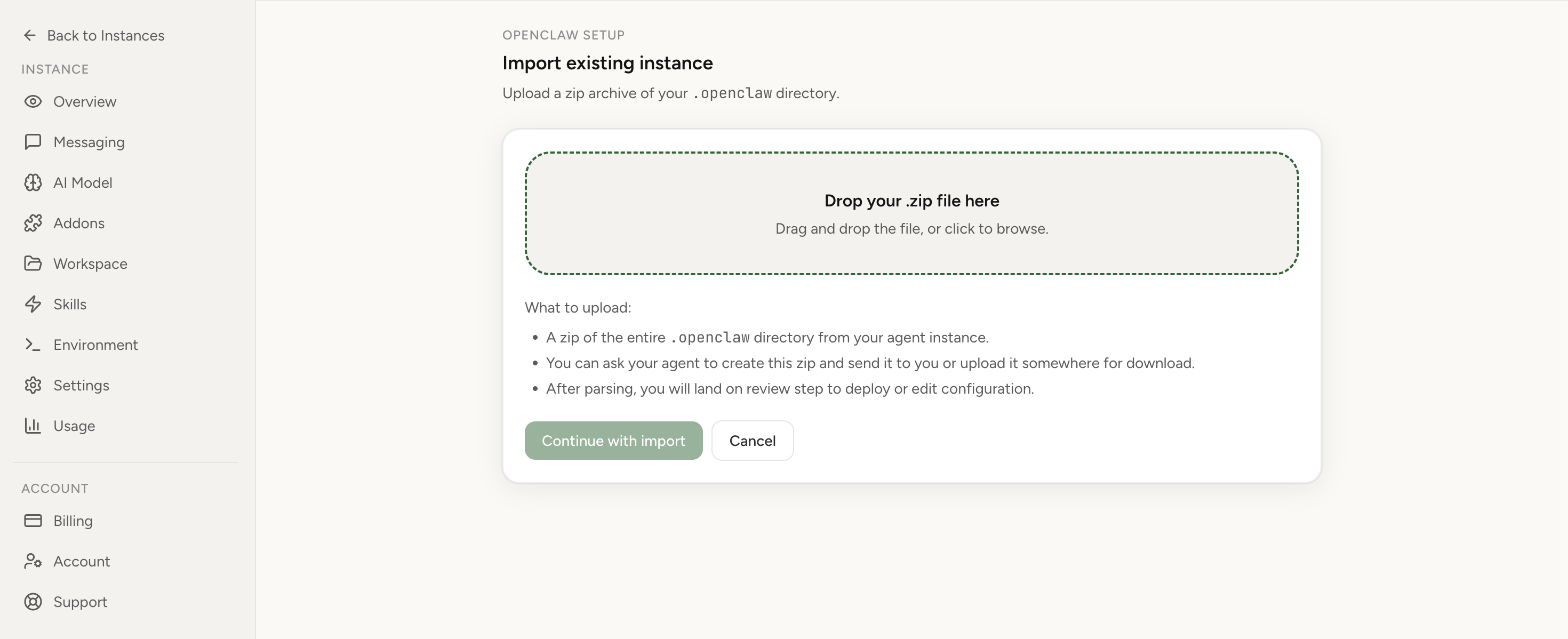
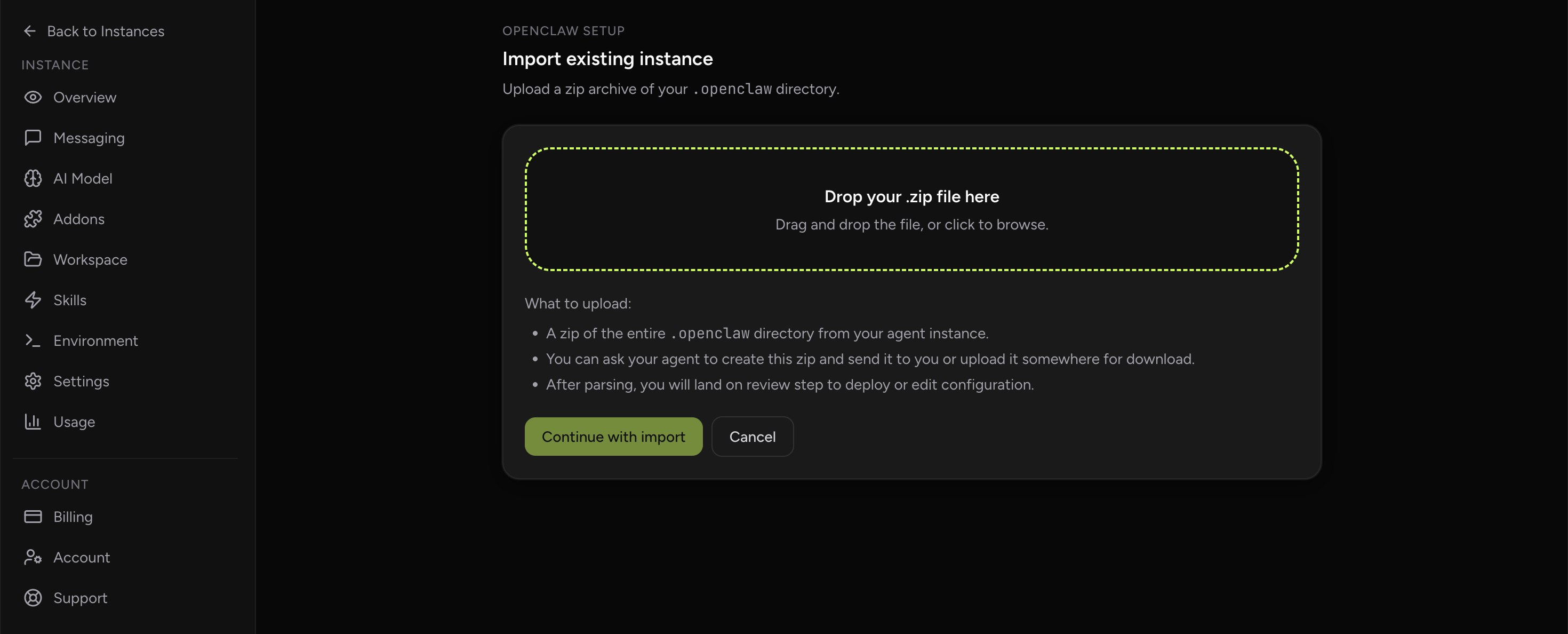
Import your current OpenClaw instance in 1 click
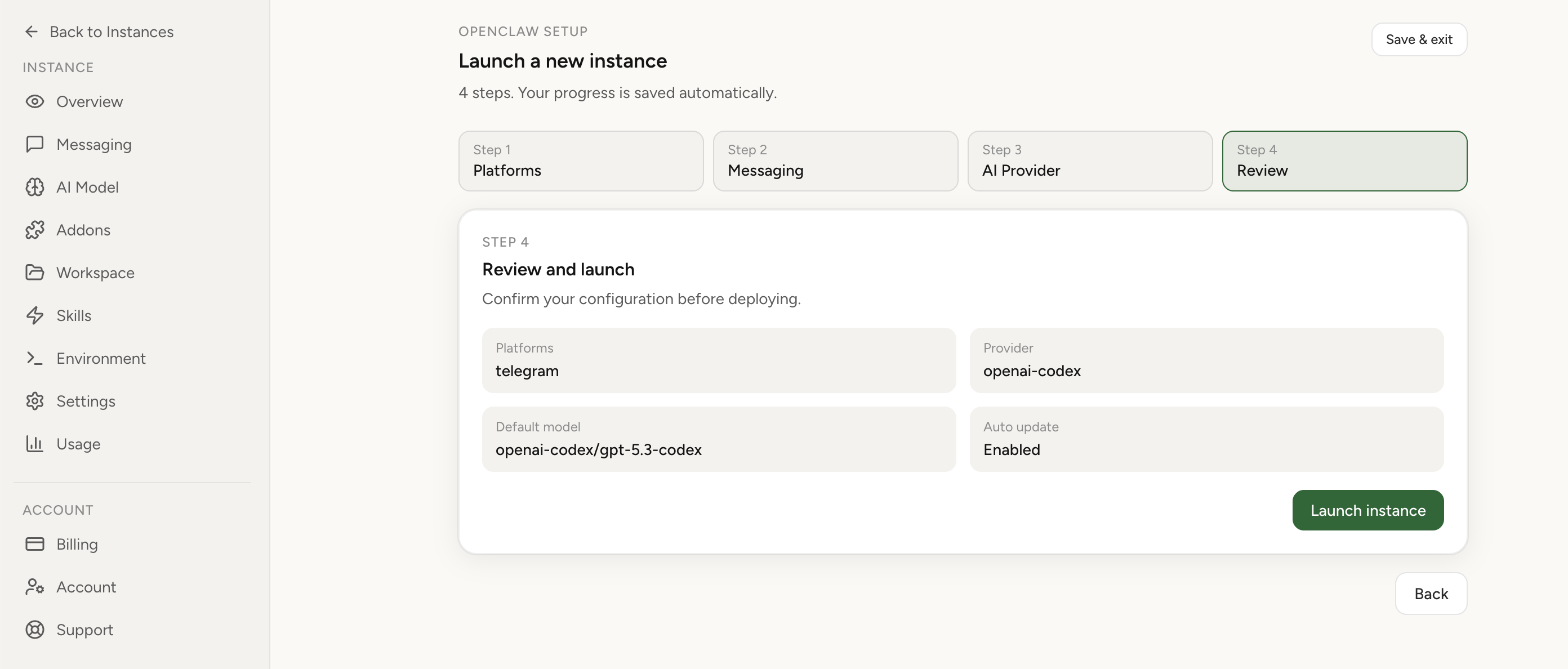
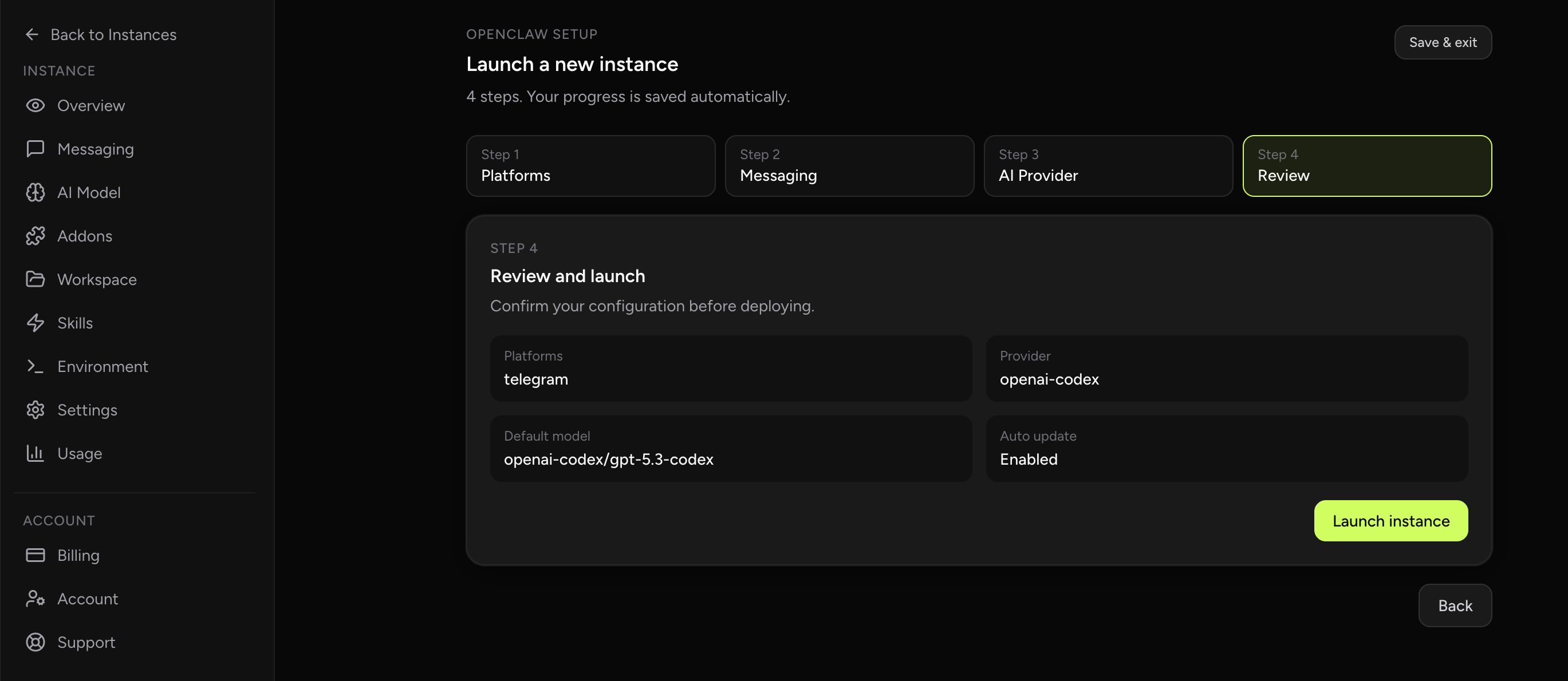
If your goal is to move the working system, not rebuild it from memory, start with the import path. Open the dashboard, review the destination on OpenClaw Setup, compare operating models on the comparison page, and keep Chrome Extension relay close if your workflows depend on your real local browser.
OpenClaw Setup login · Hosted OpenClaw overview
How to verify the migration worked
- Every critical cron job exists once, with the correct schedule and delivery behavior.
- Every important agent still exists and routes the way users expect.
- Provider access works on non-main agents, not just the default path.
- Browser workflows run against the intended model, especially when local Chrome state matters.
- The destination can replace the source without forcing the team to keep both systems alive for basic reliability.
If even one of those checks fails, the migration is incomplete. Treat that as useful information, not as a reason to improvise around the broken part forever.
Typical mistakes
- Moving prompts and assuming workflows moved too.
- Rebuilding only the main agent and forgetting bindings, session paths, or specialist roles.
- Testing browser automation in the wrong environment and calling it good enough.
- Skipping cron verification because the assistant can still answer in chat.
- Keeping parallel systems alive without a deadline, which drags the migration into permanent confusion.
When a migration should become a redesign decision
Sometimes the right answer is not a pixel-perfect transfer. Sometimes the move exposes that your old setup depended on fragile assumptions you no longer want to carry. That is especially true when browser work, shared billing, or multi-agent routing has grown beyond a solo setup. In that case, use the migration as a chance to simplify the system instead of preserving every accidental complexity.
Start with Compare to see the operating tradeoffs clearly, review OpenClaw cloud hosting for the managed runtime model, and use Chrome Extension relay as your reference if real-browser workflows are part of the decision.
FAQ
Can I migrate without parallel running?
Yes, but only when the workflow is simple enough to validate quickly. If cron, sub-agents, or browser flows matter, a short parallel window is usually the fastest way to reduce risk.
What breaks most often in multi-agent moves?
Agent-specific behavior that was never documented: routing rules, provider assumptions, and auth distribution. Those are the first things to verify after a move.
Why does browser migration feel harder than chat migration?
Because browser workflows depend on where the browser actually lives and which identity state it carries. That is an architecture dependency, not just a UI preference.
What if I only need one assistant now?
Then simplify. But make it a conscious simplification. Do not let migration erase useful scheduled work or specialist behavior by accident.