OpenClaw updates breaking your stack? Build a maintenance plan before the next upgrade
Problem statement: a self-hosted OpenClaw instance starts as a clean personal automation setup. Then one update changes gateway behavior, another exposes a plugin mismatch, a chat channel becomes noisy, and a scheduled job silently stops doing useful work. Nothing feels catastrophic enough to justify a full migration, but the maintenance burden is now stealing the time the agent was supposed to save.
This guide is for operators who still want the control of self-hosting but need a safer way to handle OpenClaw updates. The goal is not to freeze your stack. The goal is to stop treating updates as a hopeful command-line action and start treating them as a small production change with evidence, gates, and rollback. If you run OpenClaw for customer work, team workflows, scheduled reporting, browser automation, or messaging channels, that discipline is not bureaucracy. It is the difference between an assistant and another fragile service you now own.
- On May 8, 2026, social discussion surfaced an operator building a local alternative to OpenClaw because frequent updates were breaking his stack. The useful signal is not that every update is bad. It is that self-hosted users are now judging OpenClaw by day-two reliability, not only by the first successful install.
- The May 2026 OpenClaw release stream includes maintenance-relevant changes around gateway shutdown, plugin install and update repair, supervisor restart diagnostics, stale run-context reconciliation, OAuth recovery, and container capability hardening. Those are exactly the layers that make unmanaged upgrades risky when an instance is already carrying real work.
-
Google Search Console for openclaw-setup.me shows the same pattern in search behavior. In the finalized May 1-May 6 window, users clicked
troubleshooting pages for exact operational failures such as
health check failed: gateway timeout after 10000ms,openclaw session file locked,openclaw origin not allowed, anddisconnected (4008): connect failed. - Our own daily publication history now includes repeated recovery playbooks for upgrade chunks, gateway restarts, channel delivery, local Ollama boundaries, OAuth routing, and duplicate Telegram output. The lesson is practical: reliable OpenClaw operations need an update process, not just a fix after each symptom appears.
Why OpenClaw maintenance feels different from a normal app update
OpenClaw is not just a web app with a database behind it. It is closer to a runtime that touches multiple moving pieces: model providers, gateway state, local workspace files, plugins, skills, cron jobs, channels, browser sessions, node bridges, and user-facing messages. An update can succeed at the package level while still breaking the operating shape of your instance.
That is why the dangerous update is often not the one that fails loudly. Loud failures are annoying, but they are visible. The more expensive failures are partial: a gateway health check is slow, a Telegram reply is delayed, a cron job queues but does not complete, a plugin loads in the wrong process, or a browser route silently loses the tab it used yesterday. Those failures create uncertainty, and uncertainty is what makes teams lose trust in the assistant.
The maintenance plan in one page
A safe OpenClaw maintenance plan has five parts: inventory, snapshot, update, verification, and rollback. You do not need a heavyweight change-management system. You do need a repeatable checklist that protects the specific workflows your instance runs.
- Inventory: know which channels, cron jobs, models, plugins, skills, and browser routes must survive the change.
- Snapshot: preserve configuration, workspace memory, session state, credentials references, and package state before touching the runtime.
- Update: stop or drain risky work first, then update from one controlled shell with the exact command recorded.
- Verification: run real workflow checks, not only a version command.
- Rollback: return to the previous known-good state if any critical check fails.
Step 1: write down what the instance actually does
Most update mistakes start before the update. The operator knows OpenClaw is “running,” but not which parts are business-critical. Make a short inventory before every meaningful upgrade. Include the user-facing channels, scheduled jobs, model routes, connected nodes, browser flows, installed plugins, and files the assistant must preserve.
This matters because every instance has a different blast radius. A personal CLI-only setup can tolerate a few broken turns. A Telegram bot used by a team cannot. A cron job that produces a private daily summary has different risk than a cron job that messages customers. The update plan should match the real consequences of failure.
Minimum inventory fields
- Primary interface: CLI, Telegram, WhatsApp, Slack, Discord, browser UI, or API.
- Critical scheduled jobs and their expected run times.
- Default and fallback model routes, including OAuth-backed routes and local providers.
- Plugins or skills that affect memory, browser access, file transfer, or messaging.
- Workspace files that must not be regenerated or lost.
- Rollback owner: the person who will decide whether to keep or revert the update.
Step 2: snapshot before you update
A snapshot is not only a full server backup. For many OpenClaw instances, the fastest useful snapshot is a set of files and facts: current package version, configuration export, workspace directory, memory files, active channel configuration, and a list of scheduled jobs. If the instance uses Docker or a VPS image, take the platform-level snapshot too. The lower-level backup protects the machine; the OpenClaw-level snapshot protects the assistant’s identity and operating state.
Also capture a short “known-good” transcript. Send one message through your main channel, run one model turn, and record the expected response pattern. This gives you something concrete to compare after the update. Without a known-good reference, post-update testing becomes guesswork.
Step 3: stop treating live work as background noise
OpenClaw is often doing work even when no one is watching. Cron jobs, long-running research, browser tasks, and channel progress messages can all be active while you update. If you replace files under a live process, you can create a half-old, half-new runtime that fails in strange ways later. Before major updates, drain active tasks where possible and pause scheduled jobs that are allowed to wait.
The practical rule: do not update the runtime while it is mid-answer, mid-tool-call, or mid-scheduled workflow unless you are intentionally handling an incident. If you are fixing an outage, write that down too, because the rollback decision will be different.
Fix once. Stop recurring recurring OpenClaw update breakage.
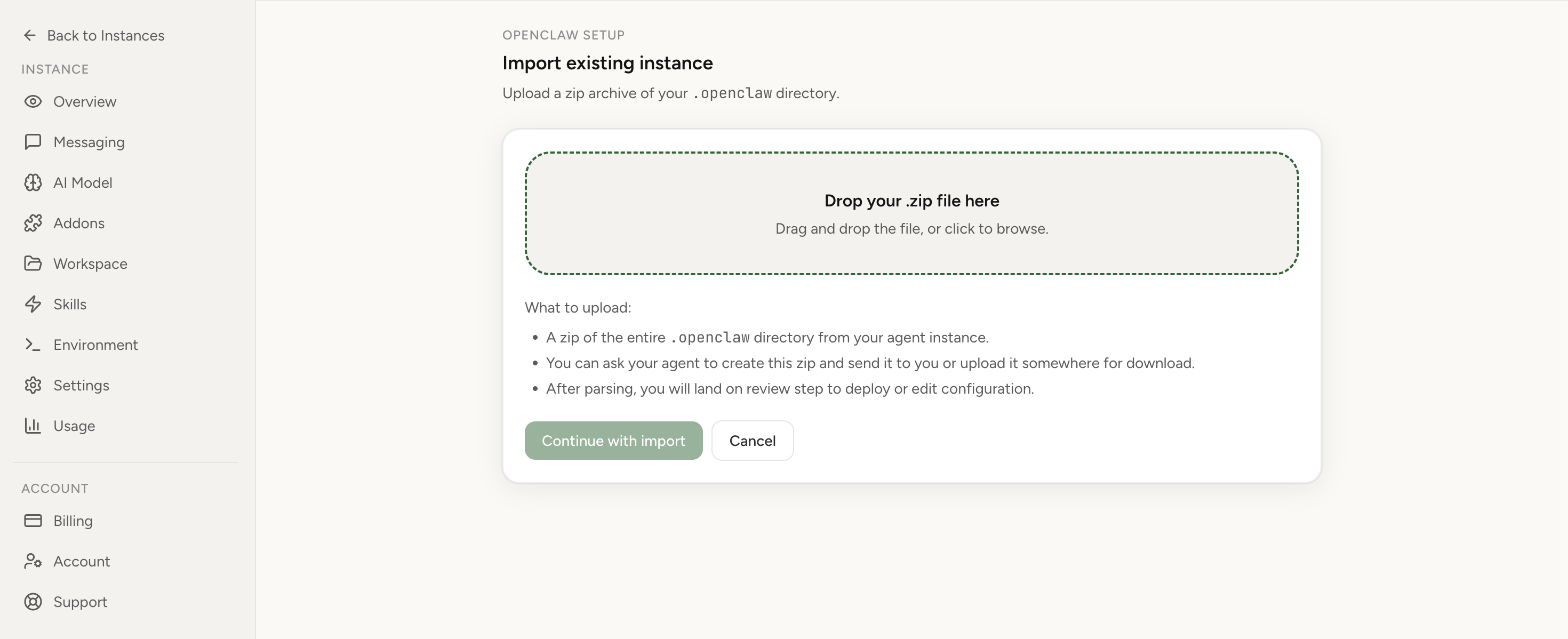
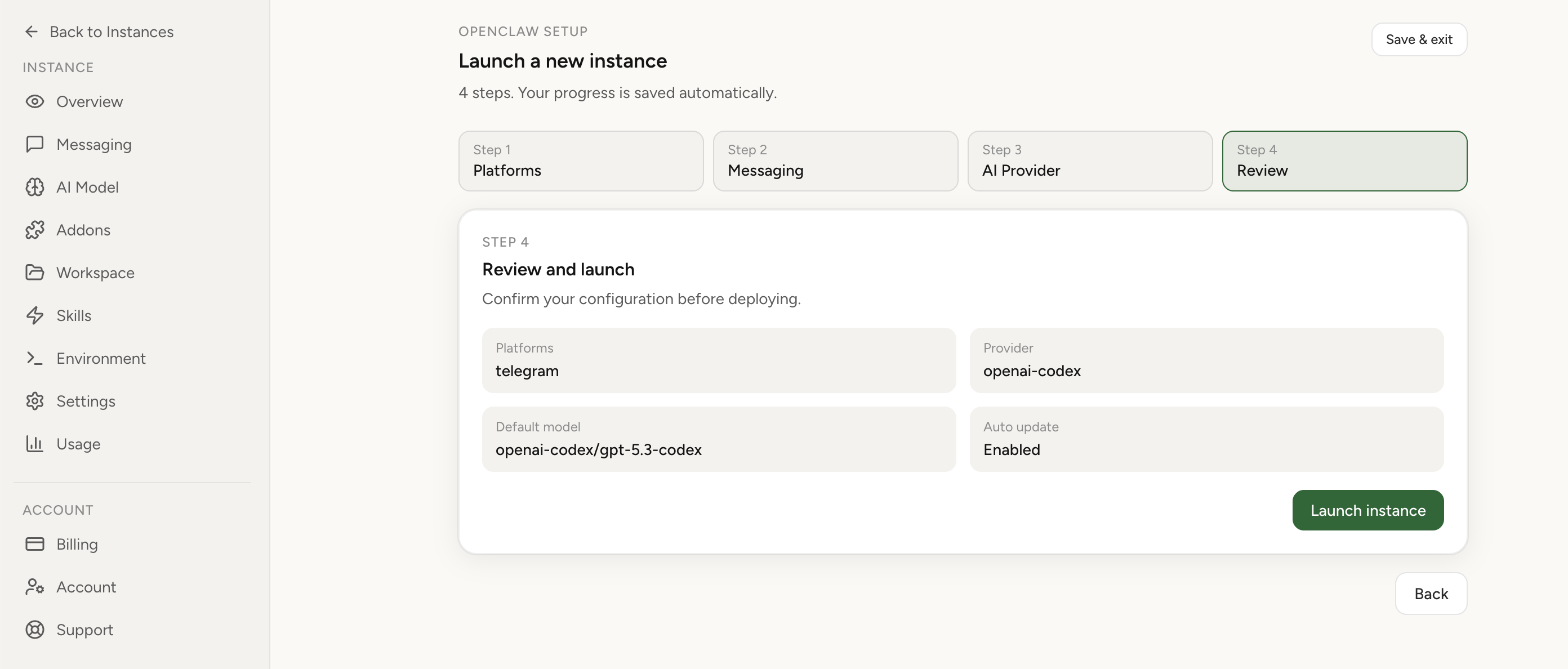
If this keeps coming back, you can move your existing setup to managed OpenClaw cloud hosting instead of rebuilding the same stack. Import your current instance, keep your context, and move onto a runtime with lower ops overhead.
- Import flow in ~1 minute
- Keep your current instance context
- Run with managed security and reliability defaults
If you would rather compare options first, review OpenClaw cloud hosting or see the best OpenClaw hosting options before deciding.
Step 4: update with an explicit gate
The update command is the least important part of the plan. The gate around it matters more. Record the starting version, update from a controlled shell, and keep the terminal output. If the update tool tries to repair plugins, alter provider routes, or restart the gateway, treat that as a change that needs verification, not as harmless noise.
If your instance has multiple agents or workspaces, do not assume a healthy default session proves the whole deployment is healthy. Test the agent that owns the channel, the agent that runs cron, and the agent that uses browser or file tools. OpenClaw stacks are often asymmetric: one agent has all the routes, another has the schedule, and a third carries the memory that matters.
Step 5: run post-update checks users would notice
Version checks are useful, but they are not enough. A production-ready verification pass should prove that the instance can still do the work people expect from it. That means at least one model turn, one channel delivery, one scheduled-job dry run or manual trigger, one config validation, and one log inspection after the first normal cycle.
- Gateway: health endpoint or status command returns healthy within the normal time budget.
- Model: the configured default route completes a short turn and reports the expected provider.
- Channel: the main chat surface sends one request and receives exactly one final answer.
- Cron: scheduled work can be listed, manually triggered, or safely dry-run without queue drift.
- Memory: the assistant can read the expected workspace or memory context.
- Browser or node bridge: if used, the route attaches to the expected browser or node without stale permissions.
- Logs: no repeated timeout, permission, plugin, or reconnect pattern appears during the verification window.
Step 6: define rollback before you need it
Rollback is not failure. Rollback is how you keep the assistant useful while you investigate. Define the decision before the update: which failed checks require immediate rollback, which can be contained, and which are cosmetic enough to keep the update. For example, a broken final-answer path in Telegram should roll back quickly. A minor admin-page visual issue may not.
The rollback path should restore the runtime and the operating state. If you only downgrade the package but leave changed config, stale plugin state, or broken scheduled jobs behind, you have not restored the instance. After rollback, run the same post-update checks. The rollback is complete only when the known-good workflow is working again.
Typical mistakes that make update problems worse
Mistake 1: updating because a command suggests it, without a reason
Updates are important, especially for security and reliability fixes. But a production instance should not change just because a terminal showed a newer package. Know the reason: security fix, provider compatibility, channel bug, plugin repair, or planned maintenance.
Mistake 2: testing only the CLI
The CLI can work while Telegram, WhatsApp, browser relay, or cron is broken. Test the surface your users actually touch. If the assistant’s job is to reply in Telegram, a local shell answer is only partial evidence.
Mistake 3: ignoring slow failures
A gateway that answers eventually is not necessarily healthy. Slow health checks, repeated retries, and delayed channel replies are early warning signs. They deserve the same attention as hard crashes because they often become outages under load.
Mistake 4: leaving rollback artifacts behind
Failed experiments create debris: temporary config, disabled plugins, paused cron jobs, copied secrets, renamed directories, and stale supervisor processes. Clean those up before declaring the instance stable. Otherwise the next update starts from an unknown state.
When managed hosting is the cleaner answer
Self-hosting is still the right choice when you need full infrastructure control and already have the operational habit to support it. But if OpenClaw maintenance is now a recurring distraction, managed hosting may be the more honest setup. The trade is simple: you give up some low-level control so the instance has a maintained runtime, clearer operational defaults, and a dashboard designed around import, access, channels, and visibility.
If you are deciding between the two paths, start with the managed vs self-hosted comparison. If you already know you want an always-on runtime, review OpenClaw cloud hosting. If real-browser workflows are part of the reason your local stack is hard to maintain, see Chrome Extension relay before you rebuild browser access yourself.
Verification checklist after your next update
Keep this checklist beside the upgrade command. The update is not finished until these checks pass or you roll back.
- The gateway is healthy and responds within your normal threshold.
- The main model route completes a short answer.
- The main chat channel receives one user message and returns one final answer.
- Progress or status messages clean up as expected.
- Critical cron jobs are still enabled and can run.
- Browser, node, or file-transfer tools work if they are part of your workflow.
- Logs show no repeated timeout, reconnect, permission, or plugin-load loop.
- The snapshot and rollback notes are stored somewhere the next operator can find.
FAQ
Should I disable automatic OpenClaw updates?
For a serious self-hosted instance, updates should be deliberate. That does not mean ignoring releases. It means applying them in a maintenance window with backups, checks, and rollback. Security fixes should still move quickly; they just should not move blindly.
How often should I update OpenClaw?
Match the cadence to risk. A personal sandbox can track frequent releases. A team instance should batch non-urgent updates, apply security and provider-compatibility fixes faster, and test each change against the workflows that matter.
Is a VPS snapshot enough?
It is a strong start, but it is not enough by itself. You also need OpenClaw-level context: active channels, model routes, cron jobs, memory files, and the known-good user flow. A machine snapshot can restore bytes; it does not automatically tell you whether the assistant is useful.
What is the first sign that self-hosting is costing too much time?
The first sign is usually not money. It is attention. If you hesitate before every update, keep a private list of fragile fixes, or spend more time protecting the agent than using it, the operational cost is already real.