OpenClaw VPS cloud setup risk checklist for teams
Problem statement: a cloud AI agent, freelancer, or helper can often install OpenClaw on a VPS quickly enough for a demo. The risky part is what happens after the demo: who owns SSH access, where secrets are stored, whether Telegram or browser access is exposed, how updates are rolled back, and whether the team can recover when the gateway is alive but not reliably delivering replies.
This guide is for teams considering a short VPS setup, a one-month trial, or a migration from a laptop into the cloud. It does not assume the self-hosted path is bad. It assumes a VPS is only safe when access, secrets, ports, logs, channels, updates, and recovery are designed before the first production conversation lands there.
- A public Reddit discussion asked whether using a cloud AI agent to set up a VPS with Hermes and OpenClaw for one month was a good idea or risky: r/openclaw discussion. A related thread appeared in r/hermesagent.
- Public hosting discussions now compare self-hosting from scratch, managed OpenClaw-style platforms, isolated VPS claims, and provider-access boundaries. Those claims vary by provider, so teams should verify architecture instead of relying on marketing language.
- OpenClaw issue reports from May 2026 show why a working install is not enough: gateway HTTP timeouts while the service remains active (#76574), event-loop saturation and probe timeouts (#76047), gateways becoming very slow with high CPU (#76382), and update repair not resolving multiple issues (#76563).
- Hosted operations work has shown that a live health endpoint and a healthy pod can still coexist with channel delivery failure, ACP replay drain timeout after 5000ms, and completion-announcement retries that time out after 120000ms. Production readiness needs delivery checks, not only uptime checks.
Why the VPS path feels attractive
A VPS feels simple because it gives you root-like control, a stable IP, and enough CPU and memory to move OpenClaw off a laptop. You can ask an AI agent or contractor to install packages, configure a process manager, connect Telegram, add provider keys, and point a domain at the host. For a weekend prototype, that may be perfectly reasonable.
The trap is that installation success looks like operational success. OpenClaw is not just a static app. It can run tools, handle browser sessions, receive channel messages, trigger cron jobs, store context, and call model providers. That means the host becomes part chat server, part automation runner, part credential store, and part recovery surface. A helper can install it once; your team still has to operate it every day.
Main causes of VPS setup risk
- Broad SSH access: the setup helper receives more access than the job requires and keeps it longer than needed.
- Long-lived secrets: model keys, Telegram tokens, browser relay credentials, and admin passwords are placed in shell history, notes, or shared chats.
- Unreviewed network exposure: the web UI, gateway, or debugging ports are opened to the internet because it made setup easier.
- No rollback path: updates are applied directly on the only working instance without a snapshot or export.
- Channel-only testing: a bot replies once in Telegram, but health checks, Control UI, outbound delivery, and restart behavior are never tested.
- Single-person ownership: one person understands the host, and everyone else only knows that “the bot is on the VPS.”
Diagnostic questions before you accept the setup
Before a VPS OpenClaw instance becomes a team tool, ask these questions and keep the answers in a private runbook. If you cannot answer them, the setup is still experimental even if it appears to work.
- Who can SSH into the host, and when will temporary access be removed?
- Which ports are open publicly, and which should only be reachable through private networking?
- Where are provider keys, channel tokens, and dashboard credentials stored?
- How do you rotate each credential without losing the instance?
- What snapshot, backup, or export exists before the next update?
- How do you prove Telegram, Control UI, cron, browser access, and logs all work after restart?
- Who receives incident alerts when the gateway is alive but messages are not delivered?
- What is the fallback if the VPS provider blocks traffic, changes networking, or suspends the instance?
Step-by-step safe VPS setup checklist
Step 1: start with a disposable trial host
Do not start on the host that will hold production credentials. Use a disposable VPS to test the install instructions, package requirements, process manager, firewall rules, domain setup, and channel connection. If an AI helper is doing the work, this gives it a sandbox where mistakes are cheap and secrets are temporary.
Step 2: create narrow credentials
Use dedicated provider keys, a dedicated Telegram bot, and separate owner credentials for the trial. Set spending limits where the provider allows it. If the helper needs SSH, give a temporary key and remove it after installation. Never paste permanent keys into public chats, issue comments, or shared transcripts.
Step 3: close ports before adding features
Keep the public surface small. The safest default is SSH restricted to known operators, HTTPS behind authentication, and no direct public access to internal gateway or debugging ports. If remote access is needed, use private networking or a managed access path instead of opening everything and hoping the UI password is enough.
Step 4: install, then document the exact state
After installation, capture a private runbook: operating system, Node runtime, package manager, process manager, domain, ports, environment variable names, backup location, restart command, log command, and contact path for the owner. Do not include raw secrets in the runbook; list where they are stored and who can rotate them.
Step 5: test every path, not just the happy path
Send a short prompt through Control UI, Telegram, and any other production channel. Run one scheduled job if cron matters. Test a browser workflow if browser access matters. Restart the process and repeat the same checks. Then verify logs show clean startup, channel delivery, and no repeated timeout loops.
Step 6: snapshot before the first real user
Take a provider snapshot, export configuration where possible, and save the rollback steps. A snapshot taken after the first incident is too late. The goal is to preserve the working state before live messages, long conversations, and cron jobs begin changing the instance.
Edge cases that need extra caution
- Corporate VPN or proxy: Telegram, provider APIs, and browser relay paths may behave differently from a personal network.
- Shared team channels: a broken agent can confuse customers or coworkers faster than a private bot can.
- Browser access: real-browser workflows raise the value of the host and make credential boundaries more important.
- Long-running cron jobs: background work can create load even when no one is watching the UI.
- Multiple helpers: every extra operator increases the access-review burden.
- Trial-to-production shortcuts: a host built for a one-month experiment often keeps temporary keys and permissive firewall rules unless someone cleans them up deliberately.
Verification checklist before production use
Use this as the acceptance gate. If a setup helper hands you a VPS and cannot show these checks, the work is not finished.
- Temporary SSH keys removed or scheduled for removal.
- Public ports reviewed and restricted to the intended surface.
- Dashboard or Control UI access requires authentication.
- Provider keys and channel tokens are dedicated to this instance.
- Credential rotation procedure is documented and tested with at least one low-risk key.
- Control UI responds after a process restart.
- Telegram or other channel sends a real assistant reply, not only a typing indicator.
- Logs can be viewed by the owner without giving broad shell access to everyone.
- A snapshot or export exists before the next update.
- There is a clear decision point for rollback, import, or managed hosting if delivery becomes unreliable.
Typical mistakes
- Letting a setup helper keep SSH access after the project is done.
- Using personal model-provider keys instead of scoped instance keys.
- Assuming a working Telegram reply proves the whole gateway is healthy.
- Opening dashboard and gateway ports publicly during setup and forgetting to close them.
- Skipping backups because the instance is “only a trial,” then using it for real work.
- Applying updates without a known-good snapshot.
- Choosing a VPS only because setup looks cheaper, while ignoring the operator time required after launch.
When managed hosting is the cleaner answer
Managed hosting is not about avoiding all responsibility. You still need to choose providers, protect account access, and decide what the agent may do. The difference is that host runtime, import flow, channel checks, owner access, and rollback discipline are treated as part of the product instead of a one-off setup script. That matters when OpenClaw is tied to client communication, team operations, scheduled work, or browser workflows.
If you want the VPS path, use the OpenClaw setup guide and keep this checklist beside it. If you want less host maintenance, compare OpenClaw cloud hosting, review self-hosted versus managed tradeoffs, and check Chrome Extension relay if browser access is part of your workflow. For teams ready to move an existing instance, the dashboard starts at app.openclaw-setup.me/login.
Fix once. Stop recurring VPS setup and ownership risk.
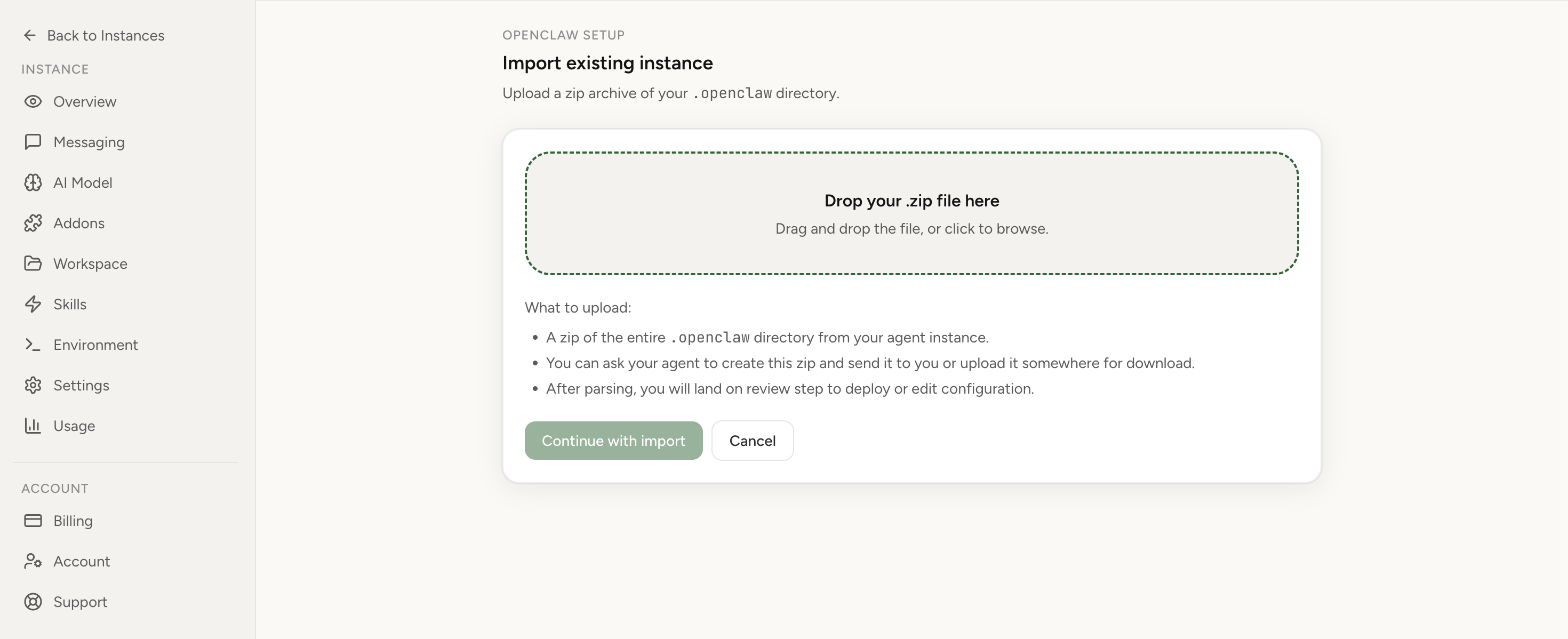
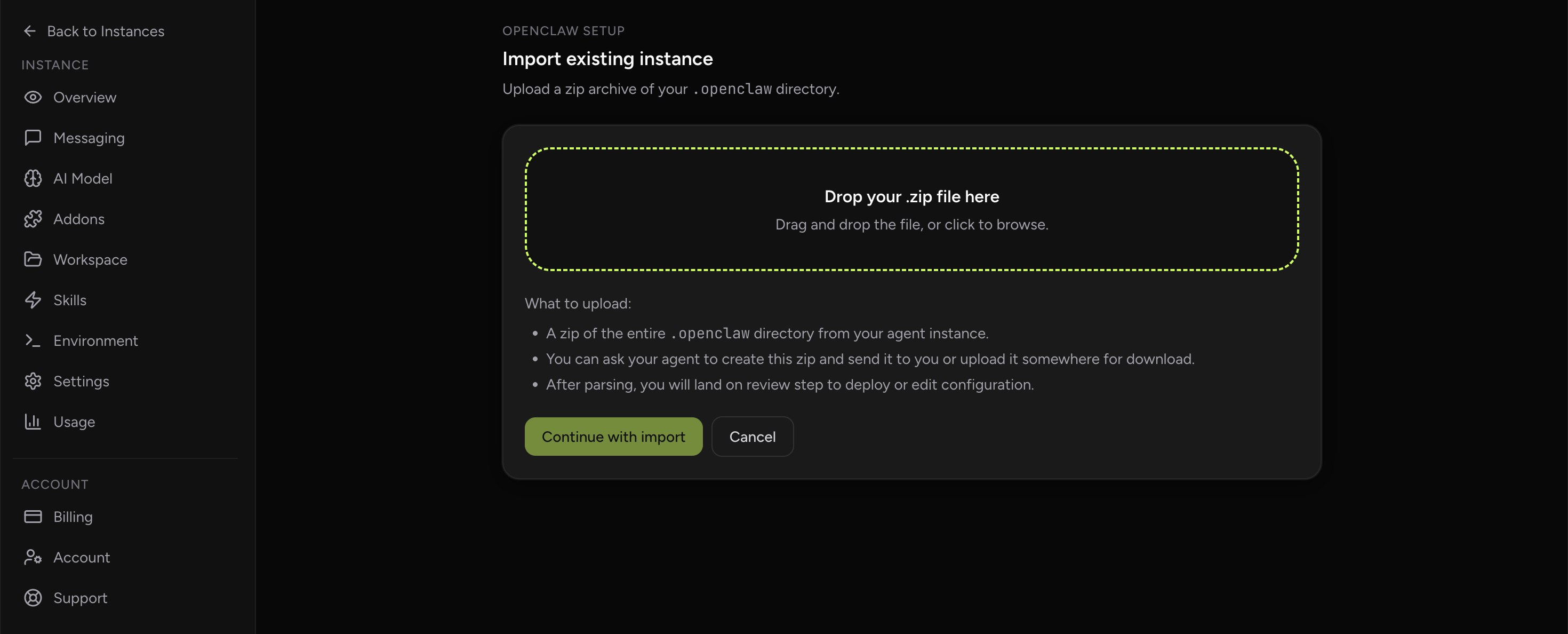
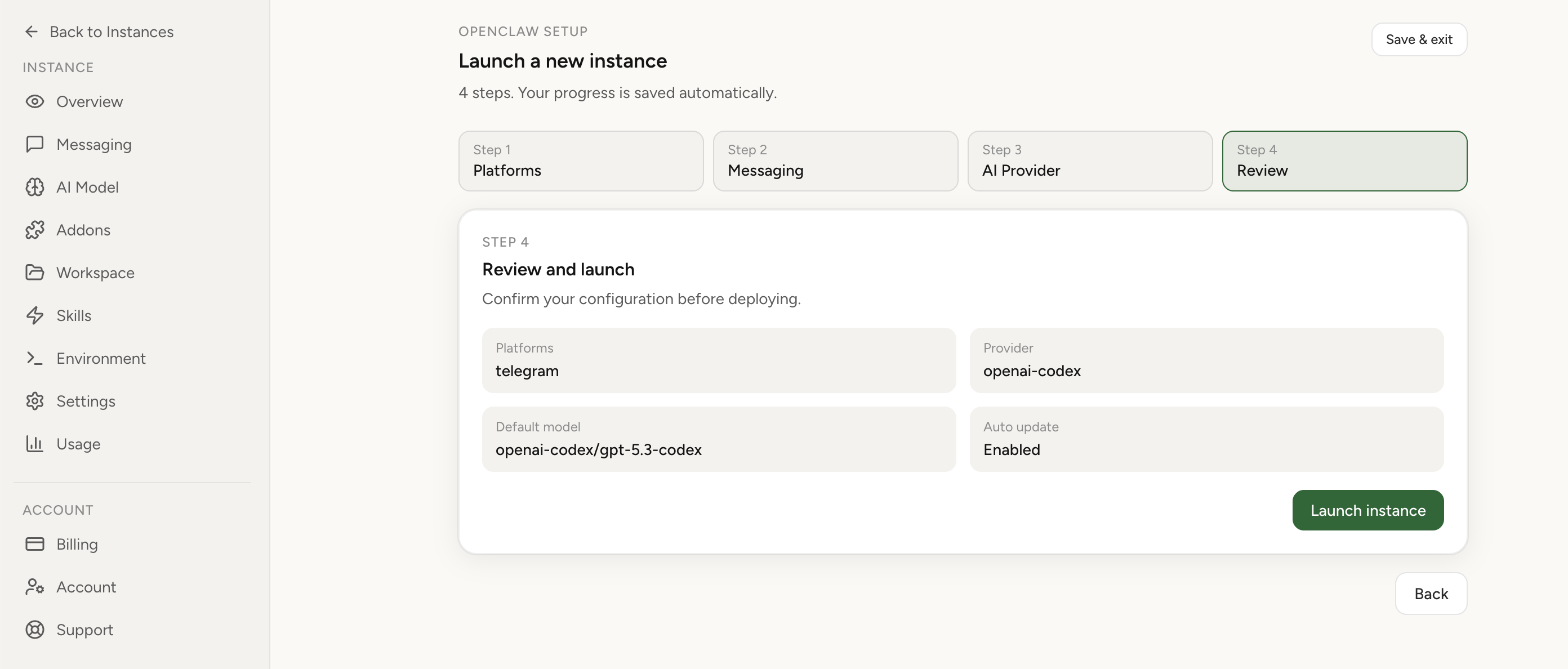
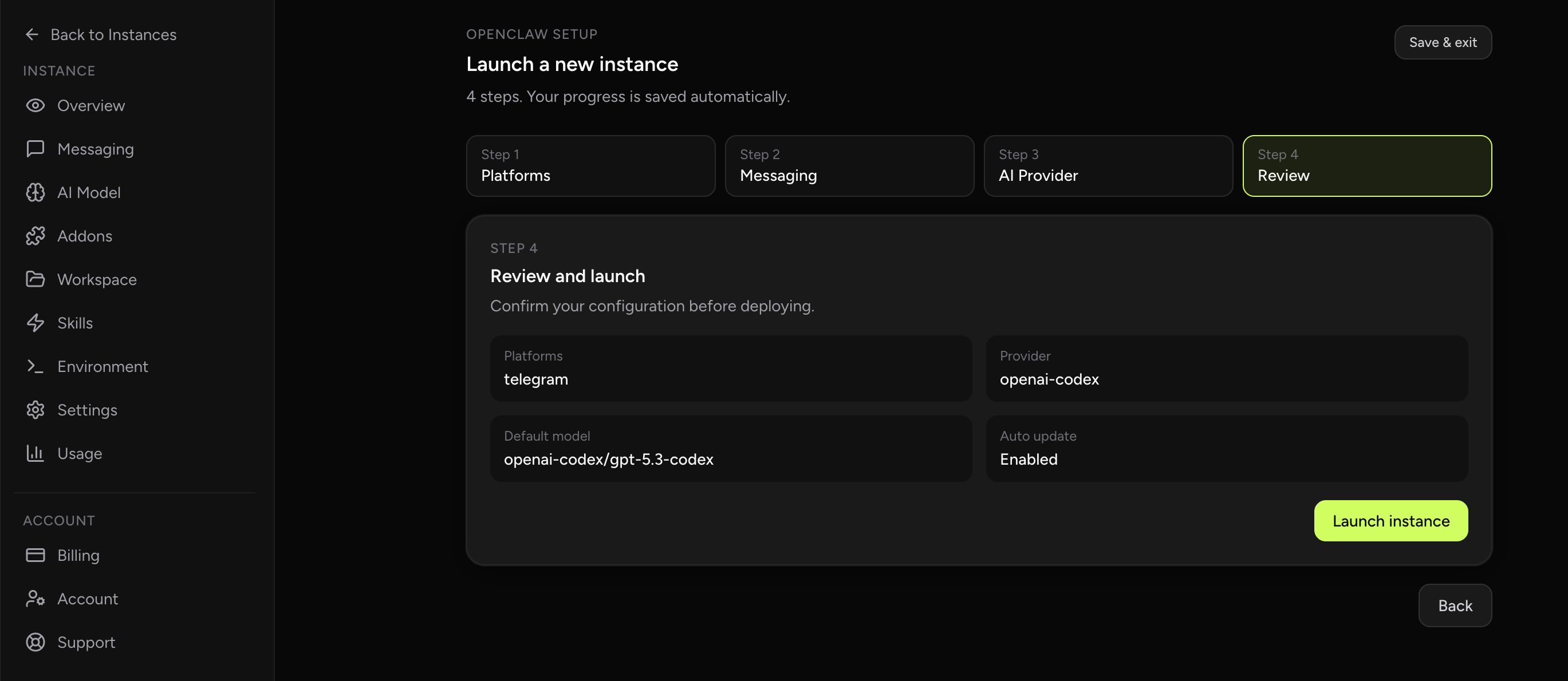
If this keeps coming back, you can move your existing setup to managed OpenClaw cloud hosting instead of rebuilding the same stack. Import your current instance, keep your context, and move onto a runtime with lower ops overhead.
- Import flow in ~1 minute
- Keep your current instance context
- Run with managed security and reliability defaults
If you would rather compare options first, review OpenClaw cloud hosting or see the best OpenClaw hosting options before deciding.
FAQ
Is a VPS cheaper than managed OpenClaw hosting?
The server bill may be lower, but the real cost includes setup time, security review, update handling, backups, credential rotation, and incident response. A VPS is cheapest when someone on the team is comfortable owning those tasks.
Can I use an AI agent to perform the setup safely?
Yes, if you constrain the environment. Use temporary credentials, a disposable trial host, narrow instructions, human review before public exposure, and a cleanup checklist at the end. Do not give a helper permanent keys and broad access to a production host without oversight.
What is the minimum proof that the VPS is ready?
The minimum proof is a documented restart, authenticated access, restricted ports, dedicated credentials, a working channel reply, readable logs, and a snapshot or export. If any of those are missing, keep the instance out of production.
Should I migrate an existing laptop setup to the VPS or start fresh?
Start fresh for disposable tests. For a real migration, preserve context, config, cron jobs, channel settings, and credentials carefully. If losing context would hurt, use an import-oriented path instead of rebuilding by hand from memory.