OpenClaw web search providers without gateway crashes
Problem statement: OpenClaw web search looks simple until the gateway refuses to start, a provider works in one session but not another, or an agent silently reaches for a search backend that was never installed. The fix is not to keep swapping API keys. You need to treat web search as a runtime dependency with provider selection, plugin availability, secret injection, and verification all checked together.
This guide is for OpenClaw operators who want the agent to search the live web from chat, cron jobs, research workflows, and support tasks without turning a small provider setting into a broken instance. It covers the causes, diagnostic order, step-by-step recovery, edge cases, common mistakes, and a verification checklist you can use before handing web search to unattended agents.
If you are deciding whether to keep managing this yourself, compare the operating model in managed versus self-hosted OpenClaw. If you want the control plane to own provider settings, runtime config, restarts, and import, start with OpenClaw cloud hosting or the OpenClaw Setup product path.
-
A hosted OpenClaw instance crashed during provider validation with
tools.web.search.provider: web_search provider is not available: brave. The configured provider was valid, but the matching provider plugin was not available to the runtime yet. - Installing the provider plugin after copying the generated config failed because OpenClaw validated the active config before the installer could repair the missing provider. Installing against a safe bootstrap config first, then copying the generated config, made validation pass.
- Manual plugin installation from the non-root runtime container created an ownership mismatch that OpenClaw rejected as suspicious. The fix moved trusted provider plugin ownership repair into the init path after the normal home-directory ownership handoff.
- OpenClaw Setup later extended the same pattern from Brave and Perplexity to Tavily, SearXNG, and Grok settings: typed provider fields, encrypted API keys where needed, environment-backed runtime secrets, and provider-owned plugin config paths.
- Recent community discussion has moved from "does OpenClaw have search?" to "which provider should I use, and how do I keep provider failures from breaking the agent?" That is an operations question, not only a feature checkbox.
The core issue: web search is two systems, not one
OpenClaw's search experience has a user-facing side and a runtime side. The user-facing side is simple: the agent can call a tool and receive search results. The runtime side is stricter. The selected provider must be recognized, the provider plugin must be installed or bundled, the provider's settings must use the schema OpenClaw expects, and the key or base URL must be visible to the gateway process.
When those layers drift, the symptom can look unrelated to the cause. A missing plugin can appear as a gateway startup error. A missing environment variable can look like a provider bug. A self-hosted metasearch base URL can work from your shell but fail from the container network. A cron job can fail while chat succeeds because the scheduled session uses a different agent profile.
Treat the provider choice as an end-to-end route: selected provider, plugin registration, provider config, secret source, network path, agent profile, and verification run. If you inspect only one layer, you can make the system worse while believing you fixed it.
Common causes
1. The provider is selected before it is available
A config can name a provider that OpenClaw understands in principle, but the runtime still needs that provider to be available when the gateway starts. If the active config references a provider before its plugin is installed, a fail-closed validation path can stop the gateway before any agent gets a chance to recover.
2. Secrets are stored in the wrong layer
Provider keys should not be pasted into public templates, committed config, or random agent notes. They should live in environment variables, encrypted app settings, or a managed secret store. The generated OpenClaw config can reference those values, but the gateway process must actually receive them. If the secret exists in your terminal but not in the runtime environment, web search will still fail.
3. Provider settings are copied across incompatible schemas
Different providers need different settings. Tavily and Grok typically need API keys. SearXNG needs a reachable base URL and may use filters such as categories or language. Perplexity and Brave have their own auth and request expectations. Copying one provider's config shape into another provider path creates a problem that looks like a bad API key but is really a malformed route.
4. The endpoint works from your laptop but not from the gateway
Self-hosted and private search endpoints add a network boundary. A SearXNG URL that works in your browser may not be reachable from the OpenClaw container, Kubernetes pod, or remote instance. Test from the same network context as the gateway before changing OpenClaw provider settings.
5. Cron jobs use a different execution path
Search that works in the main chat can still fail in scheduled work. Cron jobs may run in a different session, with different tools, a different model profile, or a more restrictive agent configuration. Verify the exact path that will run unattended.
Diagnostics: find the broken layer in order
Step 1: Confirm the selected provider
Start by identifying the provider OpenClaw is configured to use for web search. Do not assume the dashboard, a note in your workspace, and the active runtime config all agree. If the error names a different provider than you expected, you already found the first drift point.
Step 2: Confirm the provider is registered
The provider must be visible to OpenClaw before the gateway accepts the config. If provider registration depends on plugin installation, install or enable the provider before validating the runtime config that selects it. This ordering matters because a strict gateway can fail before it reaches any repair logic.
Step 3: Confirm the secret or base URL reaches the gateway
For API-backed providers, test whether the gateway process receives the expected environment variable or encrypted setting. For base-URL providers, test network reachability from the runtime, not from your local shell. A key or URL that exists outside the runtime does not help the agent.
Step 4: Run a small search from the same agent profile
Use a small, harmless query from the exact agent profile you plan to use. If your production use case is a cron job, manually run one cron-like task. If the production use case is a Telegram or Slack session, test that session path instead of only testing the main dashboard chat.
Step 5: Check result quality before scaling usage
A provider can be technically healthy but wrong for the job. Check whether the results include useful titles, URLs, snippets, and recency controls for your task. If the agent needs extraction from specific pages, web search alone may not be enough; pair it with web fetch or browser automation.
Step-by-step recovery
Step 1: Keep the gateway bootable
If the gateway crashes because the selected provider is unavailable, temporarily switch to a known-good provider or disable web search long enough to regain control. The goal is not to remove search permanently. The goal is to get the runtime back to a state where you can inspect and repair it.
Step 2: Install or enable the provider before selecting it
Provider installation should happen before the active runtime config depends on that provider. In managed OpenClaw Setup, the bootstrap path installs official provider plugins against a safe temporary config before copying the generated provider selection into place. For self-managed instances, use the same principle: make the provider available first, then select it.
Step 3: Put provider settings in provider-owned fields
Do not flatten every provider into one generic text box unless your runtime explicitly supports that shape. Keep Tavily fields with Tavily, SearXNG fields with SearXNG, and Grok fields with the xAI provider. This reduces accidental schema drift when OpenClaw validates provider settings.
Step 4: Move secrets out of static config
Replace pasted API keys with environment-backed or encrypted settings. Then restart or reload the runtime deliberately so the gateway reads the values. A restart is not a magic fix, but it is often required after changing the environment that the gateway process sees.
Step 5: Verify with one query, one page fetch, and one real workflow
First, run a small web search query. Second, fetch or open one result using the tool your workflow normally uses. Third, run one real agent workflow that depends on search. This catches the common gap where search returns URLs, but the next tool in the chain cannot use them.
Fix once. Stop recurring web search provider crashes.
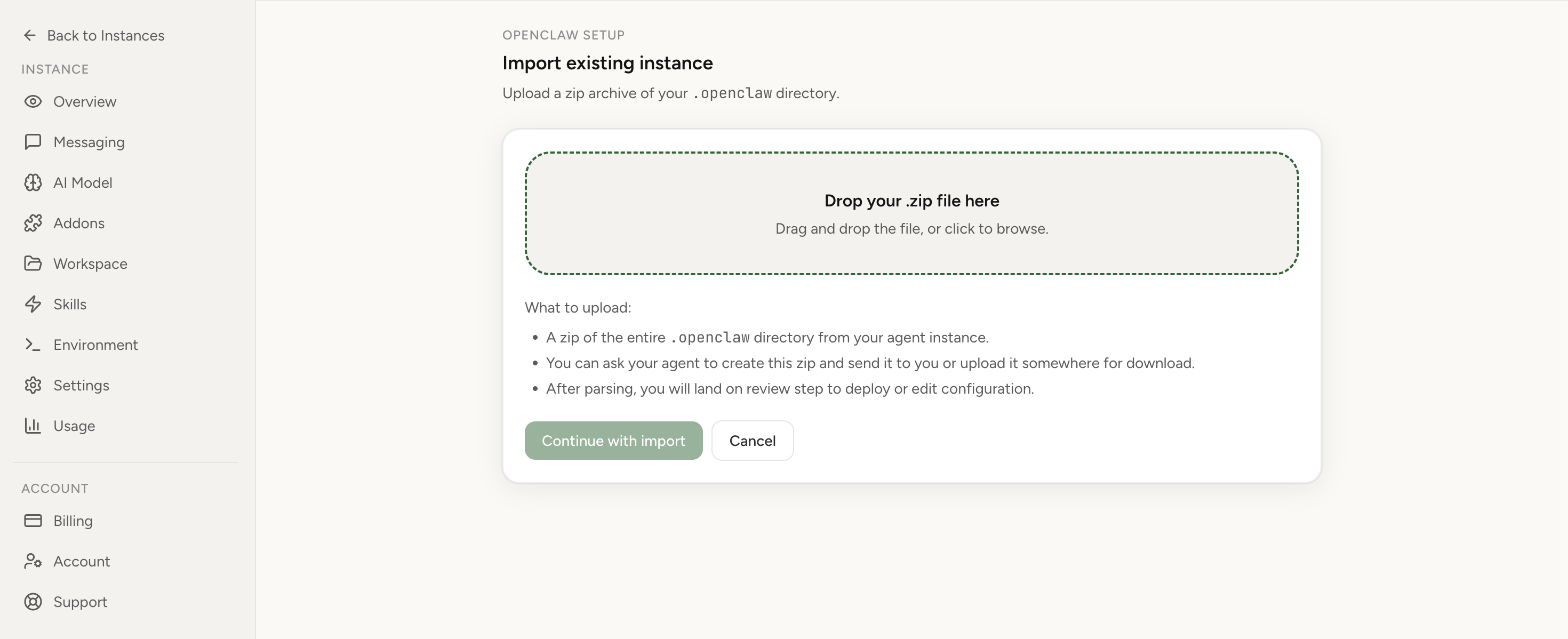
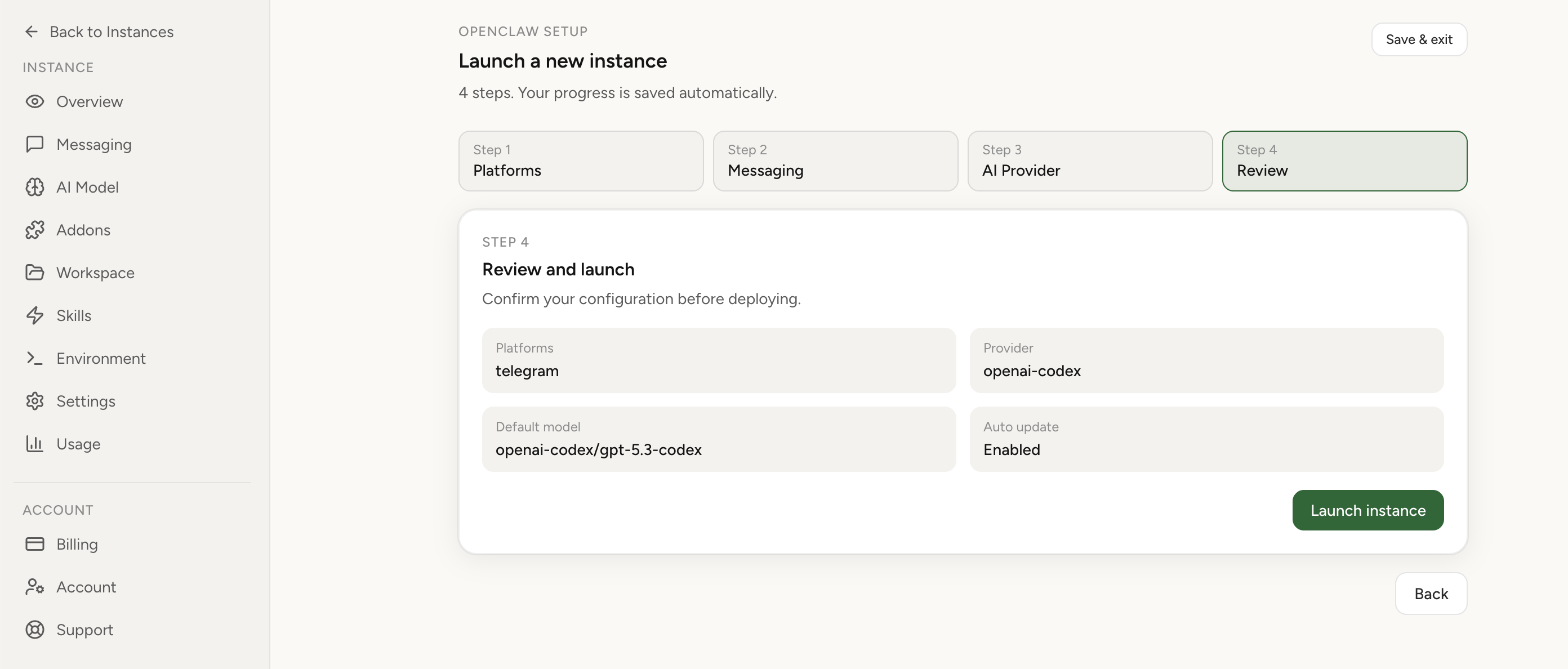
If this keeps coming back, you can move your existing setup to managed OpenClaw cloud hosting instead of rebuilding the same stack. Import your current instance, keep your context, and move onto a runtime with lower ops overhead.
- Import flow in ~1 minute
- Keep your current instance context
- Run with managed security and reliability defaults
If you would rather compare options first, review OpenClaw cloud hosting or see the best OpenClaw hosting options before deciding.
How to choose a provider without overfitting
Provider choice should follow the task. For normal research, choose a provider that returns structured results with useful snippets and stable quota. For privacy-sensitive or intranet-like workflows, a self-hosted metasearch endpoint can make sense if you are prepared to operate it. For social monitoring, use a provider that can search the surface you actually care about instead of expecting general web search to cover everything.
Avoid choosing a provider only because it was the last one mentioned in a thread. Search quality, rate limits, citation needs, network access, and cost all matter. For a personal assistant, a single provider may be enough. For production research workflows, you may need a primary provider, a documented fallback plan, and a clear rule for when the agent should stop instead of returning weak results.
Edge cases
- The provider works in chat but not in cron: verify the scheduled session's tools, model profile, and environment.
- SearXNG works in the browser but not in OpenClaw: test network reachability from the gateway host or container.
- Search returns results but the agent cannot read pages: configure web fetch or browser access for the next step.
- A plugin install succeeds but startup still fails: check ownership, registry refresh, and whether the active config changed before install.
- Only one agent fails: inspect agent-specific model and tool settings instead of only the global provider.
Typical mistakes
- Putting API keys into generated files that may be copied, logged, or committed.
- Selecting a provider before the runtime can register it.
- Testing from a local shell instead of the gateway runtime environment.
- Assuming web search can replace browser automation for logged-in or JavaScript-heavy pages.
- Letting cron jobs use search before one manual verification run proves the route works.
- Changing providers and model routes in the same edit, which hides the real failure.
Verification checklist
A healthy setup passes these checks before you depend on it:
- The gateway starts cleanly with web search enabled.
- The selected provider appears in the active runtime config.
- The provider plugin or native provider registration is available before validation.
- Secrets or base URLs are visible from the gateway runtime, not only from your terminal.
- A small search query returns useful results from the expected provider.
- The same agent profile that will use search in production can call it.
- One real workflow completes without switching to a weaker fallback path unexpectedly.
- Logs make the provider route clear enough that the next operator can debug it.
Where managed hosting changes the workload
Web search is a good example of why OpenClaw hosting is not only about keeping a process online. A useful managed setup has to coordinate the dashboard, encrypted provider settings, generated config, Kubernetes secrets, plugin installation, runtime validation, and restart behavior. If any one layer drifts, the user sees "search is broken" even though the real problem is a configuration lifecycle issue.
OpenClaw Setup keeps those layers together for hosted instances. You still choose the provider and bring the required credentials, but the control plane owns the boring parts: where settings live, how secrets reach the runtime, when the instance restarts, and how provider configuration survives import, clone, and redeploy flows.
Move provider setup into the control plane.
If your OpenClaw workflows depend on live web research, configure providers from a hosted dashboard, keep keys out of static config, and verify the runtime before cron jobs or channel agents use search unattended.
FAQ
Why did web search break startup instead of failing only when the agent searched?
OpenClaw validates important runtime configuration at startup. If the selected provider is unavailable or malformed, the gateway may fail before any tool call happens. That is safer than letting an unattended agent run with a provider route that cannot work.
Can I use multiple web search providers at once?
Use only the provider shapes supported by your current OpenClaw runtime. If you need fallback or rotation, document it explicitly and test each route. Do not invent a multi-provider config shape unless your runtime validates it.
Is web search enough for logged-in websites?
Usually no. Web search finds pages and snippets. Logged-in apps, dashboards, JavaScript-heavy pages, and visual QA usually need browser access. For hosted browser workflows, see Chrome Extension relay for local tabs or OpenClaw cloud hosting for a managed browser runtime.
When should I switch providers?
Switch when the provider no longer fits the task: poor result quality, missing sources, quota pressure, unavailable regions, or a need for a private endpoint. Do not switch while debugging until you have recorded what failed, or you will lose the comparison evidence.
What is the safest first test after changing providers?
Use a small query with an obvious answer, then inspect whether the expected provider returned usable URLs and snippets. After that, test one real workflow that chains search into fetch, browser, or file-writing work.