OpenClaw Windows native vs WSL2 vs Docker: practical recommendation
Problem statement: many teams start OpenClaw on a Windows laptop, then wonder whether native Windows, WSL2, or Docker is the safer daily setup. The installer matters less than the runtime substrate: background gateway behavior, file paths, networking, browser access, and recovery commands all become easier or harder depending on that choice.
For most Windows operators, start with WSL2 Ubuntu if you need a local setup that behaves like the Linux servers OpenClaw is usually deployed on. Use native Windows only for short experiments. Use Docker when your team already has container habits and accepts extra networking/debugging layers. If your goal is reliable always-on operation rather than local tinkering, compare the managed path before spending days on workstation-specific fixes.
- GitHub discussion #7462 updated 2026-02-28 asks for real-world WSL2 vs native guidance.
- Q&A threads continue to cluster around install retries and long-running service behavior on Windows hosts.
Decision framework: native Windows vs WSL2 vs Docker
| Option | Best for | Main risk |
|---|---|---|
| Native Windows | Fast experiments, local one-off demos, checking whether OpenClaw is worth deeper setup | Background service lifecycle, shell assumptions, path differences, and long-running gateway consistency |
| WSL2 (Ubuntu) | Daily development, Linux-like CLI behavior, easier handoff to VPS or managed hosting later | One extra environment to learn, plus care around Windows/WSL filesystem boundaries |
| Docker Desktop | Teams that already standardize on compose files, image tags, and reproducible containers | More layers when debugging browser access, ports, volume mounts, and host integrations |
Actionable setup path for lowest friction
- Choose WSL2 Ubuntu for serious local use. It keeps OpenClaw closer to Linux server behavior and reduces surprises when you later move the instance.
- Keep runtime files inside the WSL filesystem. Avoid splitting config, credentials, and session data across Windows paths and Linux paths unless you have a clear reason.
- Validate boring operations first. Confirm gateway restart, browser access, message channels, cron jobs, and backup/restore before adding advanced skills.
- Use Docker only when it is already your team norm. Containers can improve repeatability, but they also add volume, port, and host-browser integration questions.
- Do not turn a laptop into production by accident. If the instance must stay online while the laptop sleeps, move it to a managed or server environment.
How to choose based on the work you actually run
- Browser-heavy workflows: WSL2 can work, but test local-browser attachment and cookie/session expectations early.
- Always-on Telegram, Slack, or WhatsApp agents: avoid relying on a personal laptop; uptime and sleep behavior matter more than install style.
- Provider/API experiments: native Windows is acceptable for short tests if you are not depending on scheduled jobs or unattended runs.
- Team rollout: prefer WSL2, Docker, or managed hosting so every operator is not debugging a different Windows environment.
- Future migration: WSL2 usually gives you the cleanest path to a Linux VPS or hosted runtime because commands, paths, and process behavior are more similar.
Where teams usually decide to switch
If your team does not want to own runtime reliability at all, it is usually cheaper to move straight to managed operations. Start with OpenClaw setup, compare options on the self-hosting comparison page, then deploy on OpenClaw cloud hosting.
Related Windows and uptime guides
Use this when workstation uptime is the real constraint, not install method.
Windows install missing host packageTroubleshoot a concrete Windows install failure before changing runtime strategy.
Secure private remote access with TailscaleUse private networking when moving beyond localhost without opening a public control surface.
FAQ
Can I start native and migrate later?
Yes. Use native for quick validation, but document env assumptions early so migration to WSL2 or managed hosting is clean.
Does this apply to enterprise pilots?
Yes. Enterprises usually need reproducibility and auditability, which favors WSL2/Linux-like workflows or managed hosting from day one.
Sources
Fix once. Stop recurring Windows setup instability.
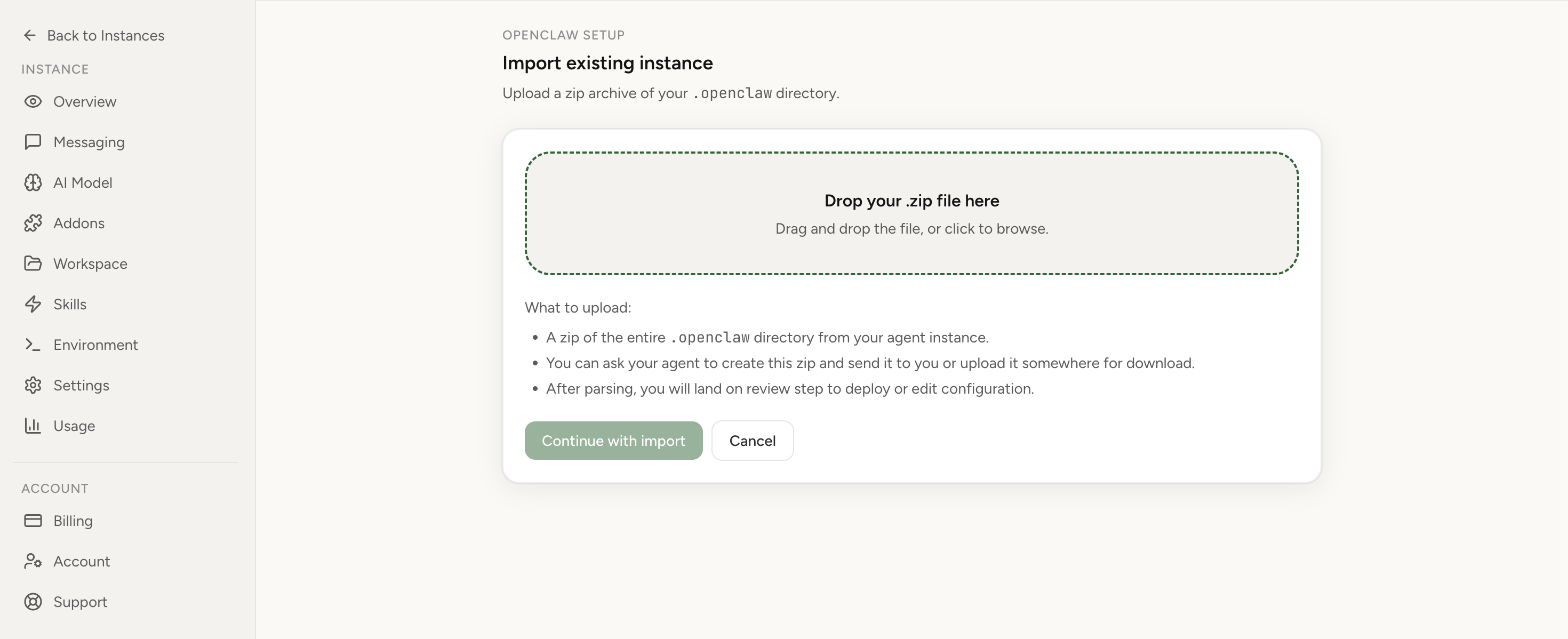
If this keeps coming back, you can move your existing setup to managed OpenClaw cloud hosting instead of rebuilding the same stack. Import your current instance, keep your context, and move onto a runtime with lower ops overhead.
- Import flow in ~1 minute
- Keep your current instance context
- Run with managed security and reliability defaults
If you would rather compare options first, review OpenClaw cloud hosting or see the best OpenClaw hosting options before deciding.